
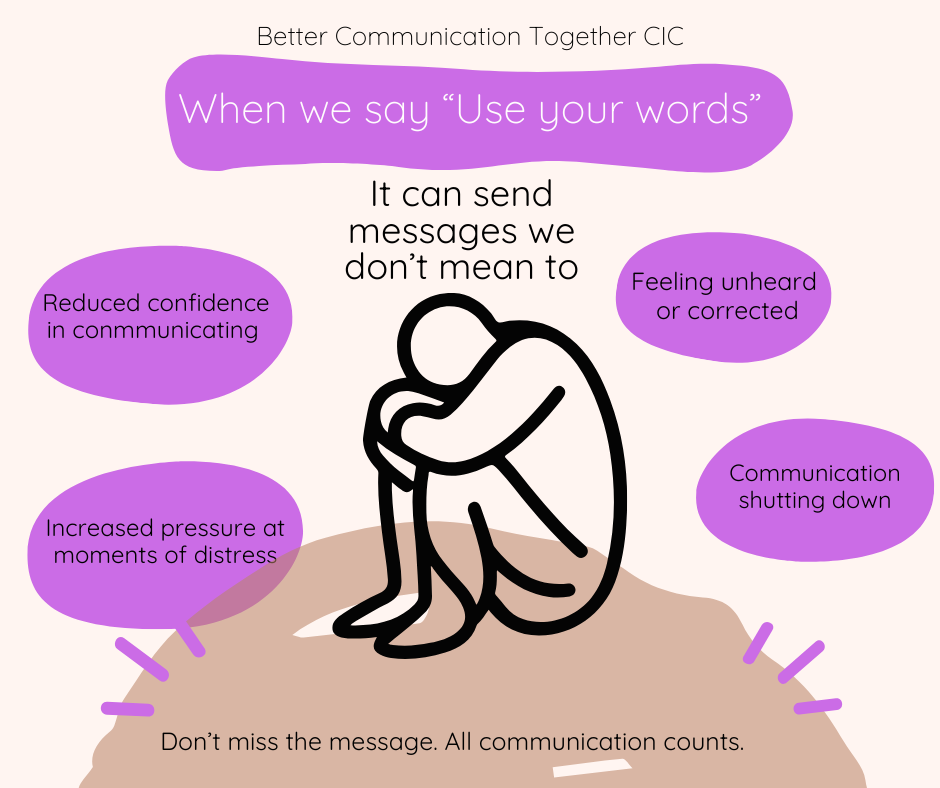
During a recent communication training session, a conversation arose about a young person who is sometimes prompted to “use your words.”
This approach was part of an agreed strategy and written into the young person’s EHCP.
One member of staff shared that this didn’t sit comfortably with them.
That feeling was valid.
Phrases like “use your words” are often well-intentioned. They are usually meant to support communication and reduce frustration.
However, this is a phrase I would encourage us to move away from.
Not because staff are uncaring.
Not because support plans are written without thought.
But because this phrase places the responsibility for communication entirely on the individual — and doesn’t reflect how communication access really works.
When communication is already happening
When we say “use your words”, or even “use your signs / symbols / device”, we are often responding to a moment where communication is already taking place — just not in the way we expected.
This isn’t a theoretical concern for me. These are real moments I’ve witnessed — and they’ve stayed with me.
I remember being in a situation where a young person who uses a voice output communication aid answered a question using signs.
Their response was clear, correct, and intentional and I understood them immediately. But it wasn’t accepted and they were told to “use your device.”
I remember how uncomfortable that moment felt - a successful piece of communication had just happened — and yet it was treated as if it didn’t count.
I’ve also witnessed someone who communicates with speech express their needs clearly through movement, gesture, and facial expression.
To me, their message was there if you were willing to look. It wasn’t responded to and later, I heard them described as “lazy.”
That stayed with me too because what I saw wasn’t laziness — it was effort that went unrecognised.
Why “use your words” doesn’t sit well
This phrase assumes that communication is always available on demand or that the person is choosing not to use it. It assumes that there is a correct method that must be used.
It doesn’t take into account emotional regulation, sensory overload, fatigue, confidence or accessibility of tools in that moment
For many people, especially in times of stress, access to communication fluctuates and being told to “use” a method can add pressure at the very moment when support is most needed.
The unintended messages we send
Even when spoken calmly, phrases like this can communicate:
“This way doesn’t count.”
“You’re not trying hard enough.”
“I value the system more than your message.”
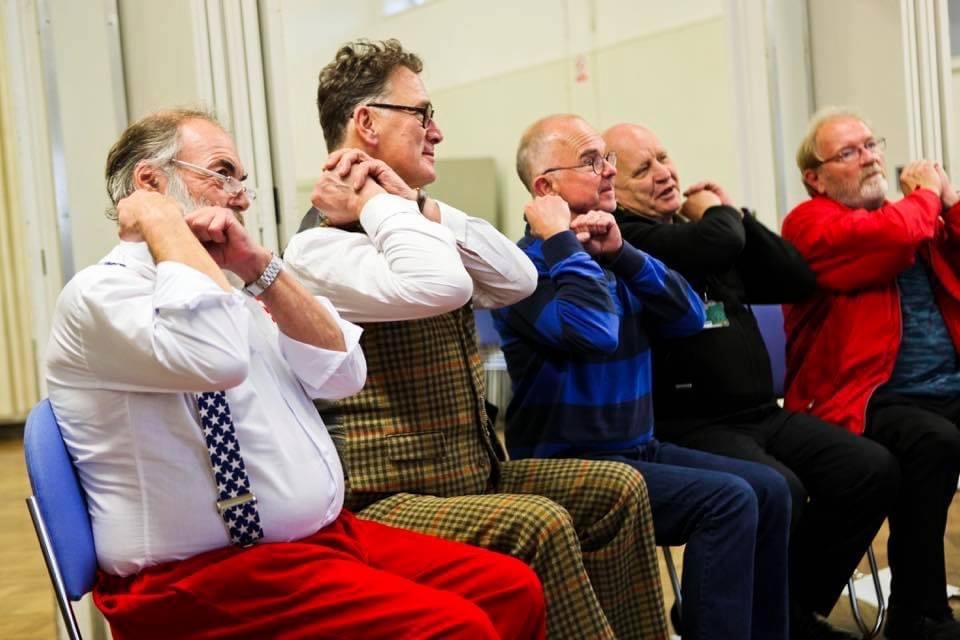
As I prepare for my annual visit to a local garden centre to train their grotto staff, I’ve been reflecting on the work we’ve done over the years to get Santa signing — and why it matters.
Many years ago, I took my son, who has Down syndrome, to a Christmas grotto in a huge shopping mall near our home. The experience wasn’t cheap, and the venue itself was magical: a winding trail, twinkling lights, the sense of adventure that builds as you inch closer to meeting the Big Guy himself.
But the moment we reached Father Christmas, everything shifted.
He glanced at my son… and didn’t even try to communicate with him.
Instead, he immediately turned to me and my husband and launched into a conversation about the terrible hangover he was nursing that day.
I was stunned. Hurt. Angry. I carried the weight of my child being ignored - in a place designed entirely for children - and it was heartbreaking. We left, and we never returned.
That moment changed everything for me.
As a Makaton Tutor, I approached the Makaton Charity and we worked together to develop some taster-session word lists especially for Santa and grotto staff. And so Signing for Santas was born.
Since then, we’ve delivered training to grottos across the country — from large organisations (including a popular animal park) to individual Father Christmas performers who simply want to get it right. Every session has been filled with joy, connection, and often a few happy tears. When Santa signs, magical things happen. Children who are usually quiet open up. Parents relax. The whole experience becomes the way it should be.
Because every child deserves to communicate with Santa and his elves — not just the ones who use speech confidently or in the way adults expect.
So how can we make grotto experiences more accessible and inclusive?
Communicate in the ways children communicate
-
Learn some British Sign Language (BSL) for children who use it as their first language.
-
Learn some Makaton signs for children with communication difficulties or delayed speech.
-
Carry a small set of symbols — a choice board or symbol keyring — so Santa can offer visual options like reindeer, tree, snow, photo or no-photo.
-
Use gestures and natural sign to make communication warm and expressive.
-
Offer choices rather than big questions, which can feel overwhelming.
-
Use real objects (objects of reference) like bells, tinsel, or a pinecone to support understanding.
-
Give children time to warm up — not every child will walk straight in ready to chat or sign.
-
Use inclusive greetings such as:
“Hello… I’m so happy you’ve come to see me today.” -
Use a simple Feelings Board so children can show if they feel happy, shy, worried or excited.
This helps Santa adjust his pace, tone, and approach. -
Let children opt in or out of touch or photos by using simple visual cards showing: high-five, wave, no-touch, photo, no-photo.
-
Create a sensory-friendly environment
Even the most magical grotto can be overwhelming for some children. Sensory differences, anxiety, and unfamiliar spaces can make the experience feel unpredictable or scary.
A few adjustments make a huge difference:
-
Offer quiet, low-sensory sessions with:
-
lower lighting
-
no music
-
fewer people
-
longer time slots
-
the option to explore the space before meeting Santa
-
-
Have a small sensory basket available with soft fabric, a fidget, a stress ball, or a mini snow globe to help children regulate.
-
Practise “Slow Santa” skills: slow down speech, allow pauses, reduce background distractions, and give plenty of processing time.
-
Ask families in advance what might help their child — communication method, sensory preferences, and things that may cause distress.
-
And then there’s the grotto itself…
For some children, the most stressful part of the experience isn’t Santa — it’s the door.
Many grottos have Father Christmas waiting behind a closed door, and for children who are anxious, autistic, sensitive to sensory surprise, or simply unsure, not being able to see what’s behind that door can be incredibly daunting.
Making the “behind-the-door” moment easier
-
Keep the door slightly open or install a small “peek window” so children can see the space before entering.
-
Display a photo board outside showing Santa, the room layout, the lights, the elves, and anything bright or noisy. This helps children build a mental map before they go in.
-
Offer a simple social story at the entrance explaining step-by-step what will happen.
-
Allow families to have a quick look inside first, either with Santa quietly waving or with the room empty to reduce pressure.
-
Have an elf act as a gentle “transition guide”, using simple words or Makaton to explain what’s inside.
-
Use calming sound cues (very low volume) so children know what to expect without being overwhelmed.
-
Let children choose how they enter — first, with a parent, with siblings, or after watching someone else go in.
-
Use clear symbol signage showing Santa, lights, photo, sit, hello, present.
-
Offer a short “waiting video” or slideshow of Santa sitting calmly in the grotto, so children know exactly who is behind the door.
-
Provide an alternative entrance or meeting point for children who find closed spaces too difficult.
-
Allow children to opt out without pressure — because “no” is a valid and important communication.
These small adjustments help children feel safe, prepared, and respected before they’ve even stepped inside.
Let’s make every Santa experience magical — for every child
When grotto staff embrace flexible communication, prepare thoughtfully for sensory needs, and offer children genuine choice and agency, we create Christmas moments that are safe, joyful, and accessible.
The magic is magnified when every child can join in — in their own way.
Tags:
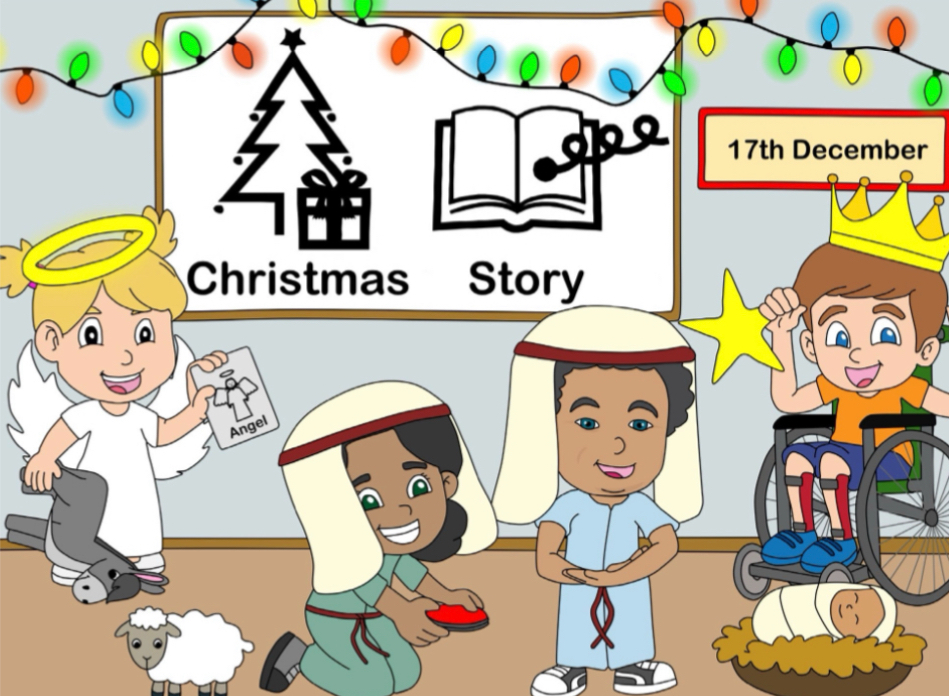
Including Everyone in the Christmas Performance
Giving every child a moment to shine
A Memory That’s Stayed With Me for 45 Years
I always remember my own school Christmas productions.
In all my years at school, I had one speaking role: I was an angel and had to say, “Go quickly and see him.”
Blink and you’d miss it.
Every other year, I was just one of many children in the chorus. I wasn’t unhappy, but I felt invisible and unseen — simply part of the background.
But one year was different.
A teacher asked me to be in charge of turning on the illuminated star — the big “wow” moment in the nativity. I was completely thrilled. For the first time, I felt important. I felt included.
Rehearsals went smoothly. I muffed it a bit on the day — perhaps they were right to keep me in the chorus — but that doesn’t matter. What matters is that someone thought about me, found a role that suited me, and gave me something meaningful to do.
That tiny act of inclusion has stayed with me for 45 years.
When Inclusion Becomes Tokenism
Over the years, I’ve watched many school Christmas performances. So often, speaking children were given the main roles, while others — usually children with different communication needs — were simply present on stage without a meaningful part.
They were on stage, but not truly involved.
Visible, but not valued.
Included in name only.
But I’ve also seen performances where every child, regardless of how they communicate, was given a role tailored to their voice — spoken, signed, symbolic, technological, or sensory.
And that’s the kind of inclusion this blog is about.
Communication Should Never Be a Barrier to Joining In
Every child communicates in their own way.
Speech is only one method — not the benchmark, not the requirement, and certainly not the only valid route onto the stage.
Performances should reflect this diversity by:
adapting roles to match communication strengths
using tools children already rely on
celebrating a wide range of expressive styles
ensuring no child is reduced to a token or an afterthought
Inclusion means designing performances so that communication is never the reason a child misses out.
Meaningful Ways to Include Every Child’s Communication Style
Using AAC Devices
A voice output aid
A switch for a key phrase
A Big Mack for repeated lines like “Ho Ho Ho!”
Using Symbols
Holding up one or more symbols as their line
Pointing to a symbol on a communication board
Choosing between symbols to move the story forward
Eye Gaze
Using eye gaze to speak their line
Selecting sound effects
Choosing scene transitions
Using Signing
Signing their line while someone narrates
Leading a repeated Makaton sign
Signing the chorus of a song (or indeed all of it!)
Musical or Sensory Contributions
Pressing a switch to cue music or activate lights or projections
Playing simple instruments
Holding sensory props
Using Multimodal Communication
Simple ways to include children who communicate through photos, objects or actions:
Photos: Holding up a photo as their “line”, choosing between photos, or pointing to a photo sequence that moves the story forward.
Real objects: Giving meaning through props — a star to lift, a bell to ring, a gift to hand over, a lantern to hold.
Objects of reference: Incorporating familiar objects some children already use to anchor their role or cue their moment.
Symbol + object pairing: Matching a symbol to a prop, placing a symbol on a board, or choosing between two symbol–object pairs.
Gestures/actions: Sprinkling “snow”, turning on lights, placing a star, waving ribbons — actions that are their line.
Sound cues: Using instruments, shakers, chimes or switches to create sound effects in place of spoken lines.
Slideshow cues: Children point to or trigger a photo or symbol on a projected slideshow that accompanies the story.
Backstage communication: Decorating props, recording sounds, or contributing artwork that becomes part of the performance.
These roles hold equal value — because value comes from belonging, not from the length of a line.
Pre-Recorded Lines or Scenes
Filming lines or short scenes in advance can dramatically reduce the pressure to perform on the day. Children can record their part in a quiet, familiar space, with plenty of time, encouragement and support — and no audience watching them.
One of the best performances I ever saw used this approach, and it was incredibly effective. Each child’s pre-recorded segment was woven into the live performance, giving them a moment to shine in a way that felt completely safe for them. Their confidence, pride and individuality came through beautifully on screen, and the whole audience loved it.
Pre-recording not only supports children who use AAC, symbols, signing, or multimodal communication — it also gives families a treasured keepsake and ensures that every child is represented meaningfully, even if performing “live” would be too overwhelming.
A Better Approach: Designing From the Child Outward
Instead of starting with the script and squeezing children into fixed roles, we can start with the child:
What do they enjoy?
How do they communicate?
In what way can they shine?
When we design performances around children’s communication styles, we create experiences where everyone belongs, not just those who speak fluently.
Acknowledging Another Group of Children
Of course, communication is only one aspect of inclusion.
Some children find performances difficult for entirely different reasons — sensory needs, anxiety, stage fright, or simply preferring quiet roles.
That’s a whole other form of inclusion, and in a separate blog I’ll explore how to create low-pressure performances where it’s completely OK to join in… and equally OK not to.
For now, this piece stays focused on communication accessibility, making sure no child is excluded because their communication style isn’t the traditional one.
Helpful Resources
Jacob’s Ladder Makaton Nativity Musicals
https://www.jacobsladderproductions.co.uk/nativity-musicals-with-makaton-signing.html
Singing Hands and Out of the Ark Makaton-Supported Songs
Excellent for building inclusive musical moments and supporting whole-group signing. youtube.com