Circular Economy
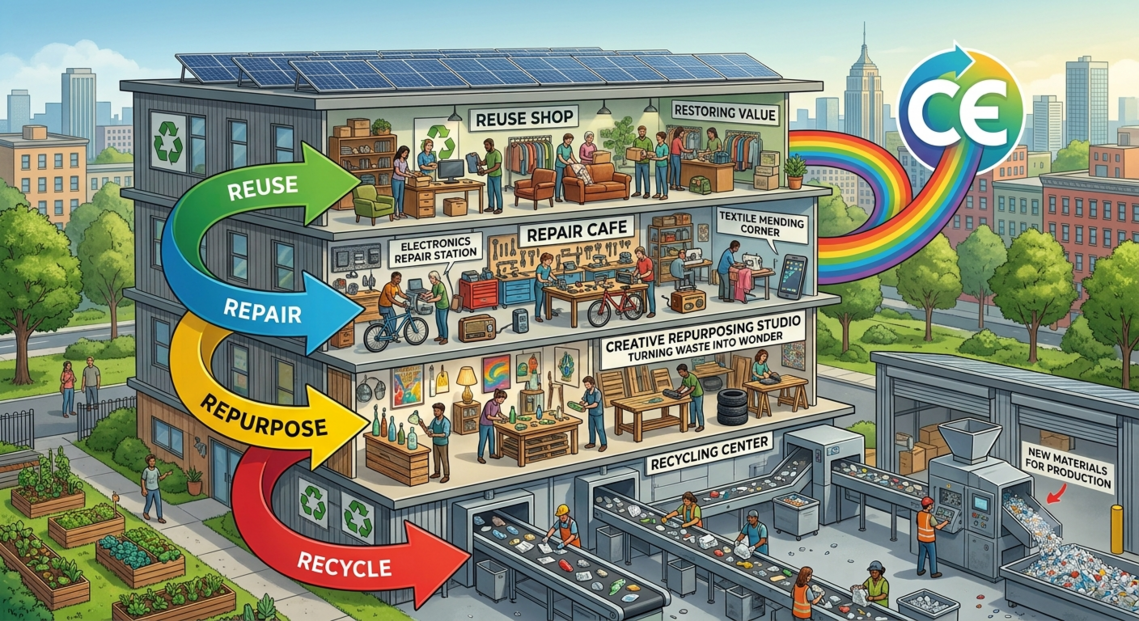
The circular economy is a system where materials never become waste and nature is regenerated. In a circular economy, products and materials are kept in circulation through processes like maintenance, reuse, refurbishment, remanufacture, recycling, and composting. The circular economy tackles climate change and other global challenges, like biodiversity loss, waste, and pollution, by decoupling economic activity from the consumption of finite resources.
-
Eliminate waste and pollution
-
Circulate products and materials (at their highest value)
- Regenerate nature
Underpinned by a transition to renewable energy and materials, the circular economy is a resilient system that is good for business, people, and the environment.
(Taken from Ellen MacArthur Foundation)
In Cricklade, we are considering how we can better support the circular economy.
Meanwhile,we encourage everyone to try putting these principles into practice in our daily lives:
-
Buy things that will last longer and have less/less harmful packaging
-
Find a second use (yourself or for someone else) for your unneeded things
-
When you are finished with something, find a different use for it or dispose of it safely, where possible in a way that will help, and not harm, our environment.