The most important recent political development was the June 1st popular election of judges, magistrates and Supreme Court justices. This had been a proposal of former President AMLO, supported by President Claudia Sheinbaum and the congressional majority of Morena and its allies. It had been established by a constitutional amendment and was implemented despite intense hostility from opposition parties, the mainstream media and most of the existing judiciary.
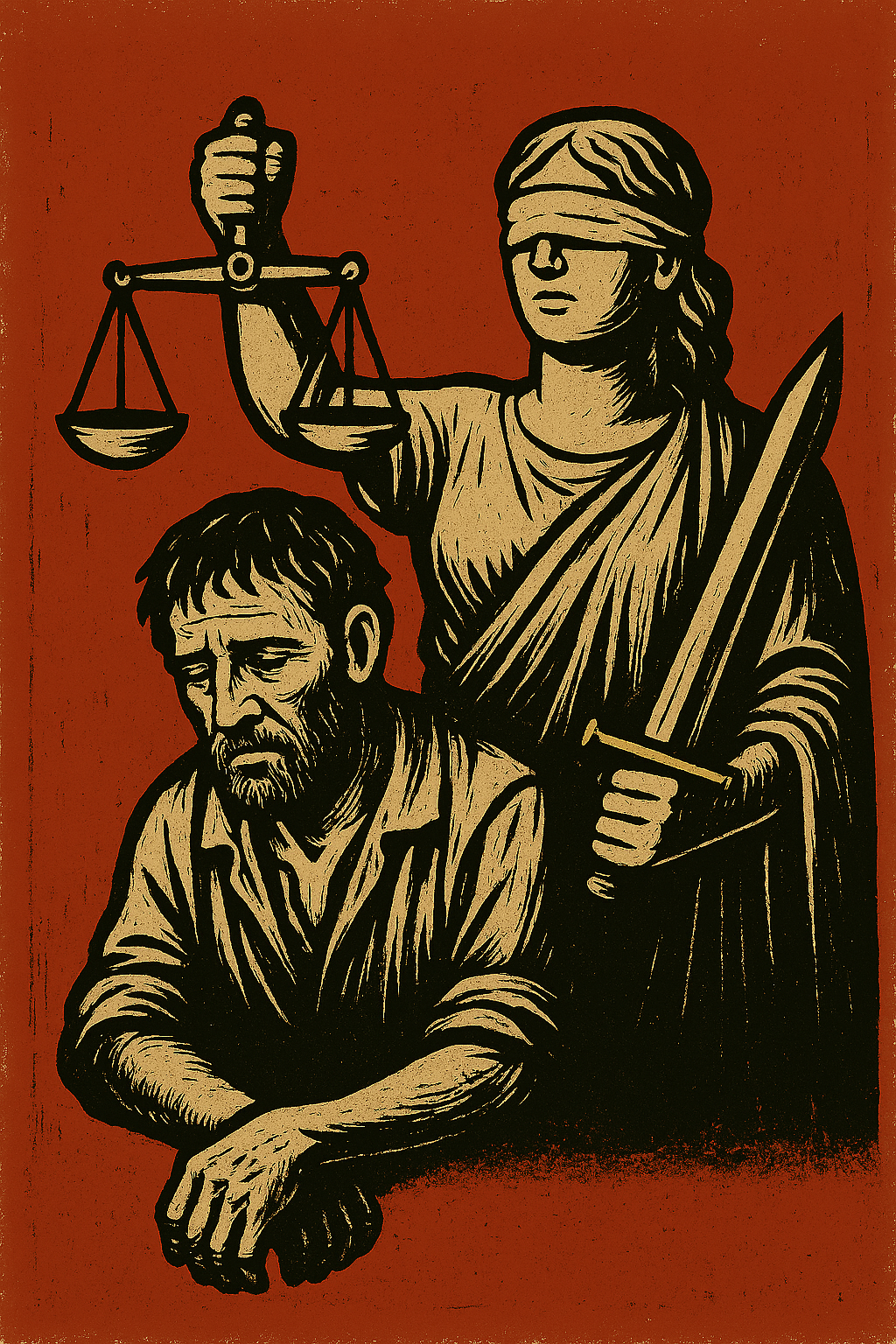
Judicial reform, with popular election on non-party lines, a new judicial supervisory system and accountability requirements, was necessary because the judiciary was the most corrupt institution in the country: the majority of the existing Supreme Court and other judges had systematically tried to block progressive legislation and granted injunctions (amparos) protecting serious criminals.
Although judges are elected in many US States (making US criticism of the Mexican reform quite hypocritical), it does not extend to the US Supreme Court and is plagued by partisanship and financial corruption. The new Mexican system is unique in the world and makes it the most democratic judicial system anywhere. The new judges will take office on September 1st, and the incoming Chief Justice is a very capable and respected indigenous lawyer from Oaxaca, one of Mexico’s poorest states.
Meanwhile, the main focus of attention continues to be the tense relationship with Washington and the threats and hostile rhetoric coming from Trump and the US. President Claudia Sheinbaum has always insisted on protection of Mexican sovereignty, which is non-negotiable, and respect for Mexican migrants and citizens North of the border. In the past two months Mexico has expressed its disapproval of the arbitrary searches, arrests and deportations by ICE (the US Immigration and Customs Enforcement), and has done whatever is possible through its 52 consulates in the US to assist its citizens. Those deported or returning to Mexico for whatever reason are received with full support under the México Te Abraza (Mexico Embraces You) programme.
Regarding trade, migration and legal issues relating to crime and narcotics, President Sheinbaum always insists on principled but calm negotiation, refusing to engage in megaphone diplomacy as practised by Trump. Mexican officials (Economy Secretary Marcelo Ebrard, Foreign Secretary Juan Ramón de la Fuente and several other cabinet members) are frequently in Washington negotiating with their US counterparts.
When the US Congress threatened to impose a 5% tax on migrants remittances, Mexico protested diplomatically and also encouraged its citizens in the US (some 40 million of Mexican descent) to lobby their representatives in Washington. In the end the tax was reduced to 1.5%, and then after further lobbying was eliminated altogether except for cash transfers (which only account for 1% of the total).
At the time of writing Trump’s latest threat to impose steep tariffs on all global trade partners (which in the case of the European Union has led to an extremely unequal arrangement with 15% on all EU imports, and other financial impositions, with Europe getting nothing in return) also included a supposed 30% tariff on Mexico. Once again, President Sheinbaum held a direct phone call with Trump on 31 July and achieved remarkable success: no new tariffs for now, 90 days for further negotiations, maintenance of the TMEC Treaty which excludes 84% of Mexican goods from tariffs except the 10% steel and aluminium duty which applies to the whole world, the prospect of a renewed long-term Treaty, and an admission by Trump that “the complexities with Mexico are rather different than with other countries due to the problems and advantages of the border”.
Meanwhile at home the Mexican government has been pushing ahead with unceasing activity to implement its free universal public health service, with the President, her Health Secretary and the whole team of social security and welfare officials touring the country to supervise and inaugurate new hospitals and clinics and ensure adequate equipment and staffing by doctors, nurses and other personnel. The standard of provision aims to be world-class and is completely free for all patients.
The health system also now includes a new programme introduced by the President, Salud Casa Por Casa, House to House Health Care, consisting of home visits to all senior citizens and those with disabilities. Nurses equipped with a suitcase of medical equipment make monthly or bi-monthly visits (depending on patients’ needs) to carry out basic health checks and provide care. Already more than two million visits have been carried out.
Public & social housing is another area in which the government is making rapid progress. In the last few months it introduced fundamental reform of two previously existing institutions which provided mortgages on easy terms for workers in the public sector (FOVISSSTE) and in formal private sector employment (INFONAVIT), but which had become profoundly corrupt. Clients of these institutions who had been virtually bankrupted with unpayable mortgages, or sold non-existent properties, have had their debts annulled and new favourable terms arranged. A new fund for “Welfare Housing” has also been created, and a massive public housing construction programme has been launched.
All this is at the federal level, but in Mexico City the Metro Mayor Clara Brugada has also announced construction of council housing, rent control and other measures to limit property speculation. It is no coincidence that just when federal and municipal authorities were taking steps unparalleled in decades to address housing problems, a “left” opposition campaign against gentrification began organising protest marches in the capital.
President Sheinbaum is also pushing ahead with her promise to greatly extend passenger rail service, extending the great achievements of AMLO with the Tren Maya and other lines in the Southeast. Work is under way with military engineers improving sections of the existing goods railways from the capital to the Northeast and Northwest, and where necessary building new sections of track for passenger service; every week progress reports are given in the press conferences.
A pathbreaking measure was recently announced in labour rights with the creation of contractual employment and welfare rights for those working with virtual platforms, i.e. in the gig economy in deliveries, taxis, domestic housekeeping, etc. They are now recognised as employees and registered with the Social Security Institute IMSS, with insurance and pension rights. This was far from easy, both in getting agreement from the companies and from the workers themselves who wanted rights but also flexibility.
Union rights in larger enterprises (factories, mines etc) continue to be problematic. Reforms under AMLO greatly improved internal union democracy and bargaining practices, but corrupt practices and presence of company unions continue in many instances: workers at the General Motors SUV plant in San Luis Potosí, where independent union SINTTIA was hoping for recognition, voted to join the “Carlos Leone” union linked to the old corrupt CTM federation. This was due to the inclusion of many supervisory staff under company influence. There are still problems with the federal labour bureaucracy as well as in the movement itself.

Finally, the Morena party itself, while making enormous gains in terms of recruitment (it now has 7 million members) and political consciousness, still has internal problems, as is only to be expected. A Morena Senator, Adán Augusto López Hernández, who was Governor of Tabasco from January 2019 to August 2021 and AMLO’s Home Secretary (Gobernación) from then until 2023, had appointed as Tabasco Security Secretary an individual, Hernán Bermúdez Requena, who has been accused of involvement in organised crime and has now been formally charged by the Tabasco Fiscalía (Solicitor General’s office). Bermúdez Requena has now fled the country.
Senator López Hernández denies all knowledge of the matter and has said he is available for questioning if needed. The matter is serious since either he was complicit with Bermúdez Requena, or if he did not know, he was negligent.
Naturally the opposition is having a field day with this as evidence of its (totally unsubstantiated) accusations that this is a Narcogobierno and is just as bad as its predecessors. Many progressive commentators and Morena members have said that López Hernández must respond to questions and probably resign. Party leaders, and President Sheinbaum herself, have said there must be due legal process and not a “media lynching” of the Senator, which is quite correct. It is also true, as pointed out by Morena party officials and unimpeachable figures like Epigmenio Ibarra (a highly respected film director, independent journalist and intellectual), and others, that while the Senator may well have to go, neither the government nor the party as a whole are complicit in crime (quite the contrary, they have achieved far more than any previous administration in fighting the cartels), they must address such problems. It should also be pointed out that on 24 July an Open Letter signed by more than 100 Morena members expressed discontent with procedures and called for more internal democracy (a sign of dissent and also of healthy debate).
Epigmenio Ibarra points out that there is nothing the opposition and the extreme right in the US would like more than to destroy Morena and undermine President Sheinbaum. Given that Morena did not come to power through armed revolution, it could not purge public administration of all suspect elements, and indeed even in countries like Cuba or Nicaragua, or indeed Soviet Russia and China, corrupt individuals from the old regimes still held some positions. No process is perfect, but as Claudia Sheinbaum declared recently, Mexico’s Fourth Transformation is “the most important such transformation in the world at present”.
=====================================================

Save the date for the following events at which Mexico Solidarity Forum will have speakers with the latest on the 4th Transformation in Mexico:
The Sueño Existe Festival -6th September