
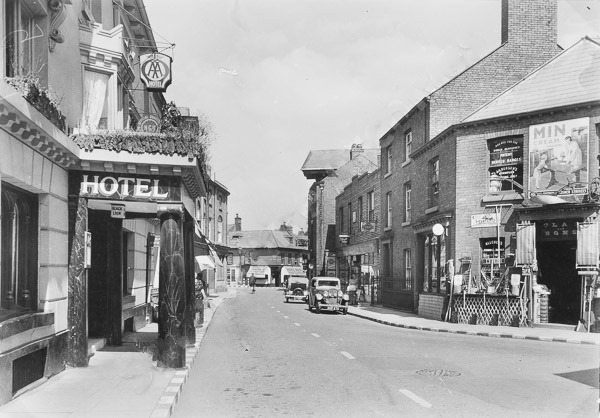
Early history and medieval period
- 11th Century:A motte-and-bailey castle was likely built by Roger de Montgomerie on a hill overlooking the Mere, with its earthworks still visible today and the motte now used as a bowling green.
- 12th Century:The castle changed hands several times between English and Welsh rulers, including William Peverel and Dafydd ab Owain Gwynedd.
- 13th Century:The lordship eventually passed to the le Strange family, and the castle was destroyed during the English Civil War.
Industrial and canal development
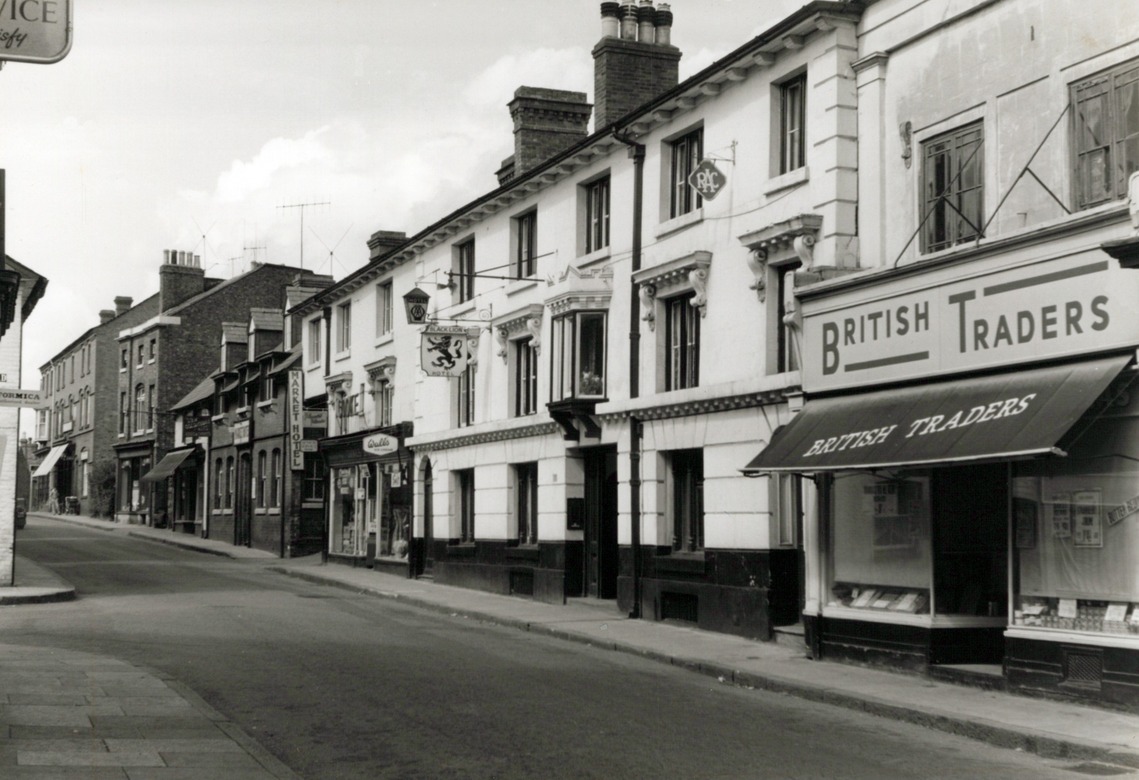
- 17th Century:The area saw industrial activity, particularly around the Mere.
- 1793-1805:Thomas Telford oversaw the construction of the Ellesmere Canal, a major project that aimed to connect to the coast but was only partially completed and eventually incorporated into other canals.
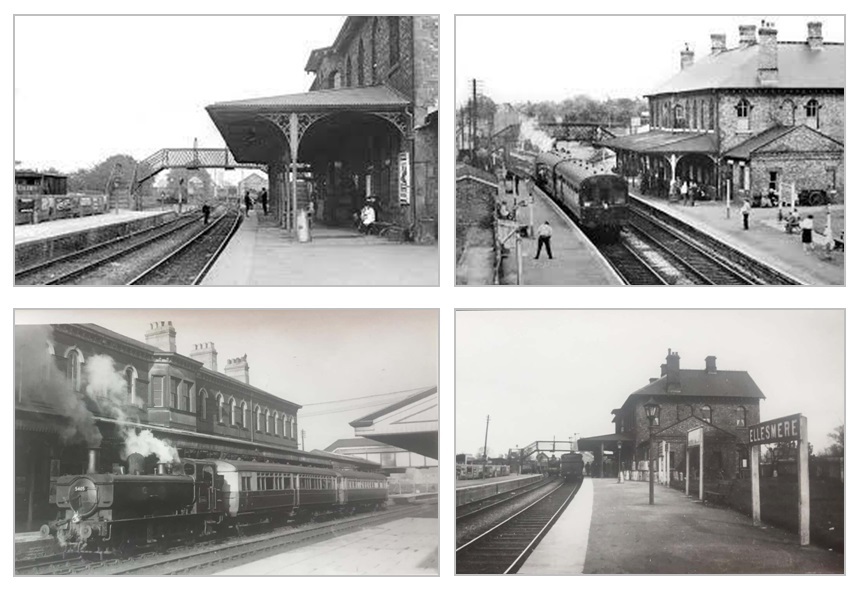
- 1863:The town's railway station opened as part of the Oswestry, Ellesmere and Whittington Railway.
- 1895:Ellesmere became an important junction when the Great Central Railway opened a line to Wrexham.
Economic and modern history
- Economic hub:Ellesmere thrived as a market town, particularly known for its dairy products.
- Canal heritage:The town's canal yard, built in 1806, was critical to the maintenance of the Llangollen and Montgomery canals.
- 1960s:The Wrexham branch line closed to passengers in 1962, followed by the closure of the main line in 1965 due to the Beeching cuts.
- Today:Ellesmere continues to be a market town and a popular tourist destination, with its historic architecture and the natural beauty of the Mere being significant attractions.
The Old Town Hall in Ellesmere, built in 1833 by the Countess of Bridgewater, was originally an open-ground-floor market space before the current Victorian Market Hall was built in 1879. The Old Town Hall housed various functions, including an assembly room, while the market eventually moved to its new dedicated building, now a hub for community events and markets.
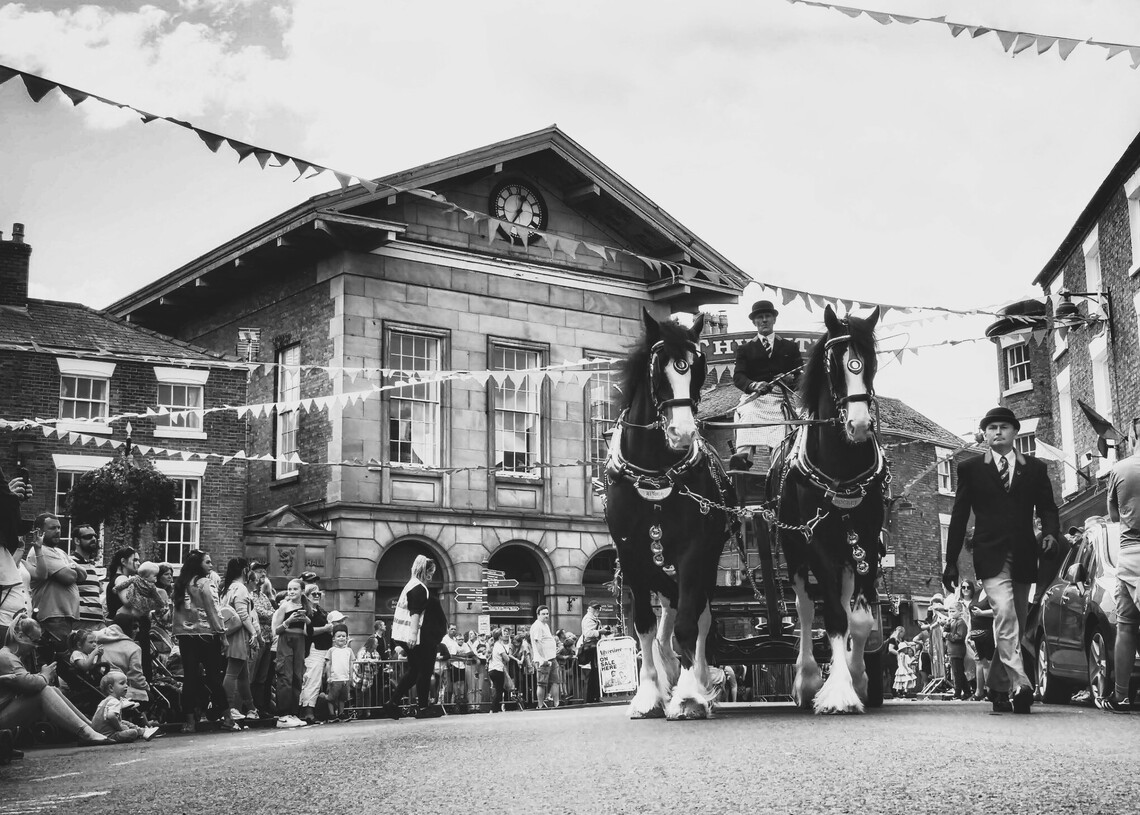
- History:A neoclassical building designed by Edward Haycock and completed in 1833. It was given to the town by the Countess of Bridgewater and is reputedly built on piles driven into the former marshy bed of the mere.
- Architecture and purpose:The ground floor was originally open, serving as the location for the town's general market. The first floor contained an assembly room used for various purposes, including the Mechanics Institute, a town museum, and a cinema that operated from around 1931.
- Significance:It is now a listed historic building, a prominent feature of the town's architectural past.
- Legacy:The building's open ground floor was a precursor to a dedicated market hall, which was built in the Victorian era.
New Town Hall (1968)
- Construction:Built in the late 1960s, separate from the historic Old Town Hall.
- Transfer to Town Council:In 1981, North Shropshire District Council offered the management of the hall to Ellesmere Town Council, which signed a 21-year lease in December 1981.
- Purchase:When the lease expired in 2002, Ellesmere Town Council bought the building outright for £1.
- Current use:It functions as a community hub and is the base for the town council.
Market Hall (1879)
-
History:Built in 1879 by the Countess of Drinkwater, it was constructed to replace the open market previously held outside the Old Town Hall.
- Purpose:It serves as a modern market space for local traders, though its use has expanded to include various community events like dog training classes, martial arts workshops, and private parties.
- Current status:The Market Hall continues to thrive as a key part of the Ellesmere community, supporting local commerce and social activities.

From plan to reality
- Initial Proposals:In 1793, the Ellesmere Canal Company was formed during "Canal Mania" to build a canal connecting the River Mersey at Ellesmere Port to the River Severn at Shrewsbury.
- Ellesmere as a Hub:Ellesmere was a crucial location for the project. The initial proposal in 1791 held a meeting in the town to discuss the route.
- Engineers at Work:The canal was built under the direction of prominent engineers, including Thomas Telford and William Jessop. Telford even lived in Ellesmere during the 1790s, highlighting the town's importance to the canal's construction.
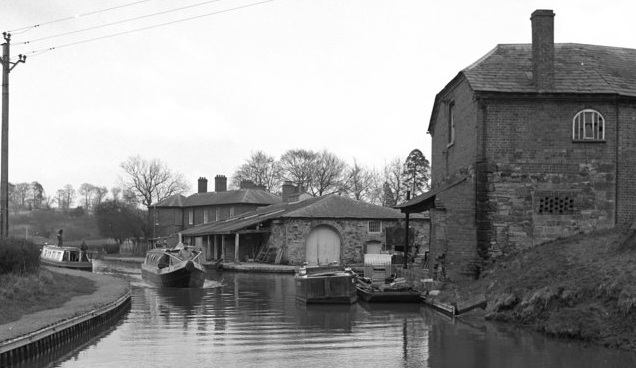
- Headquarters Established:In 1806, the Ellesmere Yard was built as the operational headquarters and workshops for the Ellesmere Canal Company.
- A Historic Site:Today, Ellesmere Yard is recognized as a rare and historically significant example of a purpose-built canal maintenance yard. Its workshops and infrastructure have remained largely unchanged, offering a glimpse into the industrial past.
The canal's evolution
- Incorporation into a Larger Network:In 1846, the Ellesmere Canal became part of the Shropshire Union Railways and Canal Company.
- Decline and Rebranding:Due to the rise of railways, canal traffic declined, and the route eventually became a leisure cruising waterway. In the 1980s, the section through Llangollen was rebranded as the "Llangollen Canal," a popular tourist destination that includes parts of the original Ellesmere system.
Ellesmere wharf was a vital part of the original Ellesmere Canal network, which was designed to connect the River Severn and Mersey in the late 18th and early 19th centuries. The wharf, developed in the 1800s by engineers like Thomas Telford, served as a major industrial hub for transporting goods and maintaining the canal system, a role which later continued with the Shropshire Union Canal. Although commercial traffic declined with the rise of railways, the wharf remained a site for various industries and canal-related engineering and maintenance until the mid-20th century, and now contains surviving historical buildings and a marina.

- Original plan:The Ellesmere Canal was planned to link the rivers Severn, Dee, and Mersey, with Ellesmere intended to be a central hub.
- Engineering and construction:Constructed by engineers like Thomas Telford, the canal and its associated wharves, including the one in Ellesmere, were crucial for transporting goods and raw materials like coal and iron during the Industrial Revolution.
- Industrial hub:Ellesmere wharf was a bustling industrial site, home to a gas works, a coal wharf, and especially William Clay's Bridgewater Foundry, which produced both canal and agricultural equipment.
- Decline:The canal struggled financially due to its incomplete status, leading to a series of mergers. The rise of railways in the late 19th century further diminished the canal's importance, and commercial traffic largely ceased by the mid-20th century.
Survival and heritage
- Remaining structures:Despite the decline of commercial traffic, the wharf area still has surviving buildings and structures, such as a brick warehouse and the historic Beach House, designed by Thomas Telford.
- Continued use:The site became the Ellesmere Yard for the Canal & River Trust, used for maintenance of the waterway.
- Modern status:Today, the area is known for its marina, moorings, and its connection to the modern Llangollen Canal. The former industrial site is the subject of redevelopment plans, with ongoing efforts to preserve its historical elements.
Ellesmere's history is strongly tied to the dairy industry, which thrived due to the area's fertile land, improved transport via canals and roads, and a large cheese factory that became the town's biggest employer until its closure in 1987. The town also benefited from companies like Fullwood & Bland, which moved its rennet production and milking machine manufacturing to Ellesmere, supporting the dairy equipment industry.
- Market town:Ellesmere was historically a thriving market town where dairy produce, including butter and cheese, was sold at regular fairs.
- Transport development:The creation of the Shrewsbury to Wrexham turnpike road in 1752 and the opening of the Ellesmere Canal in 1805 significantly improved transport. This allowed for the easier and faster transport of dairy products, particularly to major cities like Liverpool, Manchester, and Chester, and for export.
Growth of industrial dairy processing
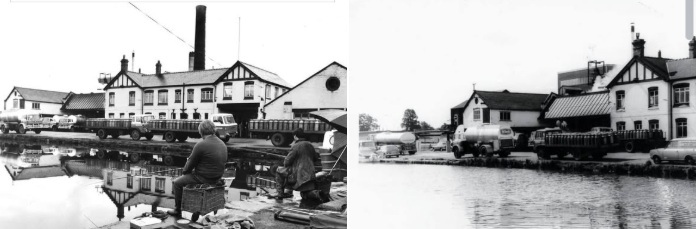
- Cheese factory:In the early 1900s, a cheese factory was built on the site of a former ironworks and became the town's largest employer by the 1930s.
- Diversified production:The factory processed milk into various products, including cheese, butter, and cream.
- Dairy Crest closure: The factory, owned by Dairy Crest, operated until its closure in January 1987, leading to significant job losses in the town.
Supporting industries
- Dairy equipment manufacturing:The dairy industry was further supported by companies like Fullwood & Bland, which established a base in Ellesmere in 1918.
- Milking machines:The company expanded its operations by producing milking machines in Ellesmere starting around 1940, benefiting from the increasing mechanization of dairy farming.
- Modern dairy companies:The legacy of this industrial history continues with companies like Fabdec, which originated in Ellesmere and now manufactures dairy equipment, including milk tanks, for the global market
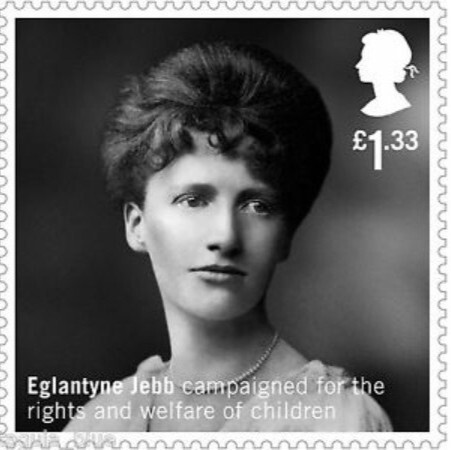
- Birth and family:Eglantyne Jebb was born on August 25, 1876, at "The Lyth" (now called Spoonhill House) near Ellesmere. Her family was a prominent local family with a strong commitment to social reform and public service.
- Early life and influences:Her mother, also named Eglantyne Jebb, founded the Home Arts and Industries Association, while her sister Louisa helped found the Women's Land Army in World War I. These family influences instilled a sense of social duty in Eglantyne.
-
Founding Save the Children:After World War I, Eglantyne and her sister Dorothy Buxton founded the Save the Children Fund in 1919 to provide famine relief for children in Germany and Austria.
- Drafting the Children's Charter:Jebb's work continued with the drafting of the Children's Charter, which was adopted by the League of Nations in 1924 and served as the foundation for the UN Convention on the Rights of the Child.
- Ellesmere's commemoration:Ellesmere continues to honor her work. The town has a dedicated Jebb Garden near the mere, which is part of a sculpture trail that celebrates the sisters' achievements.