
Nursery Green is a small 3 acre park off The Avenue in Hampton opposite All Saints Church. The expanse of grass with mature trees and enclosed children’s playground make it a popular recreation ground for families and dog walkers. The footpath Linear Walk provides a link from Oak Avenue through the park to Hampton Square and Sainsburys.
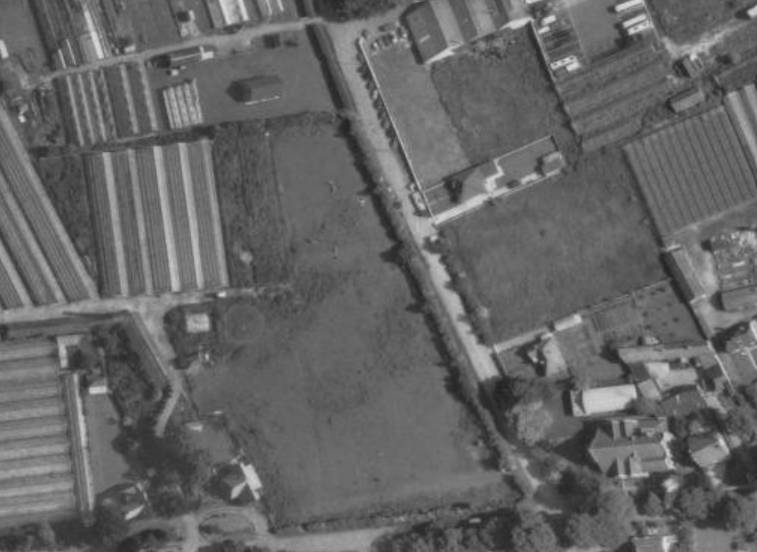
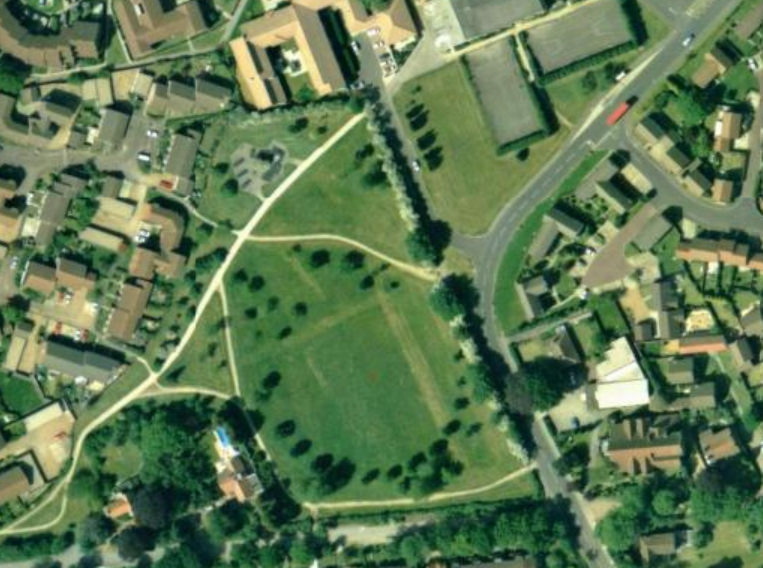
Aerial views in 1971 and 1991
As the name suggests, Nursery Green was once occupied by nurseries growing flowers and fruit in large glasshouses covering a wide area.
This area of Hampton has a long history of commercial food production. From the early 19th century London grew and needed more and affordable food. Market gardening was pushed out of central London into the southwest suburbs along the river within walking distance of the markets. Better roads and the arrival of the railway allowed market gardeners to move deeper into Middlesex, to Twickenham, Hounslow and then to Hampton. In many areas employment in agriculture exceeded that in trade, manufacturing and handicrafts.
As London continued to grow, the orchards and market gardens began to give way to houses for the “commuter classes”. By the end of the 19th century house building in Middlesex shifted the focus of market gardening to Hampton. The introduction of the railway to Hampton in 1864, as well as the creation of better roads, made it easier for nurseries to supply fruit and vegetables to meet the demands of the growing population of London. The sale of Tangley Park Farm (1863) and the Earl of Carlisle’s manor house (1897) made more land available to growers.
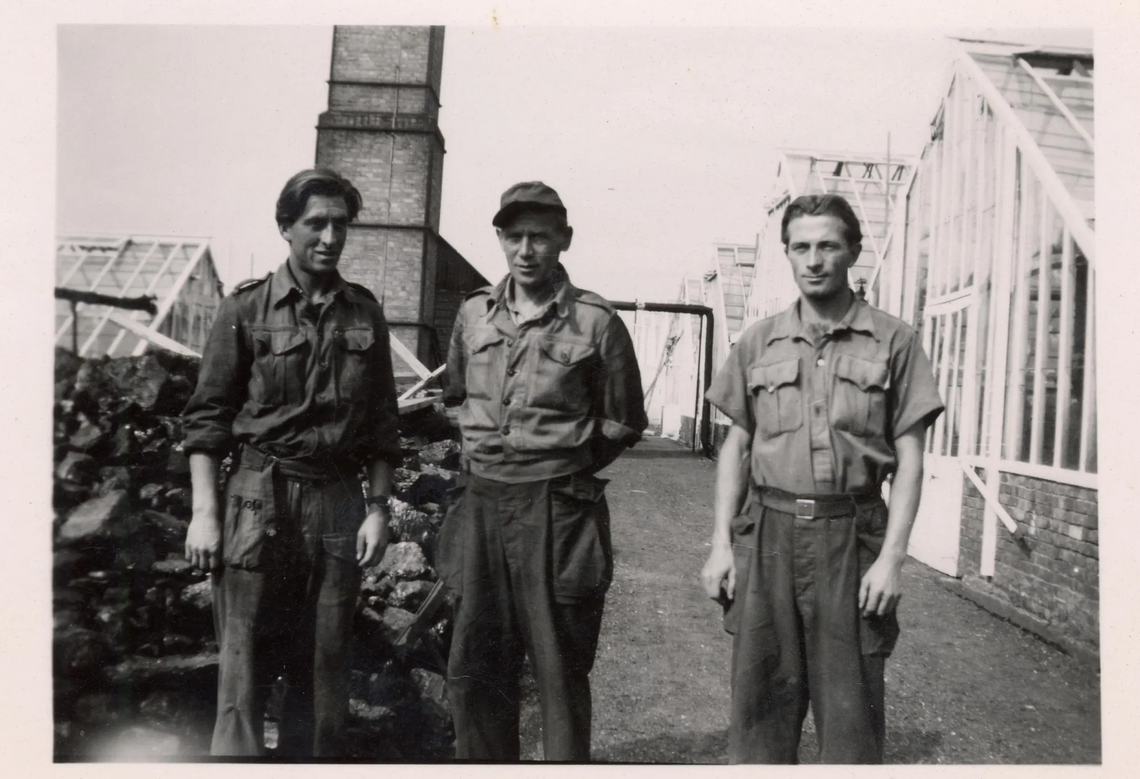
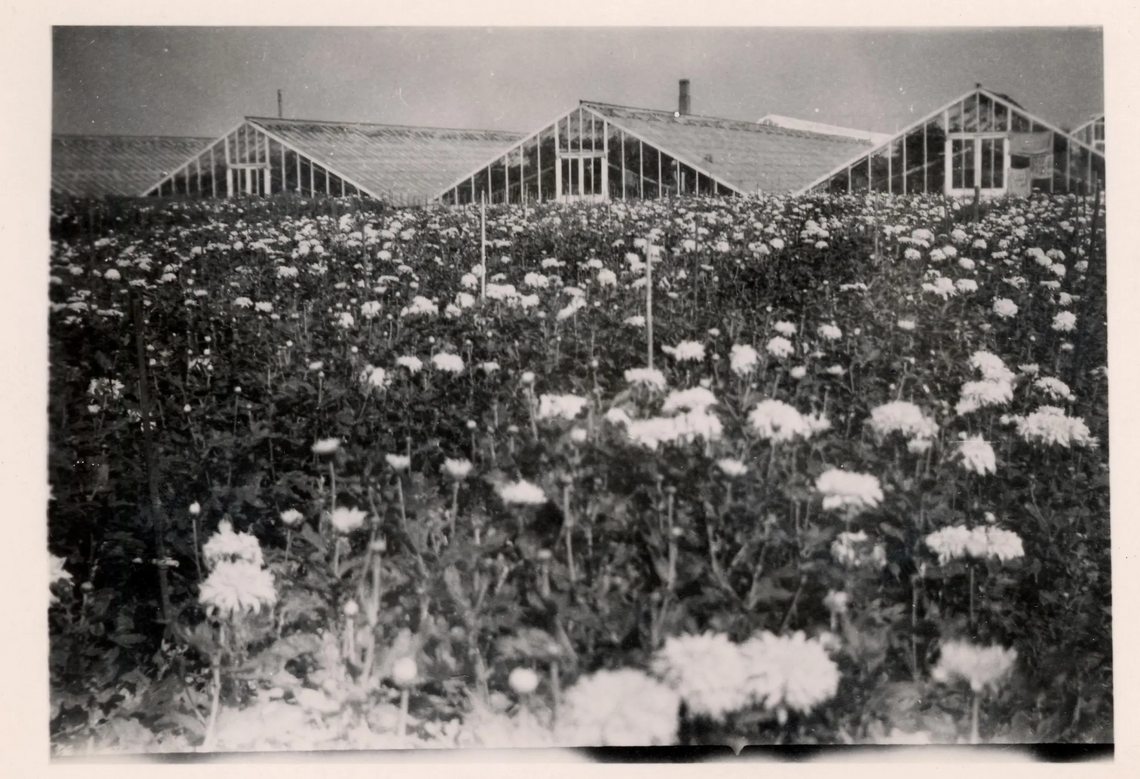
German prisoners of war and the glass houses in 1947
The large glasshouses of its many nurseries allowed growers to produce fruit and vegetables more efficiently. The largely family-run nurseries of Hampton thrived through World War 2 and beyond. The glasshouses in Hampton were counted in their hundreds and provided employment to many of its residents.
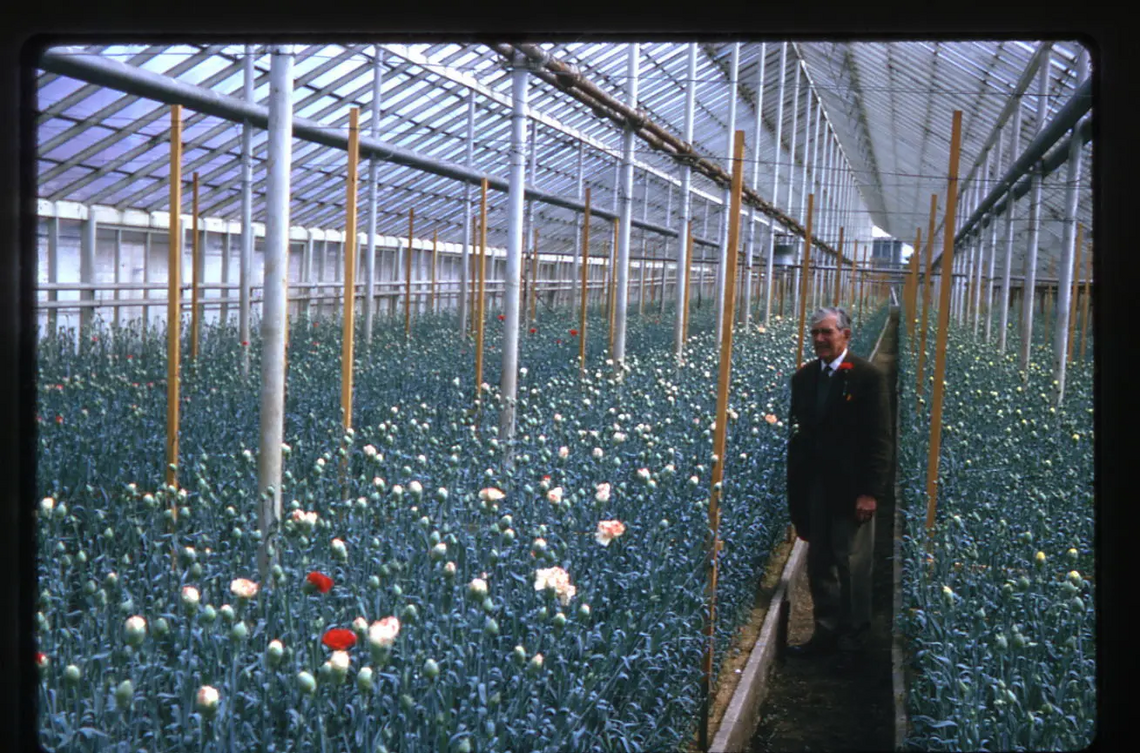
Carnations 1964
The area then saw a decline due to post-war competition and sadly become derelict in the 1960’s.
The 1970’s and 1980’s were a period of radical change in Hampton’s history.
The government announced that 1000 acres of Green Belt could be released for housing, on the grounds that the land had “gone sour”. Plans for housing were put forward, and building started in the late 1970’s creating the housing development of some 2,000 new homes. About one quarter of Hampton was transformed from one of the largest market garden areas in Middlesex into the housing development now known as Nurserylands.
Most of the roads on the estate are named after nurseries, nurserymen and the varieties of fruit and vegetables they grew. For example, the Page family owned Gresham Farm, primarily producing cut flowers – chrysanthemums, carnations and lilies. The Cheesemans were a prominent family in business from the 1920’s.
Infrastructure elements such as telephone boxes, a post office, bus stops, schools, shops – including Sainsburys, a sports centre, a public house and old peoples’ housing were added during the 1980’s.
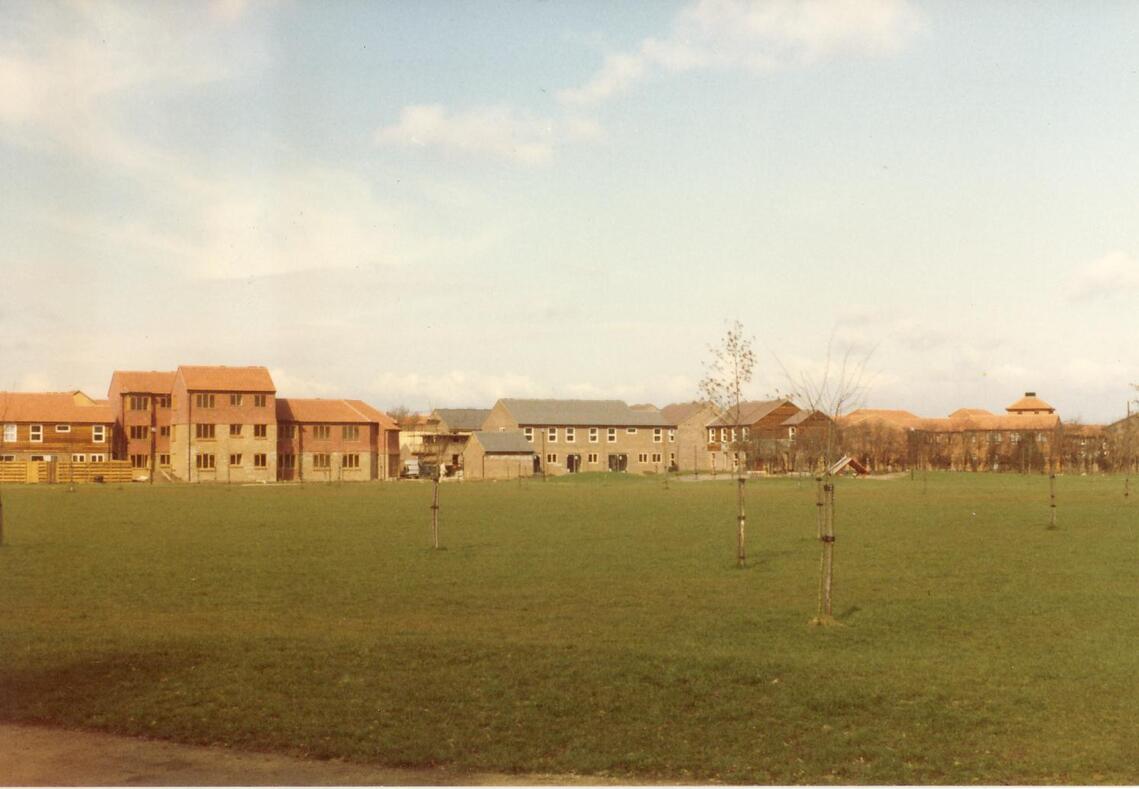
Houses and flats during the building process and planting of new trees on the Green
Residents groups contributed strongly to the decision-making process, proposing the retention of open space and community uses, hence the development of Nursery Green and the White House Community Centre. Nurserylands now has a settled and thriving community.
Nursery Green is maintained by the Parks Department of the London Borough of Richmond upon Thames and the community group Friends of Nursery Green, formed in July 2022, is active in conserving and enhancing the park for the enjoyment of local residents and visitors.
(More photos coming soon, please keep checking back!)