
Instinct Before Understanding
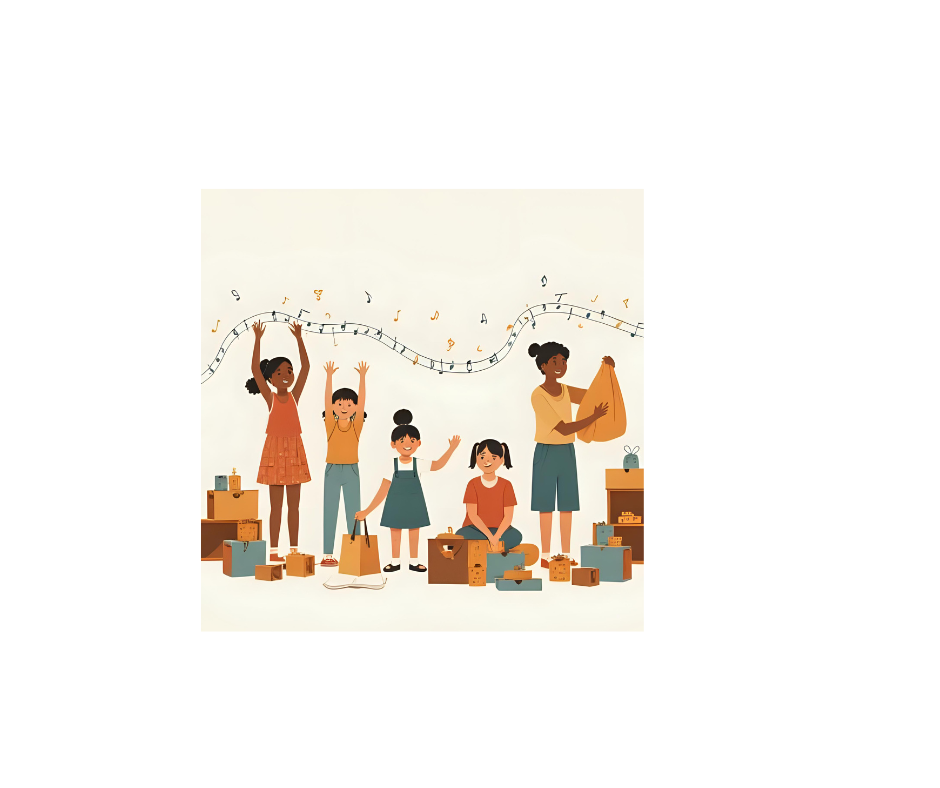
Singing has always been a part of how my son moves through the day. I used little songs to help him transition — from breakfast to brushing his teeth, or from playtime to bedtime. It wasn’t planned or taught; it was instinctive. Now he’s almost 18, and we still help him transition by singing to him. Music remains his way of making sense of change — finding rhythm, reassurance, and connection as he moves from one moment to the next.
Later, I learned that what came naturally to us was actually a well-evidenced communication strategy. Music isn’t just pleasant sound — it’s structure, rhythm, and emotion working together. When everything else feels uncertain, a familiar tune creates predictability and comfort.
Why Musical Cues work
Transitions can be challenging for many children, especially those with learning disabilities, autism, or sensory processing differences. Each change demands new expectations, new environments, and new social rules — that’s a lot of processing.
Music supports transitions because it connects emotion, memory, and movement in a uniquely powerful way.
Predictability: The same melody signals what’s about to happen. This builds trust and reduces anxiety.
Brain processing: Music engages both sides of the brain. Rhythm helps organise thoughts and movement; melody supports memory and language processing.
Regulation: The tempo and tone of music can calm or energise. A gentle song helps slow breathing and heart rate; a lively jingle boosts motivation.
Communication beyond words: For non-speaking individuals, music provides a universal language. It gives a voice to those who may not express verbally.
Memory and sequencing: Pairing songs with actions or routines helps embed sequences (“Wash, wash, wash your hands…”) so transitions become easier to anticipate and recall.
In short: musical cues help people understand, prepare, and participate — not just move from one thing to another.
The “Real World” Myth
A behaviour professional once told me my son should learn to move from one classroom to another without singing, because “that’s what happens in the real world.”
But it made me wonder — whose real world?
It wasn’t the singing that needed to change — it was the understanding. Singing to my son has always been one of the ways we help him manage transitions and feel secure. Music gives him a way to process change and feel connected. Taking that away wouldn’t make him more prepared for life — it would remove one of the few things that truly helps him navigate it calmly and confidently.
The “real world” isn’t one-size-fits-all. It’s made up of diverse ways of being, learning, and connecting. A better approach is to build a world that flexes to fit the person — not the other way around.
Practical Musical Cues
Musical cues don’t need to be complex. They can be short, repetitive, and fun. The key is consistency and connection.
Here are a few ideas you might recognise or adapt:
Hello and Goodbye Songs – Singing Hands have brilliant examples that use Makaton signs and clear repetition, perfect for groups and classrooms.
Tidy-Up Tunes – Short, upbeat jingles that make ending one activity feel natural.
Movement Transitions – Rhythmic clapping or drumming patterns that guide the group from sitting to moving, or from indoors to outdoors.
Calm-Down Music – Soft instrumental sounds or familiar slow songs to help regulate after excitement or sensory overload.
If you’re new to this approach, Singing Hands ( www.singinghands.co.uk ) is a wonderful starting point. Their use of Makaton, music, and movement offers a clear, inclusive model for supporting communication and transitions through song.
Using Makaton with Singing is another great way to support those who enjoy early years songs or benefit from learning through rhythm and repetition. It combines signs, symbols, and music to make communication accessible, memorable, and fun for everyone.
If you’d like to register interest as an individual or enquire about whole setting training, please drop me a line at bc2cic@gmail.com — I’d love to hear from you!
A Better Approach
Every person deserves tools that make the world feel safe, predictable, and joyful.
For some, that tool is music.
When we allow singing, humming, or rhythmic movement to be part of a transition, we’re not “giving in” — we’re giving agency. We’re saying: Your way of coping is valid.
A better approach is one that listens, adapts, and meets people where they are — even if that means singing through the supermarket, humming in the changing rooms, or using a favourite tune to get from one activity to the next. After all, those moments of music aren’t barriers to the real world — they’re bridges into it.