Active Learning with Makaton: Use It or Lose It
When people say “if you don’t use it, you lose it,” they’re absolutely right — especially when it comes to Makaton. Learning signs and symbols isn’t about memorising a list; it’s about weaving them into your everyday communication. That’s where active learning makes all the difference.
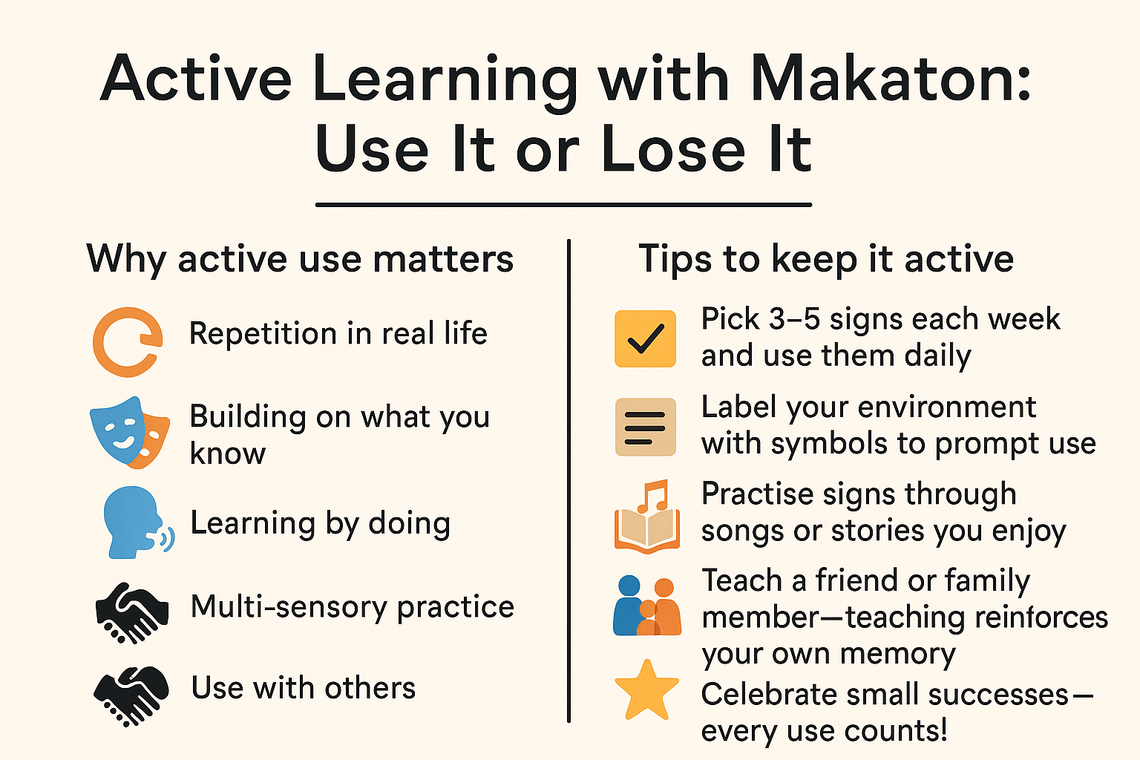
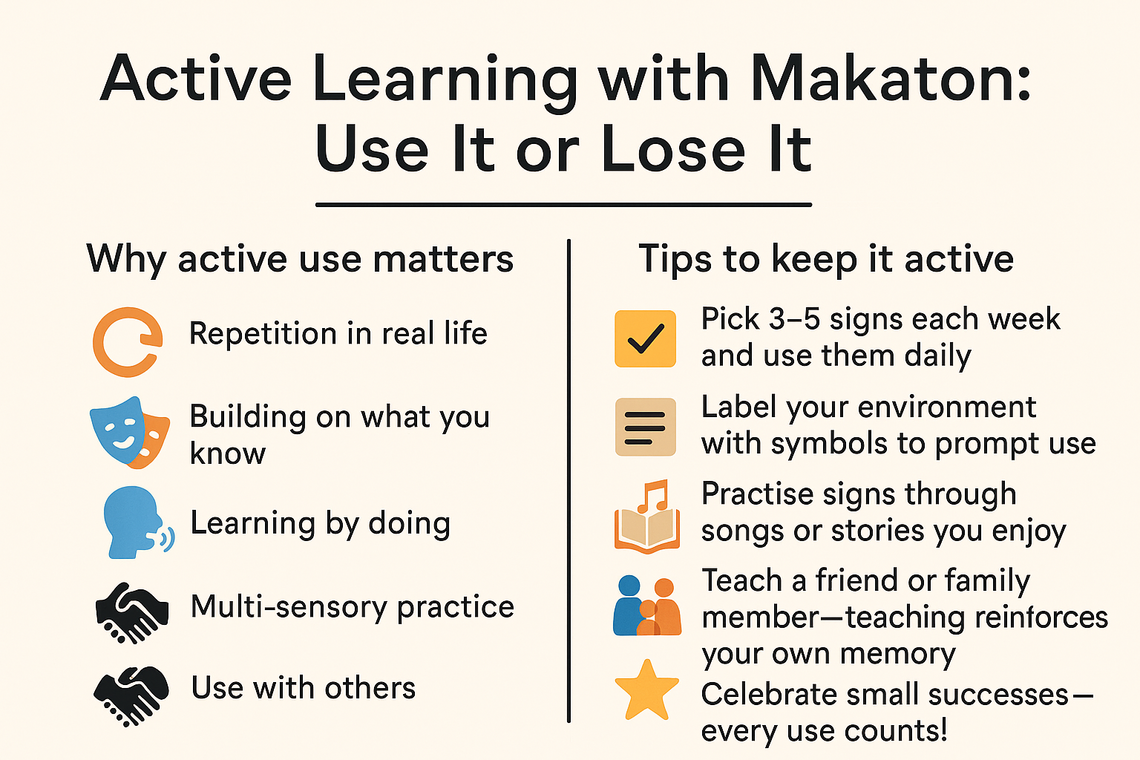
Why active use matters
Makaton really comes alive when it’s used in real life. Here’s why practising actively helps signs stick:
Repetition in real life – the more often you use a sign, the stronger the memory link becomes.
Building on what you know – start with familiar words, then add new signs that connect to them.
Learning by doing – role-play, songs, stories, and games make practice fun and memorable.
Multi-sensory practice – saying the word, making the sign, and showing the symbol together engages more of the brain.
Use with others – communication grows when signs are part of everyday conversations.
Tips to keep it active
If you want Makaton to become a natural part of your communication, little and often works best. Here are some simple ideas:
-
Pick 3–5 signs each week and use them daily.
-
Label your environment with symbols as prompts.
-
Practise through songs or favourite stories.
-
Demonstrate signs with family, friends, or support staff so you can practise together.
-
Celebrate small successes — every use counts!
Final thought
Active learning isn’t about getting it perfect — it’s about keeping it alive. Each time you use a sign or a symbol, you’re strengthening your memory, building confidence, and opening up more ways to connect with others.
So don’t worry about doing everything at once. Start small, keep it playful, and remember: use it, don’t lose it.
Nic Pike