
When George Stephenson arrived at Killingworth Colliery in 1804, he was a young enginewright responsible for maintaining the colliery's winding engines and machinery. Over the following years he developed a reputation as a skilled and practical engineer, solving problems and improving equipment across the colliery. Living at Dial Cottage on Great Lime Road and working on the extensive Killingworth Waggonway network, Stephenson found the opportunity to experiment with new ideas that would eventually earn him recognition as the "Father of Railways".
By the early 1810s, engineers across Northumberland were experimenting with steam-powered locomotives for use on colliery waggonways. Stephenson followed these developments closely and drew on both their ideas and his own experience at Killingworth when designing a locomotive of his own.
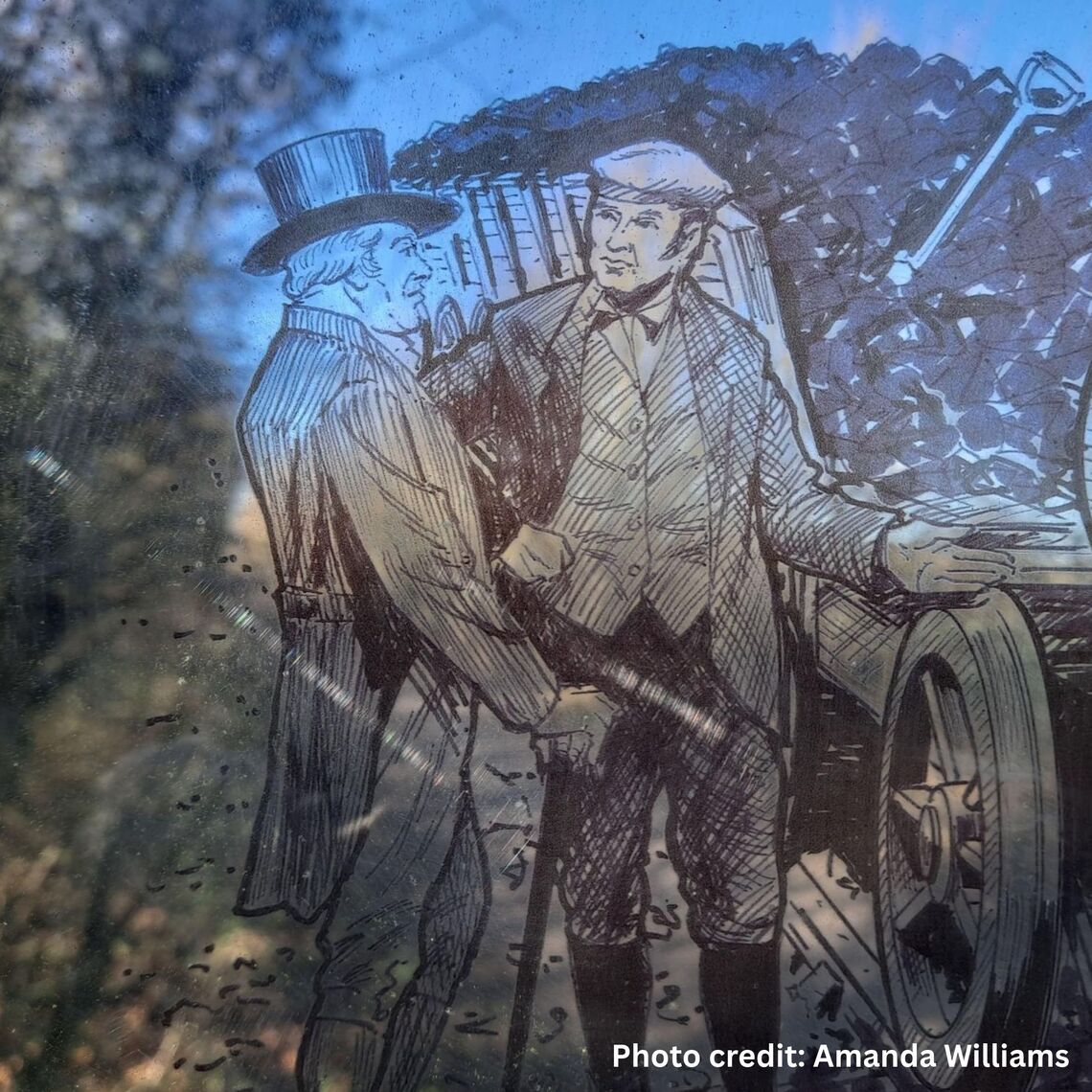
This photo, taken from Blucher Interpretation Panel on the Killingworth Waggonway at Rising Sun Country Park, shows George Stephenson talking to Edward Pease, a Quaker businessman, who played an important role in the development of modern railways
On 25 July 1814, Stephenson tested his first locomotive, Blücher, on the Killingworth Waggonway. Built for Lord Ravensworth of Killingworth Colliery, the engine took ten months to construct in workshops behind Dial Cottage, with every component made by hand. During its trials, Blücher hauled eight waggons carrying around 30 tons of coal at a speed of four miles per hour. Stephenson continued to improve the design and its performance, and Blücher became the first steam locomotive capable of reliably hauling heavy loads in everyday use.
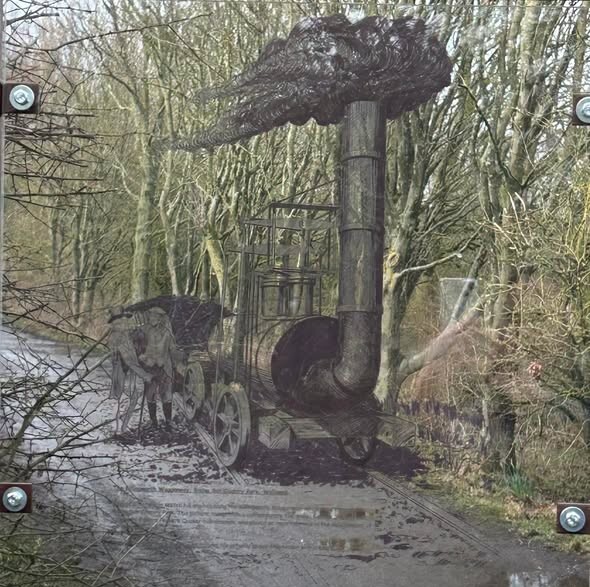
Fifteen years later, the Killingworth Waggonway was again associated with a major milestone in railway history. On 5 September 1829, Rocket, designed by George Stephenson and built by his son Robert, was successfully tested on a stretch of the waggonway near Dial Cottage before travelling to Liverpool for the Rainhill Trials.
Held between 6 and 14 October 1829, the Rainhill Trials were organised to determine the most effective form of transport for the Liverpool and Manchester Railway. Although ten locomotives were entered, only five competed, and Rocket was the only engine to successfully complete all the required tests. Its victory demonstrated that steam locomotives were the future of railway transport and established design principles that would influence locomotive design for generations.
From Blücher in 1814 to Rocket in 1829, the Killingworth Waggonway played a pivotal role in the development of the railway. The innovations tested here helped transform transport across Britain and, ultimately, around the world. Part of the Killingworth Waggonway survives within what is now Rising Sun Country Park, providing a tangible reminder of this important chapter in railway history.