‘The Delhi Rd Kitchen’ Cookbook Story
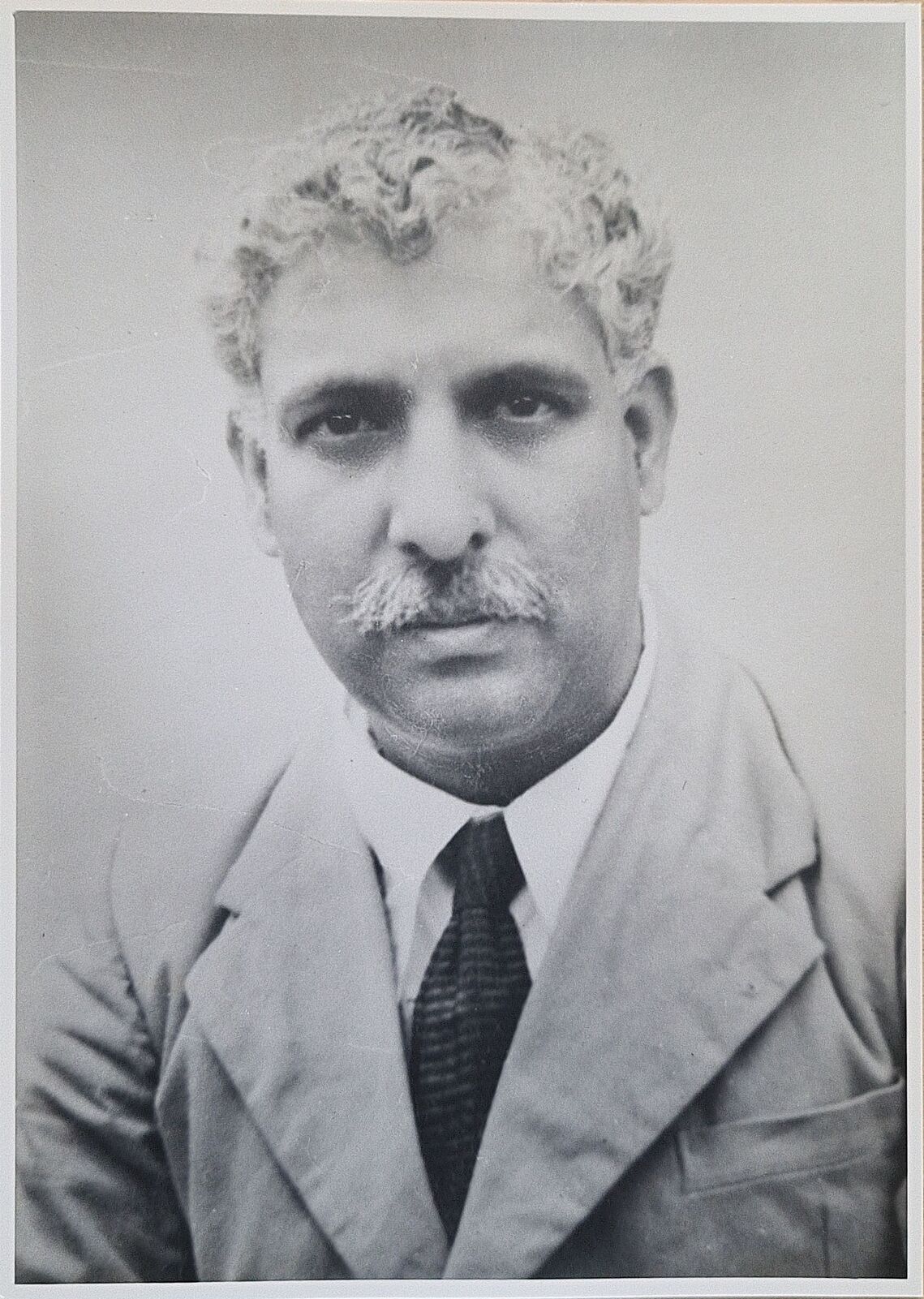
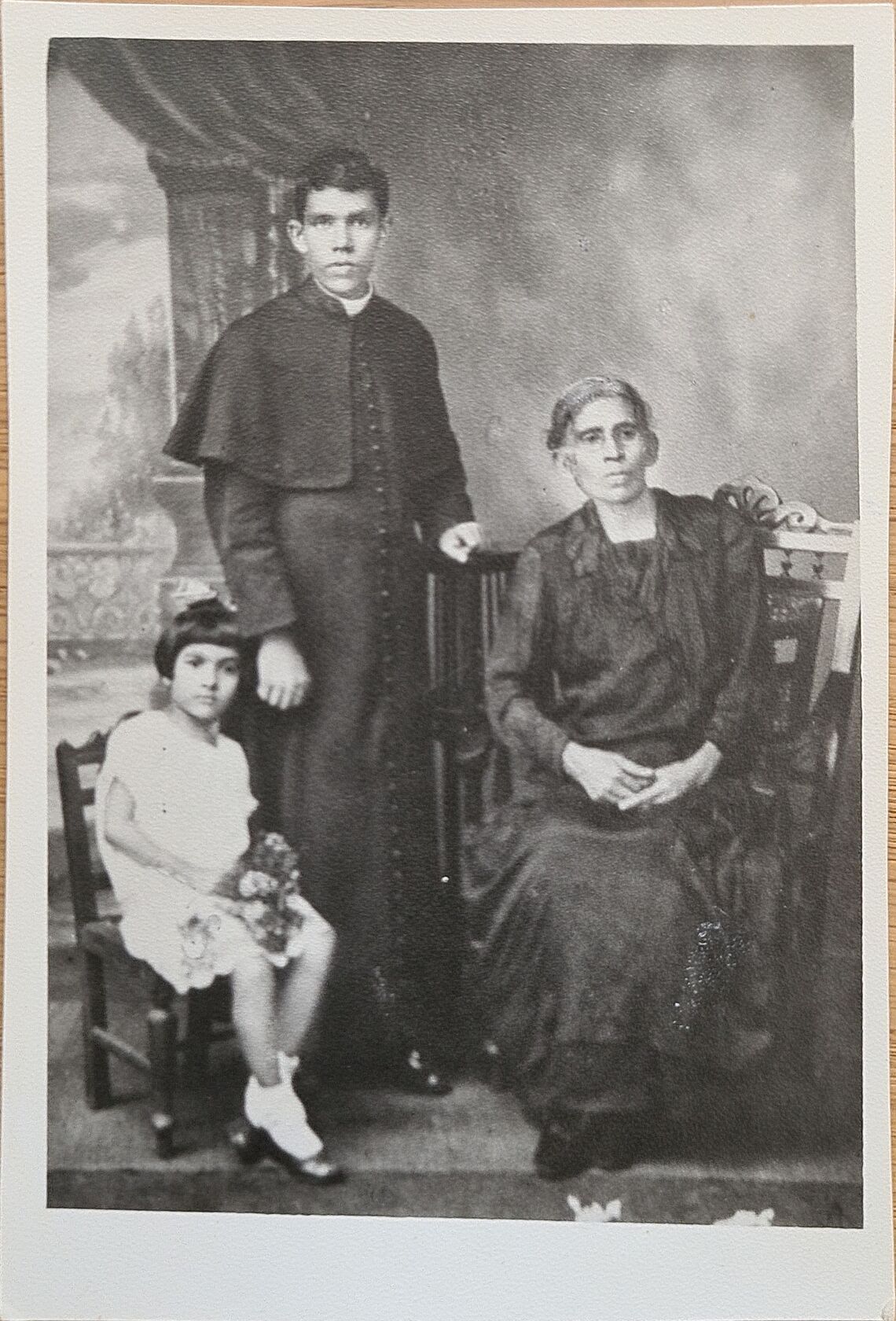
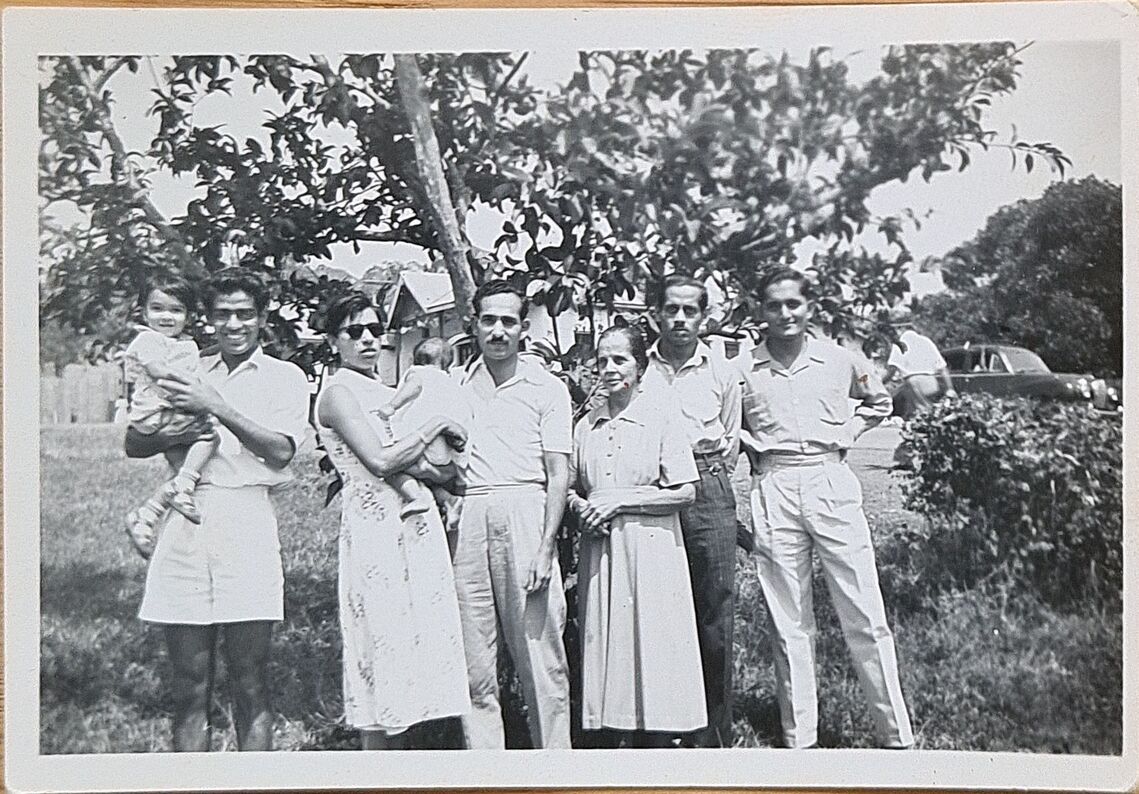
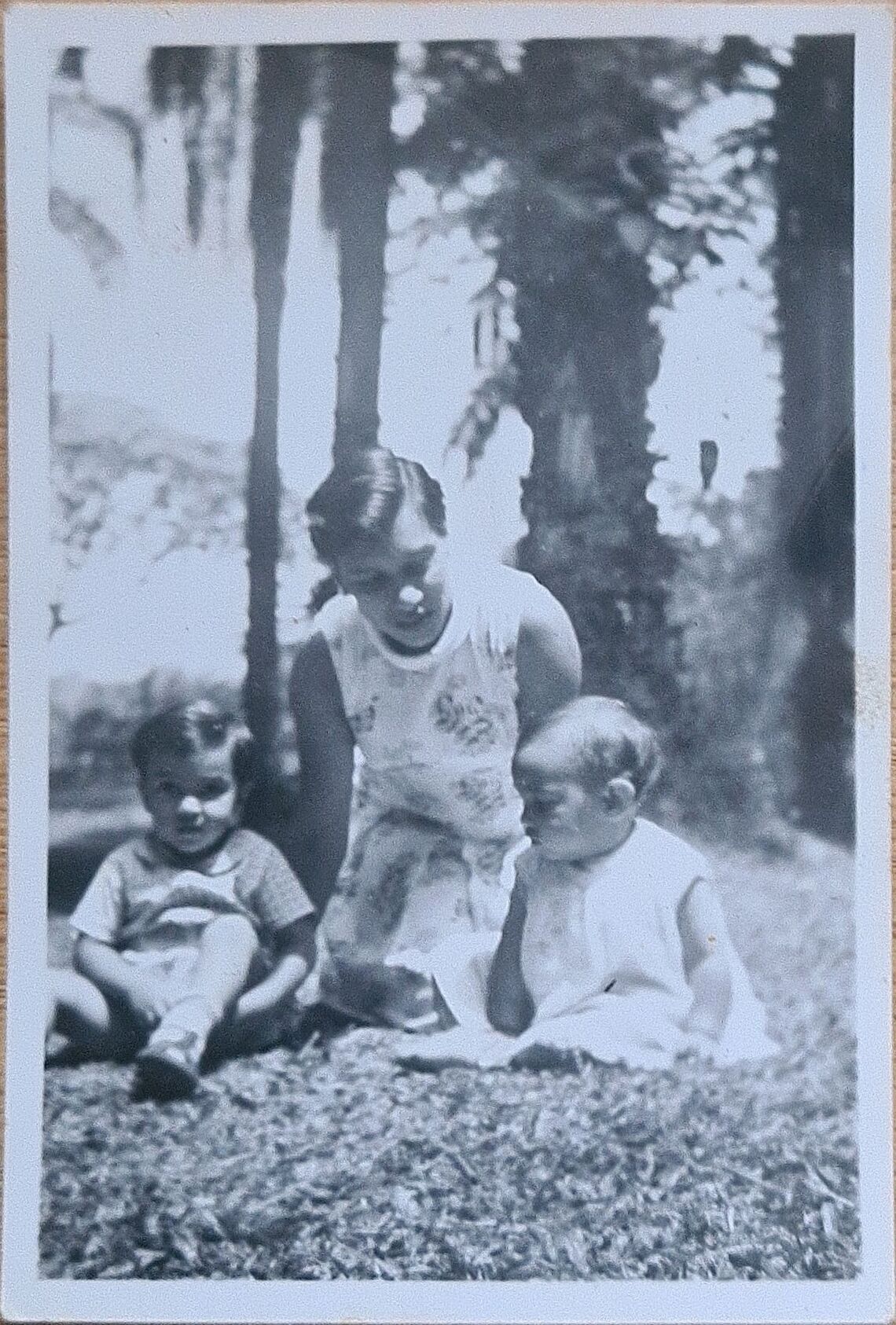
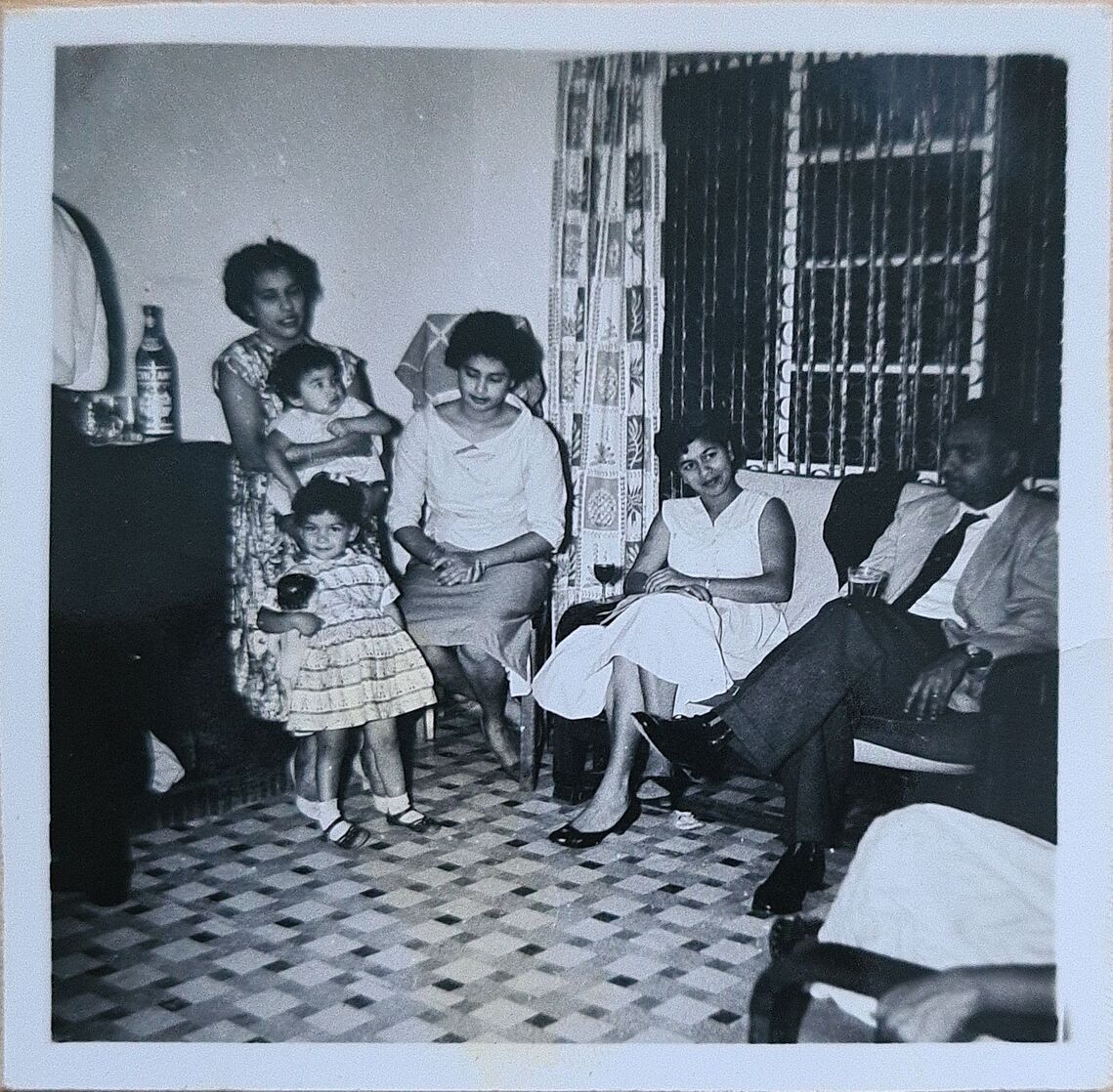
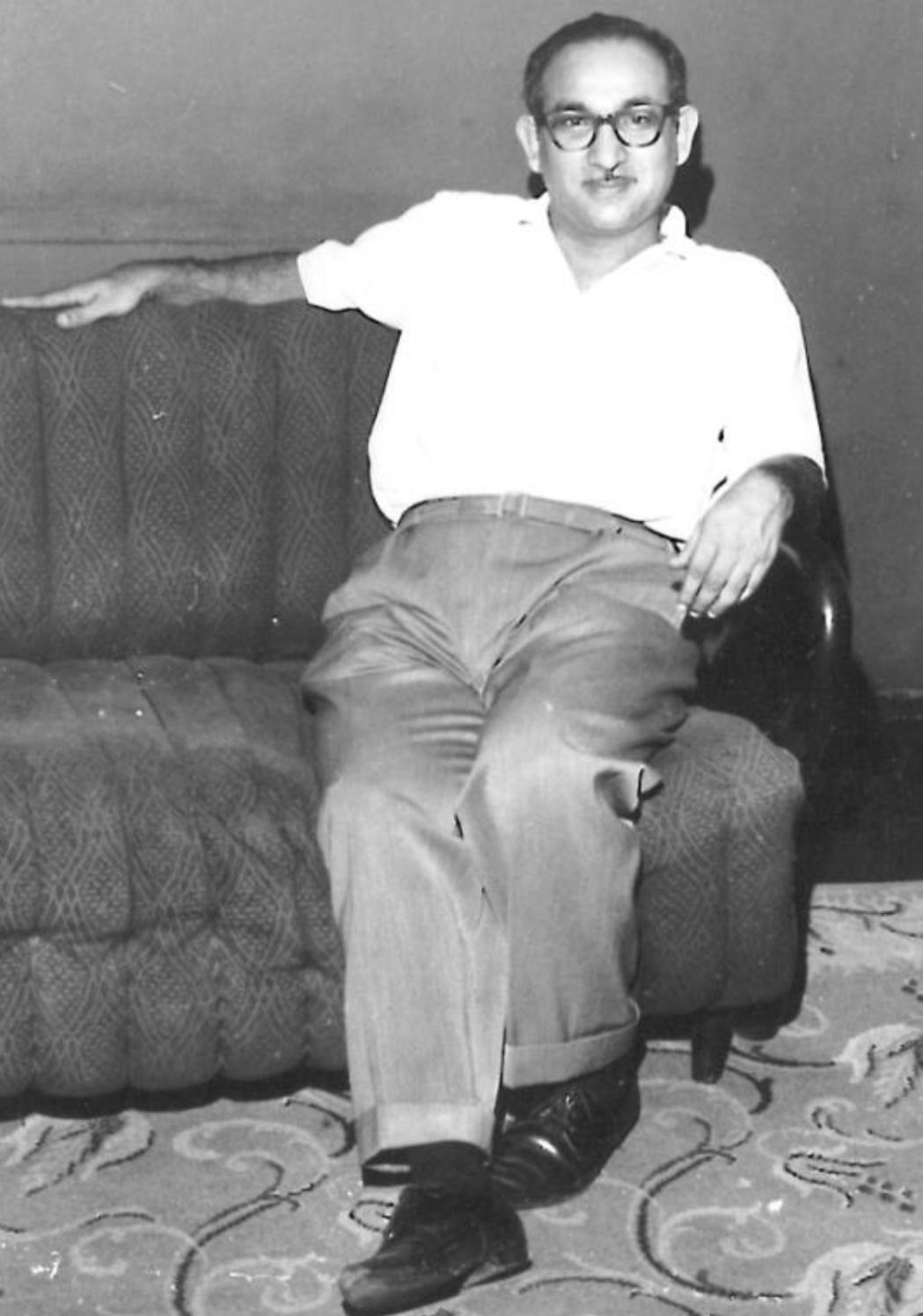
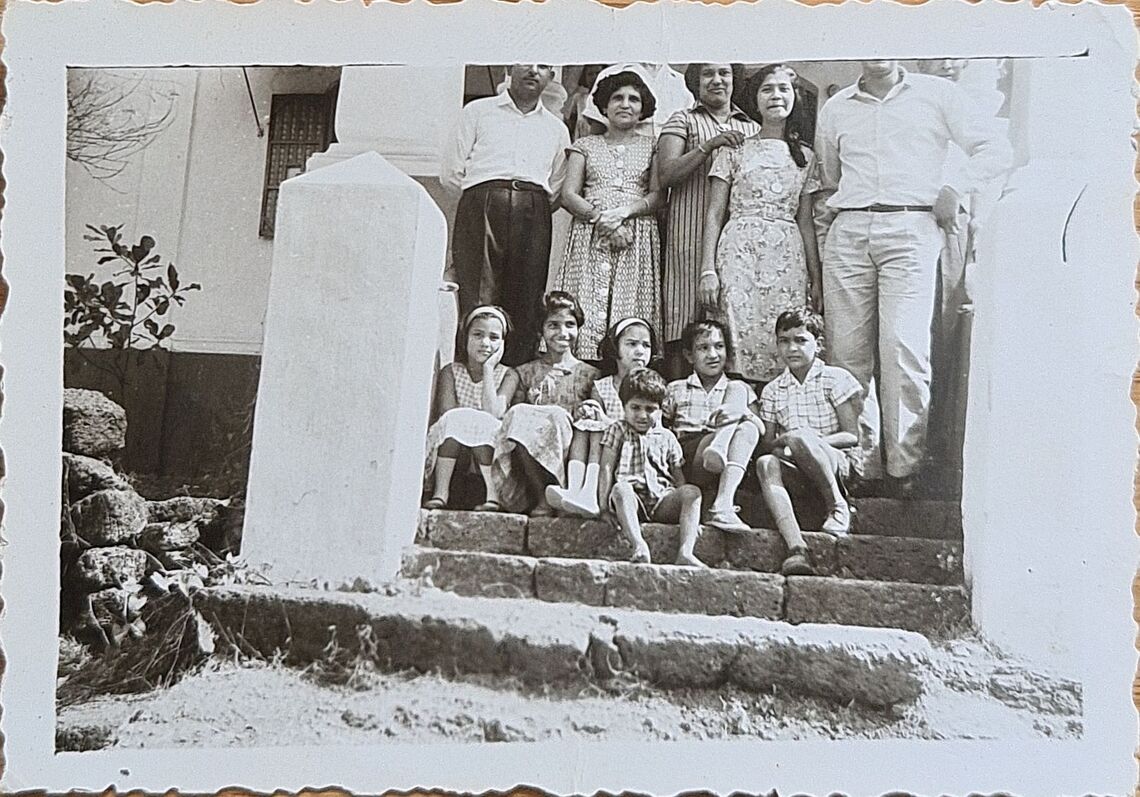
Welcome to a heartfelt tribute to our parents and grandparents, Grace (nee Lobo/Da Cruz). from Aldona, and Narciso (Pinto/Lima) from Uccasaim, Goa. Born in Kenya and Uganda in the mid-1920s, they studied and worked in Bombay before returning to Africa in the early 1950s to marry and raise a family. By the late-1960s, they settled on London's Delhi Road. Bound together by a shared love of Goan cooking, this collection celebrates their memorable Sunday night dinners - capturing the wonderful food, love and laughter that filled our childhood home.
The Archives
The ‘Delhi Rd Kitchen’ Cookbook is a compilation of family recipes written in letters, exercise books, scraps of paper and the backs of envelopes. There are also some of our grandmother’s recipes, originally written in Portuguese and translated by our dad, who yearned to replicate the delicious memories of his childhood food ‘just like Mama made’!
It has taken a long time to plan and write, and is for everyone who sat around the table at Delhi Rd, wine glass in hand, enjoying the food and raucous conversation on a Sunday evening. But most of all, it’s dedicated to our loving parents, Grace and Narciso, who taught us how to appreciate good Goan food, cooked with love and patience.
Memories of the Kitchen Table
My earliest memory of our Dad’s cooking was in Dar es Salaam, East Africa, where we lived from 1960 - 1967.
Our African cook Kondo, who by now was an expert in Goan food, cooked 6 days a week. On a Sunday it was his day off, so our Mum and Dad would cook instead and try out one of their favourite Goan or Western dishes.
Dad’s ‘famous’ dish was spicy sausage pasta - little chipolatas cooked in a tomato and recheado masala sauce, mixed with spaghetti and lots of cheese. Mum’s favourite recipe was another pasta dish, Doris’ American casserole. Dad loved to experiment with food and replicate dishes that he had eaten at restaurants or parties.
An Expat food festival took place every year in Dar, and showcased food from all over the world. It included Chinese, Indian, Greek, Italian, Polish and English cuisines, to name a few.
The entry ticket entitled you not only to sample the dishes but also to have a copy of the recipes, which we still have today. I’ve included some of the recipes in this recipe book, which Dad adapted to become his ‘own’.
In the mid 60’s, when we moved to the UK as new immigrants, Kondo the cook and our Dad were left behind in Africa.
Our Mum struggled to work, shop, cook and feed four constantly hungry children. It was a steep learning curve, but when Dad eventually joined her in late 1968 both of them were working and Mum was often ill, so they decided to share the cooking.
Dad would cook five days’ worth of meat dishes at the weekend and store them in the chest freezer. Mum’s job was to cook the accompanying vegetable dishes and rice, chips or mashed potatoes when she came home from work.
The weekend was when they had the time to experiment with Goan recipes, with rice, prawn curries and fish often on the menu.
This cooking ritual carried on until our Mum’s untimely death in 1992, long after their children had left Delhi Rd to have families of their own and just the two of them were left at home.
Keeping Grace's Memory Alive
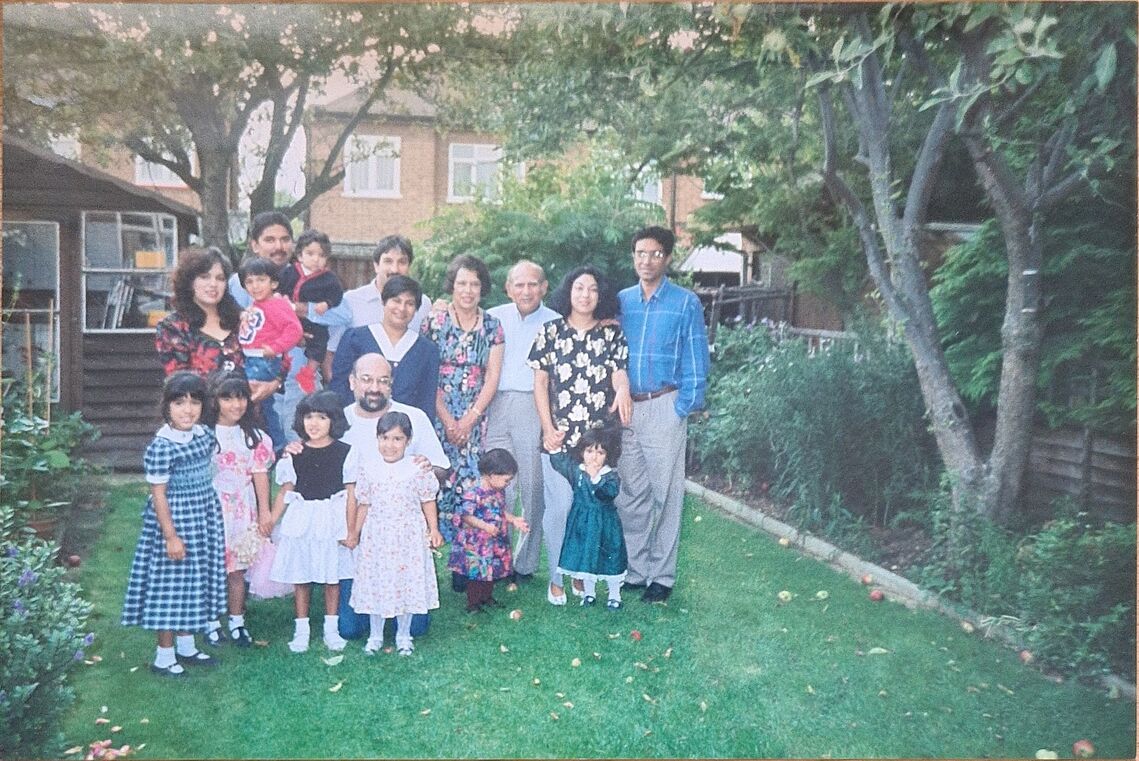
After Nannie passed away at 67, Grandad faced a sad reality: their eight grandchildren—all under five, with another on the way—might lose their precious memories of Grace.
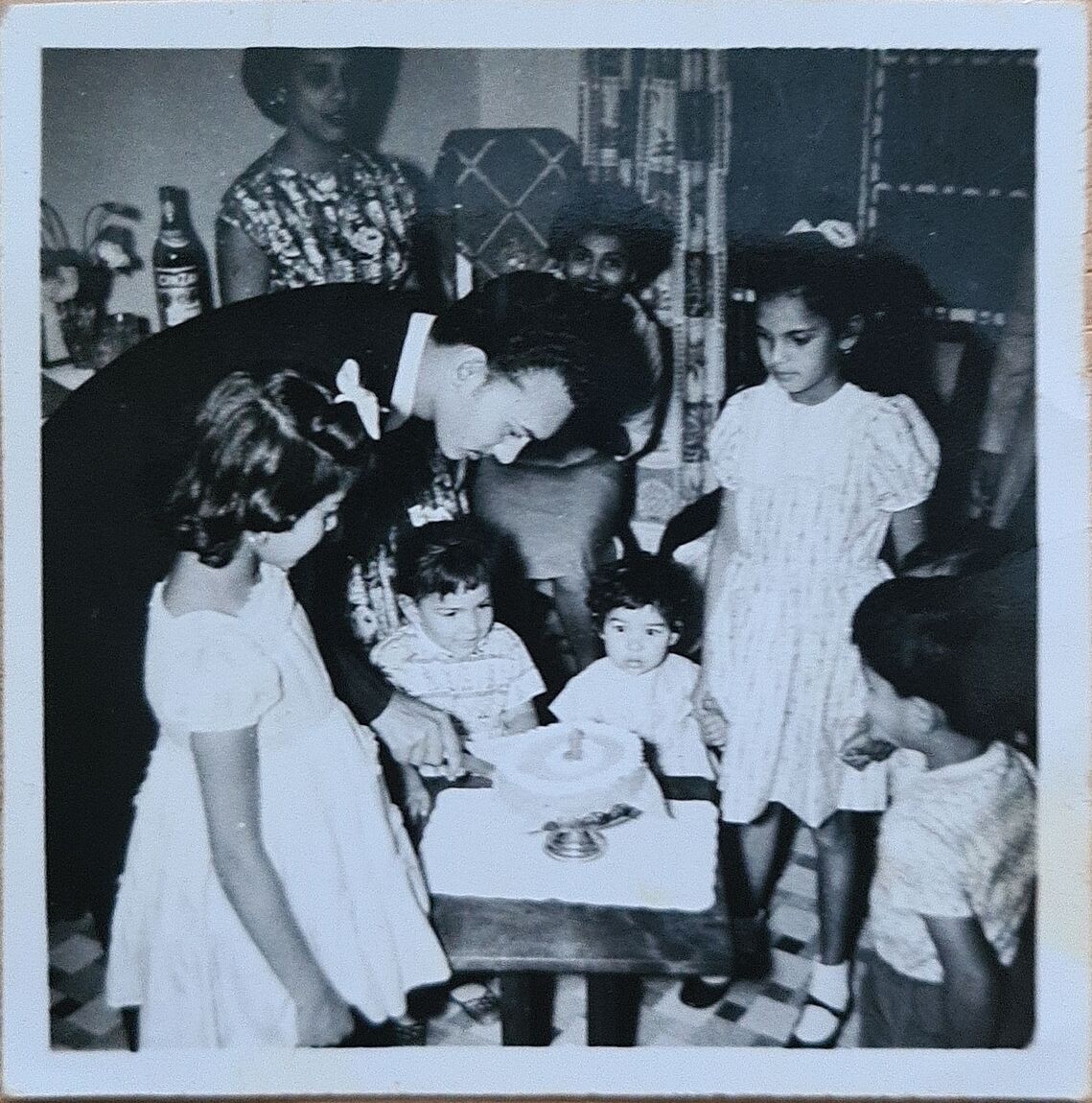
His answer was to have an annual Memorial Mass and party for her every year on November 15th, Nannie’s birthday.
What started as a simple remembrance blossomed into a lively celebration of family and Goan hospitality. After Mass, Delhi Road would come alive as friends and family gathered to remember Nannie.
The afternoon would unfold in typical Goan style—beginning with plates of Goan snacks: crispy beef patties fresh from the oven, golden fish croquettes, delicate, fragrant chutney sandwiches, lacy forminhas, and the newcomer to the snack plate, samosas.
The main meal would then follow, including the now ‘famous’’ Portuguese Fish Dish, pulao rice, fruity East Indian chicken curry, and the ‘legendary’ Xacuti. The traditional Goan roast would take pride of place, while a rainbow of desserts—lovingly prepared by friends and family—would crown the feast.
Christmas & The Goan Tradition of Kuswar
Christmas was also a lavish celebration in any Goan family and when Nannie was alive, the ritual of making and distributing Goan Sweets, or ‘Kuswar’, was shared between them.
When she passed away, our dad still wanted his grandchildren to remember this much-loved Goan tradition and so he took it upon himself to make the ‘Kuswar’.
Come December, Delhi Rd kitchen would be filled with bags of flour, mounds of sugar, grated coconut and fine semolina. Dad would diligently craft each sweet; delicate Neureos filled with coconut, deftly curled Kulkuls, golden angel wings dusted with sugar, home-made toffee that melted in your mouth, and diamond shaped gram Doce.
The treasures were carefully stored in large empty tubs of ghee and the task of distributing the sweet parcels among Chris, Lilian, and our circle of friends fell to Lorraine.
A Lasting Legacy
Dad’s greatest passion was always cooking, and most Sundays he would cook something special, trying out new dishes from his numerous cookbooks, or cooking up one of his grandchildren’s favourites like Army Dish.
He would then call around to his children, grandchildren and close friends waxing lyrical on what was on the menu that night and asking who was coming to dinner.
Of course, there were never any shortages on uptake and these lively dinners are fondly engraved in his grandchildren’s memories.
Our final memory of Dad’s food was ‘The Roast’ which he had lovingly prepared and put in the freezer for Easter when all the family were to come together. He was excited, anticipating seeing all his children and grandchildren and planning what else he would cook for the meal, even though he was ill and could barely make it out of bed.
The following weekend, Dad was gone and the family gathered together for the final ‘Roast dinner’. Toasting our parents in the garden, in the warm May sunshine, we nostalgically remembered all the love and food we shared together over the years in our Delhi Rd Kitchen.
Grace & Narciso - A Goan Diaspora Story
East African Beginnings (1920s–1967)
Grace was born in Nyeri in the Central Highlands of Kenya, and Narciso in Fort Portal, Uganda, in the mid-1920s. As small children, both were sent back to India for their studies - Grace to stay with a strict, formidable aunt in Aldona, and Narciso to St. Paul’s boarding school in Belgaum. Those were difficult years for them both, especially for Narciso, who had been homeschooled and spoke only Portuguese.
As the late-1930s approached, an increasingly volatile political climate across Africa forced both families to make difficult choices. Grace's mother, Cecilia, gathered her younger children and moved to Mahim in Bombay. Meanwhile, Narciso's mother, Sofia - then expecting her fifth child - returned home to Goa. Their husbands, Pedro (Peter) and Joaquim, who had originally arrived in Africa for work in 1914, remained behind.
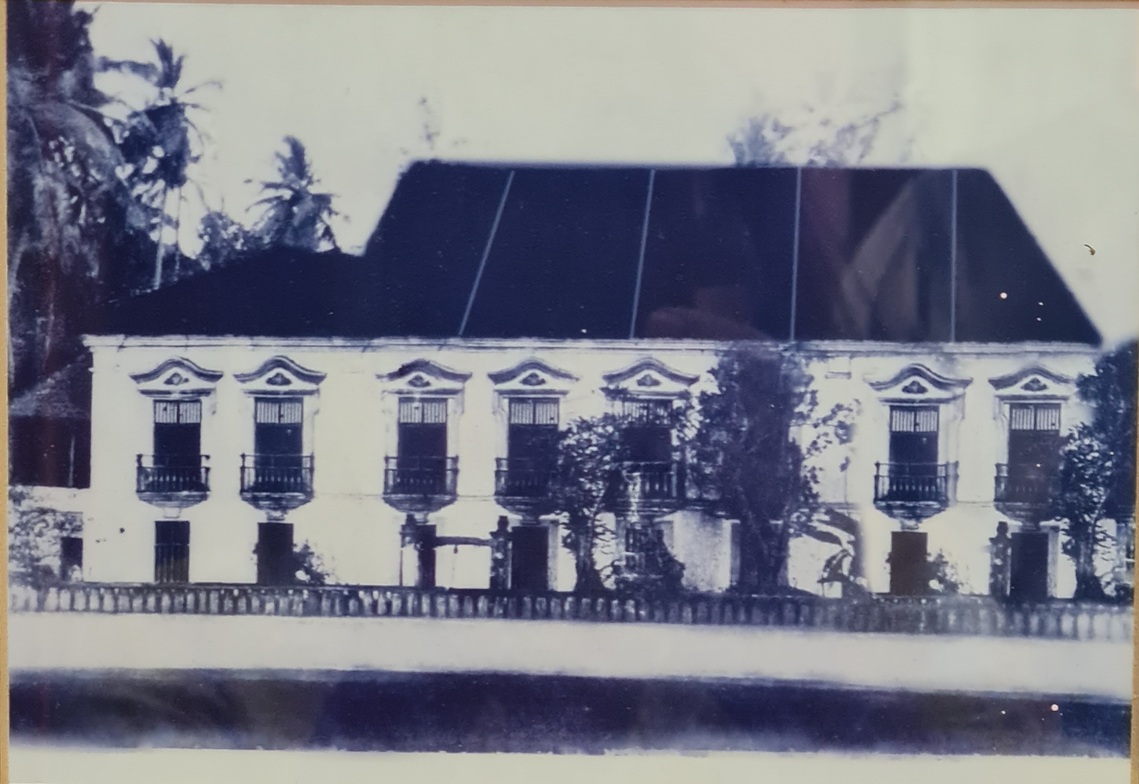
As the 1940s brought the war years, Narciso continued to board in Belgaum, spending his holidays happily with his cousins at the Pinto ancestral home in Candolim. He was completely unaware that his mother, Sofia, was facing severe financial hardship back in Goa. Money transfers from East Africa had abruptly stopped, leaving her struggling to buy food and basic necessities for her children. Determined to keep her family together, Sofia moved to Belgaum to be closer to her older sons Francis and Narciso who were at St. Paul's, and open a boarding house for young men. Meanwhile, her sister Rosa, whose husband was also stranded in Africa, opened a companion boarding house for girls. Those were incredibly difficult years for the family, and Narciso, just thirteen years old at the time, would later recall waking up early every morning to help his mother make chapatis for the boarders before rushing off to school.
New Horizons in Bombay and Uganda
After finishing his studies at St. Paul’s, Narciso moved to the teeming city of Bombay to complete his Registered Accountancy exams. Life there was modest and frugal, with money often running thin by the end of the month. Yet Narciso found joy in simple pleasures, joining friends at local Irani cafés to scrape together enough for plates of spicy fruit salad and crispy bhajias. Meanwhile, Grace was carving out her own path in the city, earning a Secondary Teacher's Certificate and teaching at St Sebastian Goan High School in Girgaon.
All the while, Narciso kept his eyes set on East Africa, where his father had worked in Uganda. Landing a post across the Indian Ocean was fiercely competitive, but fate intervened on an ordinary bus ride. A chance encounter with a family friend alerted him that Burmah-Shell was running a massive recruitment drive, with entrance examinations scheduled for the very next day. To his delight, Narciso was offered a position with Burmah-Shell in Jinja, Uganda, and set sail in August 1950.
By 1952, Narciso took up an accounting post with Buchanan’s Budongo Sawmills Ltd. Operating deep within the Budongo Central Forest Reserve near Masindi in western Uganda. Budongo Sawmills was the country’s largest commercial timber producer and the single largest employer in the Masindi District. It maintained a workforce of roughly 1,000 African labourers alongside a specialized team of European executives and Asian/Goan administrators. It was to this remote forest management compound that Narciso would soon welcome his bride.
The Budongo Forest Compound
In 1953, Grace left Bombay accompanied by her 19-year-old brother, Francis (Fanchu), embarking on an epic journey across the Indian Ocean to marry. They boarded a steamship across the Arabian Sea to Mombasa, then took the railway inland to Nairobi. There, Fanchu departed for his own job, leaving Grace to travel the final leg to Kampala alone. Narciso met her in Kampala on May 22, 1953. A few weeks later, on June 13, 1953, they were married in the Catholic Church in Masindi—a striking cathedral built a decade earlier by exiled Polish refugees using hand-carved local Budongo mahogany. They were surrounded by the small, tight-knit Goan community of the sawmill compound, who all came together to cook up a simple feast for the wedding reception.
After the wedding, Grace moved straight into the family compound, where life was shared intimately among just six households. Those were deeply happy times, and she spoke fondly of the lifelong friends she made there for decades to come. The wooden houses were raised high on stilts, crowned with inverted metal caps to prevent white ants from devouring the timber and to keep crawling columns of biting safari ants at bay. Large, wraparound verandas lined with fine wire mesh allowed families to gather in the evenings, protected from mosquitoes while catching any breeze moving through the canopy.
Grace quickly adjusted to the rhythms of forest life. In the evenings, some of the families gathered on the verandas to share drinks, listen to the radio, and play card games to the distant beating of ngoma drums. Around them, the forest came alive with night sounds—the hum of cicadas, heavy tropical downpours beating against tin roofs, and the distant calls of black-and-white colobus monkeys and wild chimpanzees nesting in the trees.
Kampala and Dar es Salaam
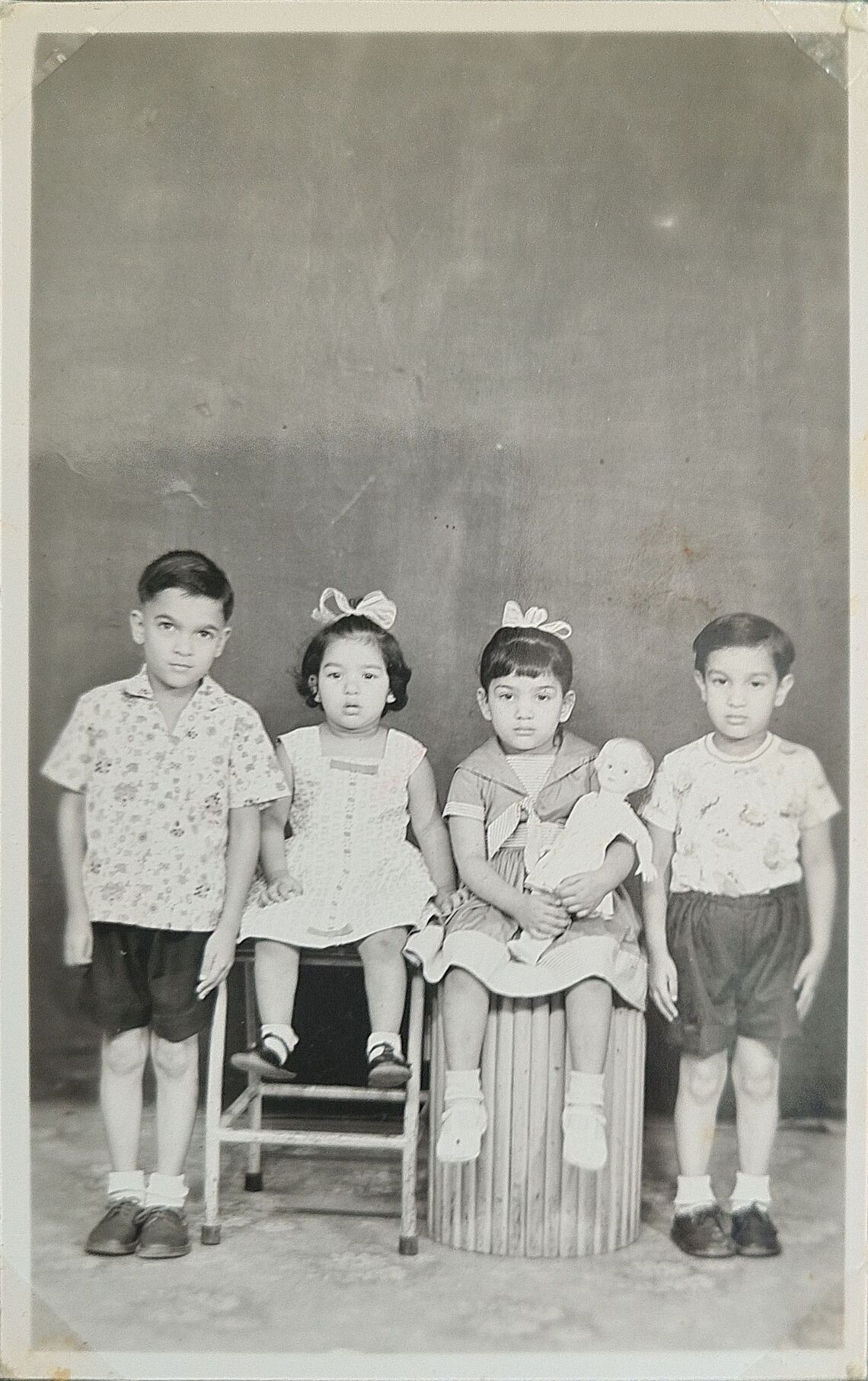
On April 4, 1954, Narciso and Grace welcomed their eldest son, Claude, and soon moved from the isolated forest compound to Kampala. Their household grew in rapid succession with the births of Christopher in October 1955, Lorraine in May 1957, and Lilian in May 1958. In Kampala, Narciso joined Lombard Banking, while Grace took up a teaching post at the prestigious Aga Khan Secondary School, later moving to the Norman Godinho School on Buganda Road.
However, the humid climate proved difficult for Grace, who suffered frequently from bronchitis. Seeking relief for her health, Narciso moved the family across the border in 1960 to the breezy coastal city of Dar es Salaam in Tanganyika. Narciso initially continued his work with Lombard Bank before accepting an accountancy role with Tanganyika Millers Ltd., the country’s primary agricultural milling company. Meanwhile, Grace joined the teaching staff at St. Joseph’s Convent School, run by Swiss nuns.
When Tanganyika gained independence on December 9, 1961, a massive wave of European corporate leaders resigned and returned to Europe. This left major commercial institutions facing an unprecedented management vacuum, and in 1964 Narciso was offered the position of Chief Accountant of Tanganyka Millers.
In February 1967, President Julius Nyerere issued the Arusha Declaration. Under the new policy, private milling firms—including Tanganyika Millers—were nationalised and consolidated into the state-owned National Milling Corporation. Seeing the economic landscape shift, Narciso and Grace decided it was time to relocate their family to the United Kingdom, as they both held British passports.
The Final Chapter in East Africa and Settling in London
In June 1967, Grace set off first, flying from Dar es Salaam to London to pave the way for the family. Upon landing in the cool climate of post-war London, she stayed with close friends from the Budongo compound days, Emma and Camilo D’Souza in Stamford Hill while searching for a home, eventually renting a flat in Wood Green. Although her teaching credentials from Bombay were not recognized in the UK, Grace adapted quickly, securing a job as an administrator for a furniture company on White Hart Lane in Tottenham, later joining Thorn EMI in Enfield where, she worked until retirement.
In September 1967, Narciso flew to London, bringing their four children to reunite with Grace. With the family safely settled in Wood Green, Narciso returned alone to Dar es Salaam to complete a two-year contract. He oversaw the handover of Tanganyika Millers into the state-run National Milling Corporation, spending over a year managing operations in Tanzania while living thousands of miles away from his wife and children.
By the beginning of 1969, overcome with deep homesickness, Narciso broke his contract and flew to London to join Grace and the children permanently, bringing to a close an extraordinary nineteen-year East African journey.
Upon arriving in London, Narciso initially found it difficult to secure an accountancy position, frequently encountering the frustrating hurdle of being told he was overqualified. He soon landed a role as an accountant at a family firm of solicitors on Green Lanes in Palmers Green. Then, in 1971, he joined Colombotti Alkin & Partners, a prominent law firm located on Park Lane. Although the partners eventually moved on to separate practices, Narciso remained as the personal accountant for Carlo Colombotti and his various businesses until two years before his death in 2014.