
Outing to Greys Court and Stonor Park
Friday 18 July 2025
09:00 to 19:30
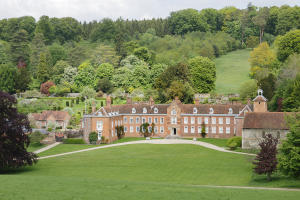
On 18th July members from Chelmsford National Trust visited Greys Court Tudor country house in the rolling hills of the Chilterns. The influential de Grey family settled on this site around 1347. Most of the medieval fortifications are now in ruins but the modest Tudor house which was built in the courtyard is still very much intact. Other buildings from earlier eras include the Great Tower from the 14th C and a rare Tudor donkey wheel in use until the early 20th C.
Evelyn Fleming lived in Greys Court briefly from 1934 to 1937. Evelyn was the mother of Ian Fleming, the author of the James Bond books and her other son was Peter Fleming the famous travel writer and adventurer.
In 1937 Sir Felix and Lady Elizabeth Brunner bought the Estate. (He was a Liberal party politician and business owner.) His wife was an actress, Elizabeth Irving, and came from a famous theatrical family. They restored the house and rescued the gardens from dereliction and created a comfortable family home for their four boys.
The house has a very pleasant feel, the rooms are not particularly large but the windows let in plenty of light. A large wisteria covers the porch at the front door where we entered the hallway. Against the back wall were two glass cabinets filled with English and Swiss ceramics from the 18thC both from Brunner’s ancestral collection. On the left we entered the dining room with its splendid plasterwork ceiling, oak gateleg table and Windsor chairs.
On the other side of the hall was the main drawing room, a picture of the family above the 18th C marble fireplace, comfortable armchairs and a grand piano. There was a further sitting room at the back of the house latterly used by Lady Brunner as her study.
Upstairs was Sir Felix library/study, his desk laid out as it would have been when he was alive. Books lined the walls ranging from politics to gardening and more well-read popular novels. The simple but elegantly furnished bedrooms looked out on the front of the house and were very light and airy. A portrait of Sir Felix and Lady Brunner in their later years was displayed on the wall of Lady Brunner’s bedroom.
Downstairs the kitchen had an old arched fireplace which held an Aga and various working areas for food preparation. A large light pantry with an ancient metal lock adjoined the kitchen. Unfortunately, we did not have time to visit the gardens or surrounding grounds.
Our second visit of the day was to Stonor Park, historic country house and private deer park, home to the Stonor family for over 850 years. Lord Wm Stonor and Lady Ailsa became full time custodians in 2016 continuing the family legacy of stewardship. At the front of the house there are the remains of an ancient pagan stone circle, a stone of which was used as a foundation stone in the nearby 14th C catholic chapel. Mass has been celebrated here since medieval times.
On entering the house our guide directed us into the 17th C Gothichall with its ornate fireplace and elaborate stained glass windows. Around the room there was a display of 29 generations of heraldry from 1150 until the present day. The drawing room was pleasantly furnished with many family portraits and a painting of Stonor in the 16th c, painter unknown. The blue dining room was decorated with French hand blocked wallpaper made to resemble a tapestry. Portraits of the American side of the family, together with other objects, including a French liqueur box were displayed in the room.
On the way to the Library we visited the Solar, the oldest part of the house above the main hall. The collection of furniture included shell chairs and a gondola bed, elaborately decorated, dating from 1820.
The Library runs from front to back of the house and contains a unique collection of Ecclesiastical and Anglican books mostly smuggled into the country during the reformation. On the desk a document containing a seal which is 700 years old.
In 1581, the Jesuit priests Edmund Campion and Robert Parsons lived and worked at Stonor Park. Campion’s “Decen Rationes” Ten Reasons (why Catholics should be able to practice their faith) was printed on a secret press in the attic and distributed in Oxford. Campion was eventually taken prisoner, held in the Tower, tortured and convicted of high treason. He was hung, drawn and quartered at Tyburn. We visited the long gallery and main bedroom with its four-poster bed, before concluding our tour of the house. The Italianate garden and orchard at the back of the house had lovely views over the house and park below. This concluded our visit to Stonor Park.
| Location |
From Fairfield Road Chelmsford Essex CM1 1JG (view map) |
|---|