Background:
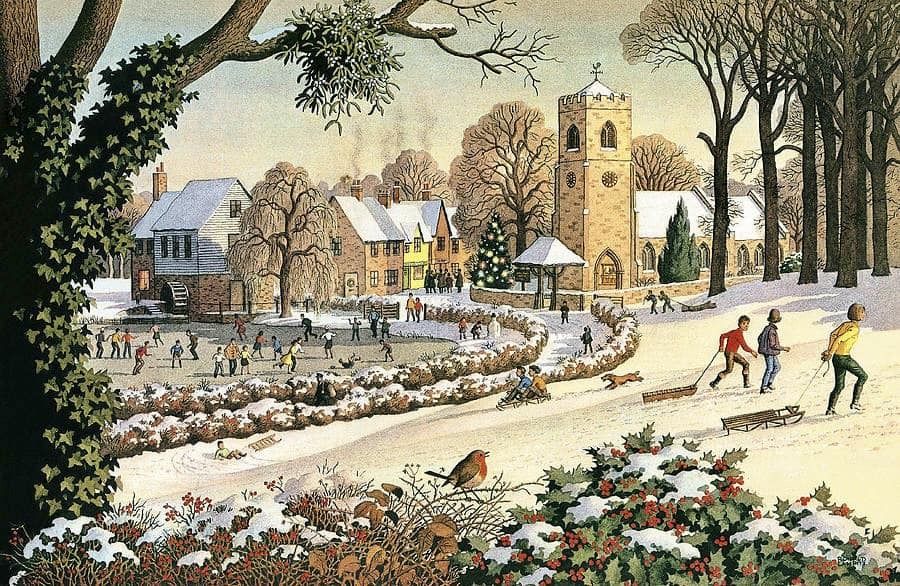
Ladybird Advent Calendar Window 18,
Artist: Ronald Lampitt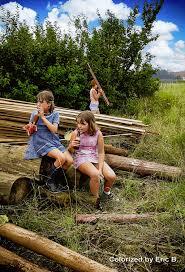
As a child, I was surrounded by nature all day, every day.
The natural world was in books, in TV programs, in songs and hymns and outside when we were playing.
We didn't need to 'learn' nature as it was part of our lives and we loved it.
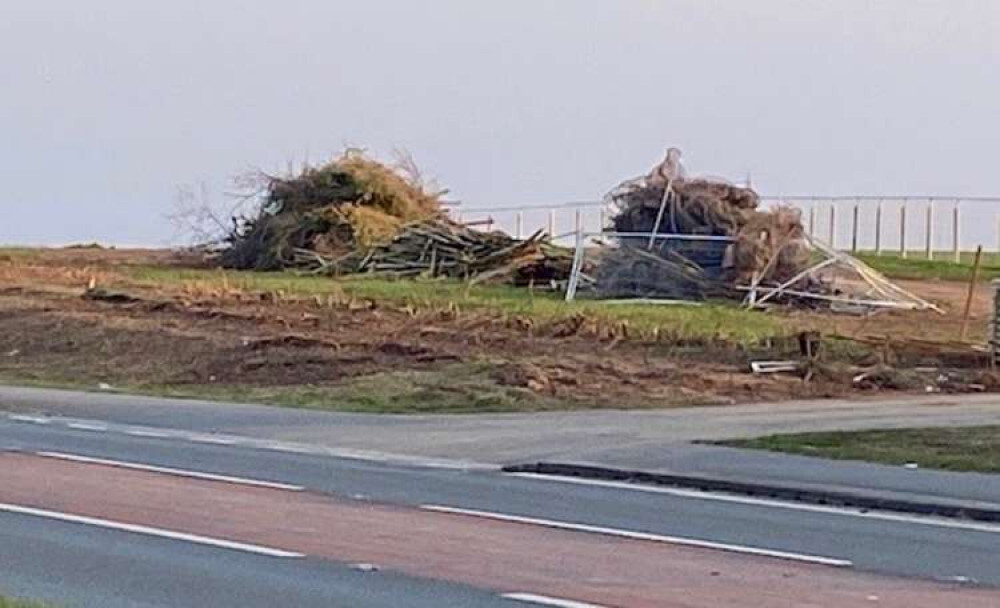
Many of us who have lived in this area for a long time find it hard to see fields and scrubland being cleared for building and development. The area we grew up in is becoming unrecognisable.
We know that we need more growth and housing but we worry what will happen to the wildlife which is displaced.
We also know that there are countless missed opportunities to incorporate nature into new developments and that leads us to worry about the future for our children and granchildren.
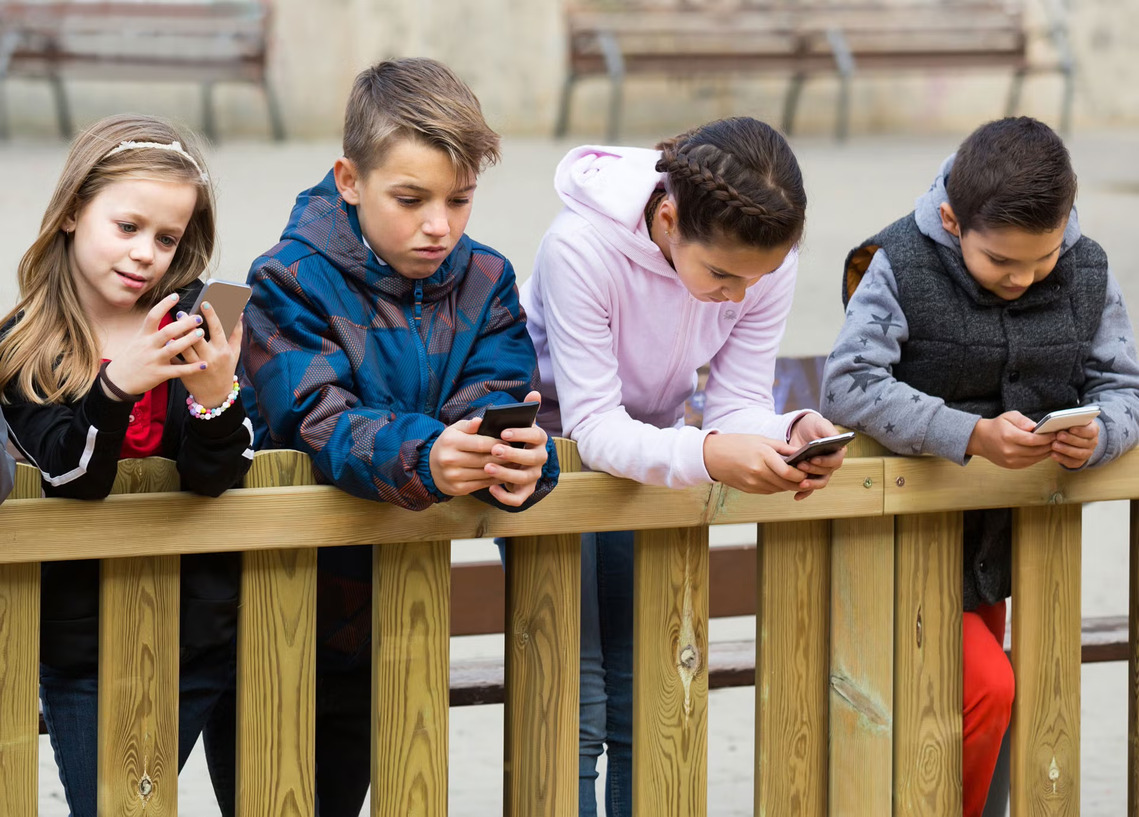
Sadly, there seems to also be a growing number of people who have no connection with nature at all!
The world is now so busy and noisy. People drive everywhere and when they do walk instead, their gaze is locked to a smartphone screen.
They don’t see or hear anything going on around them.
They don’t notice flowers, dragonflies, cobwebs, clouds or subtle changing colours. They don’t hear birdsong, the wind soughing through trees or the buzzing of bees. It’s so very sad.
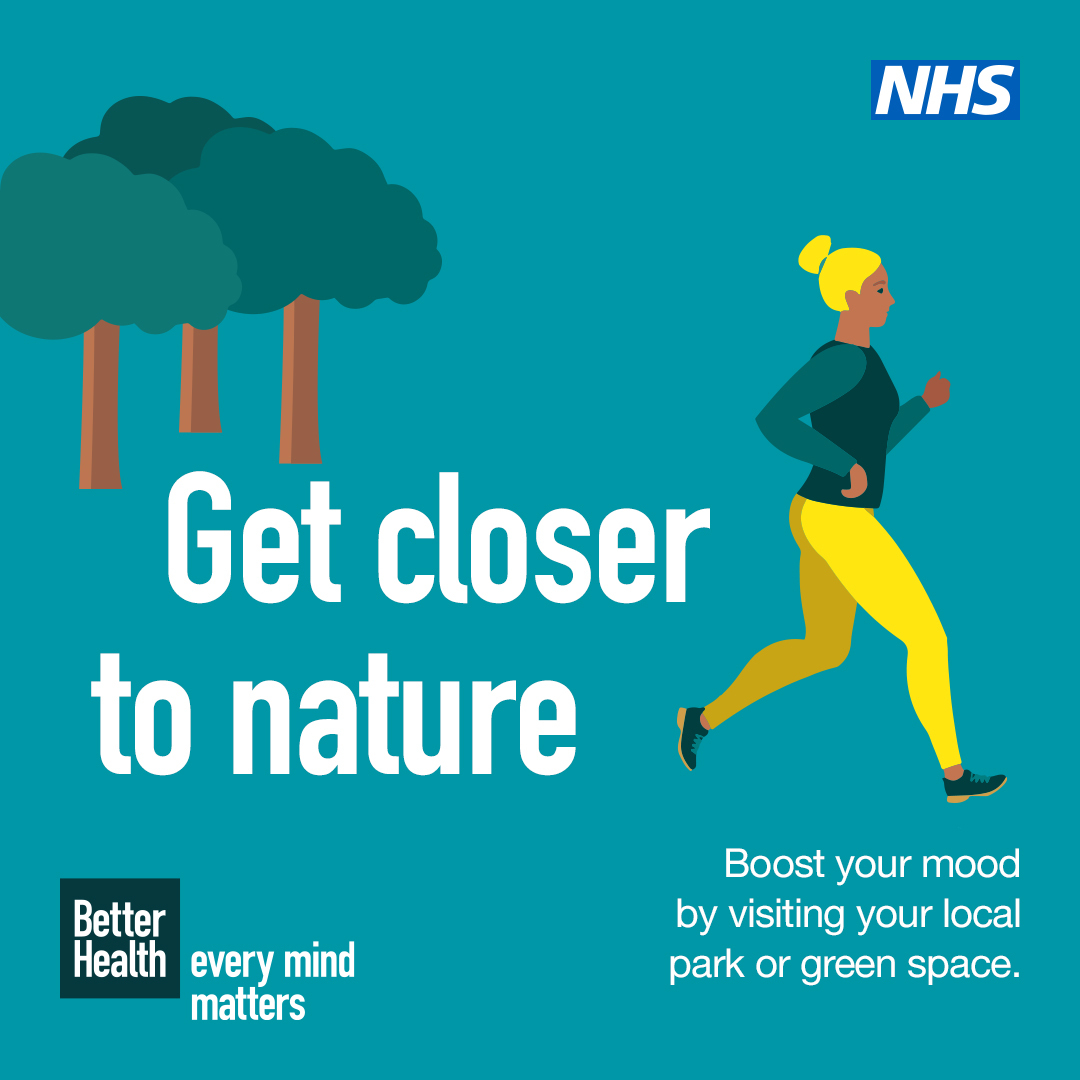
And it's proven that time spent in nature is beneficial for mental and physical health.
Is it a coincidence that so many people are suffering with anxiety and depression at a time when connection with nature is declining?
The creation of the Wild About Huntingdon community project
If we don’t notice nature, we won’t care about it.
If we don’t care about it, we won’t see the need to protect it
and if we don’t protect it, it will slowly disappear...
In 2021, I fought tooth and nail to prevent a planning application being granted which would result in the loss of 20+ healthy, semi-mature, native trees to build a car park. Planning documents stated that the land should be protected and planted but despite the planning officer stating that it would have an adverse impact, the application was still approved. Apparently the benefits outweighed the damage.
I started to look at other local planning applications and found that within ¼ square mile of my house, 54 healthy trees and a long hedgerow were lost in less than 5 years! If this was happening countrywide, it's no wonder we are one of the most nature depleted countries in the world.
Near to where I live, 200 metres of hedgerow was removed very bright industrial lighting installed. Almost overnight, wildlife which we had seen regularly for 20+ years disappeared. The song thrush, the green woodpecker, the fox, the rabbits, the kestrel, all gone. None have returned.
We’ve recently seen sales of much-loved, well-used parkland. We have seen covenants removed to facilitate building on public open spaces. This is impacting people as well as wildlife - it’s no wonder people are losing the connection with nature. Very little land is protected. Very few trees are protected. It felt to me as if nowhere was safe.
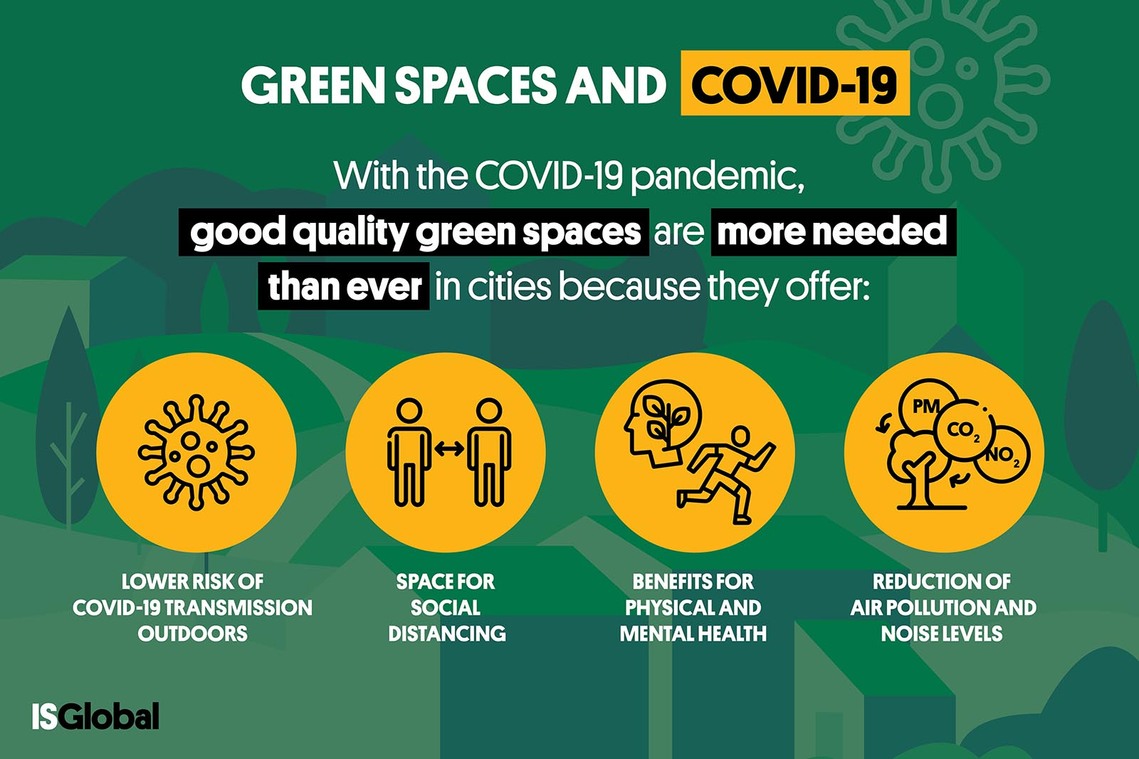
It’s ironic that in 2020 (Covid) people realised that being outdoors in parks, gardens and in nature was literally a life saver. During lockdowns, we desperately needed those spaces for our wellbeing and we vowed never to take them for granted again - but the importance of green spaces was forgotten all too soon.
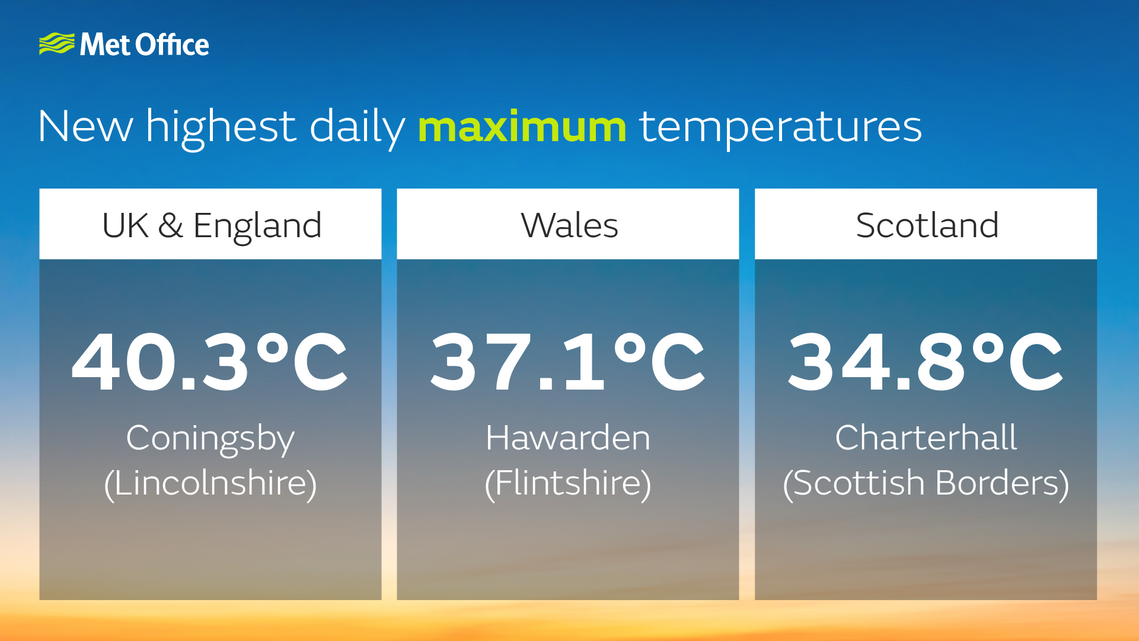
in 2022, we experienced unbearable 39.9 degree heat for the first time in Cambridgeshire. At the same time we saw a huge drop in bee and hoverfly numbers. Something was seriously wrong and I was absolutely terrified.
Had we left it too late to take action?
Then I found an article by The Wildlife Trusts which stated that 'private gardens in the UK collectively cover a much larger area than all National Nature Reserves combined, creating a vast network of crucial habitats that can support significant biodiversity, acting as vital wildlife corridors, and offering enormous potential for nature recovery if managed wildlife-friendly.'
Maybe our gardens were the answer?
Having considered all of this information (and much more), I was compelled to do something to make a difference. I was never going to be able to do anything nationally or worldwide, but I could make a difference locally.
Wild About Huntingdon was born.
2022, and I was clearing my garden, putting cuttings and seed heads in the garden bin when I suddenly wondered why I didn't share them with my neighbours instead! I decided to start a simple seed swap and set up a Facebook page. I quickly discovered that many other people were feeling as desolate and helpless as me and they also wanted to do something for nature.
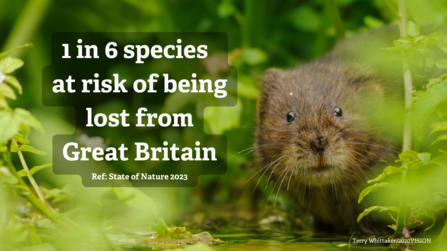
The Government published its ‘State of Nature Report 2023’. The results were shocking, indicating that nature was still in decline and 1 in 6 UK species were reported to be at risk of extinction. Conservation groups declared a Nature Crisis. 2024 arrived but many butterflies didn't and a UK Butterfly Emergency was declared. It was also reported as the worst year on record for bumble bees.
I decided that Wild About Huntingdon needed to be more than a seed swap.
The immense support and encouragement from the local community plus some incredible collaborations enabled us all to tackle the nature crisis in a holistic manner, covering many more aspects of nature recovery including:
- Providing nest sites for birds, bugs, hedgehogs, butterflies.
- Planting pollen-rich plants and leaving long grass as shelter and breeding areas for pollinators
- Removing litter, which kills 3 million animals every year
- Creating access to gardens in the form of Hedgehog highways
- Improving gardens for wildlife with logs, wild flowers, dead leaves, water, berries etc
- Sharing local wildlife information - what’s to look out for locally, from fungi to finches to foxes
- Organising events to raise awareness and connect with nature
- Sharing information on volunteering and local conservation groups to improve physical and mental health, as well as engaging with the natural world
- Growing trees
- Raising funds and/or providing resources to local wildlife rescue centres
- Collaborating with local authorities and businesses to increase planting for wildlife
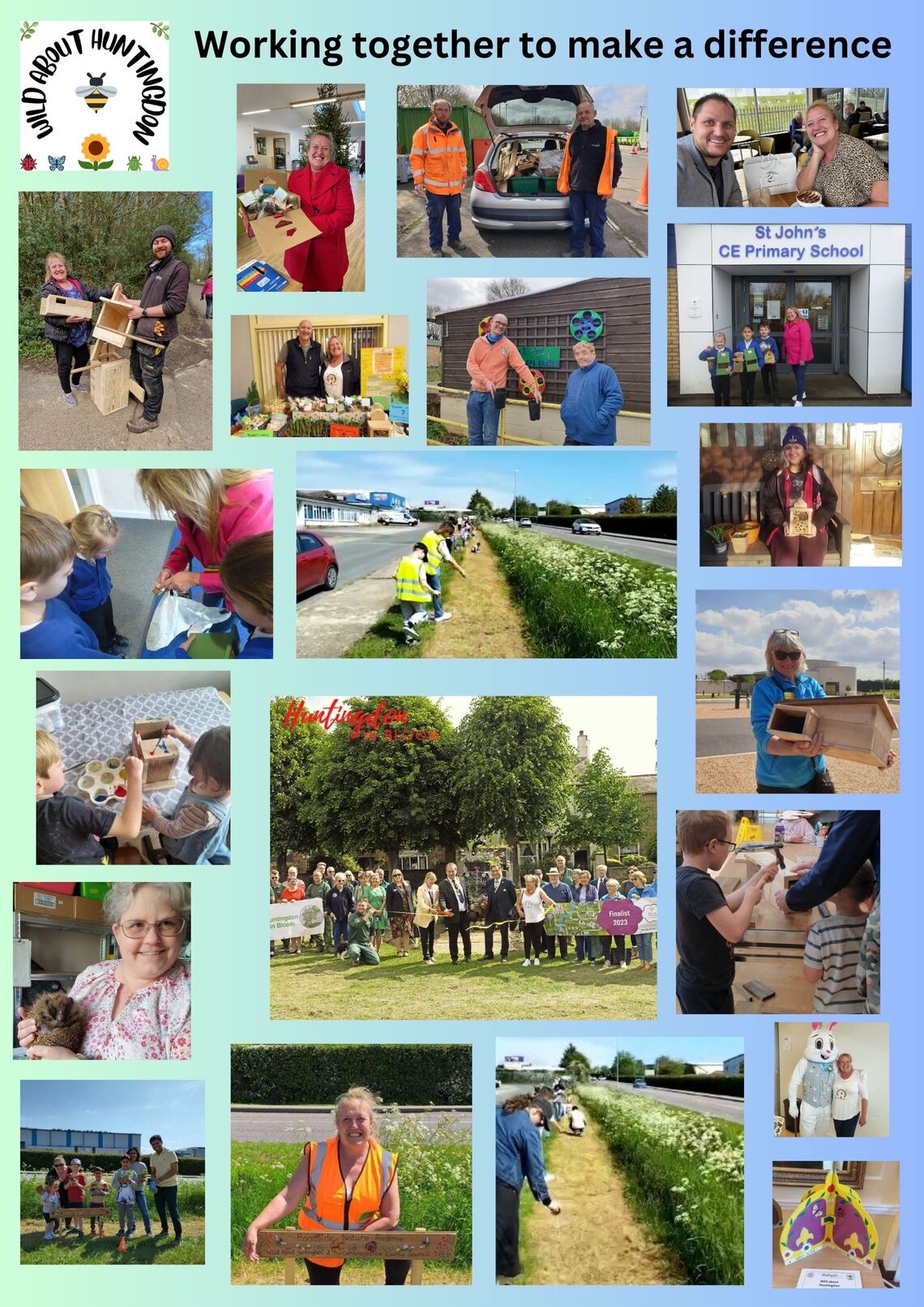
Wild About Huntingdon continues to evolve, thanks to the support of the local community
and the amazing collaboration of many local organisations. Thanks to you all.