
On This Day in Wembury
13th November 1906
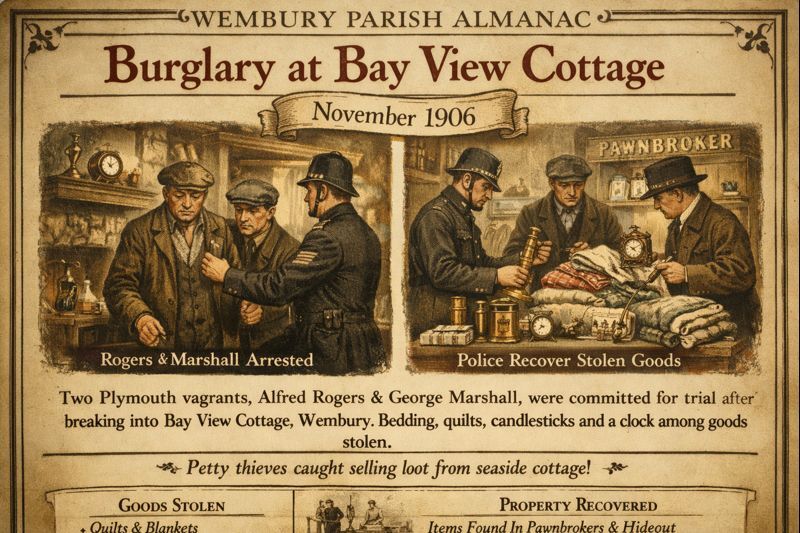
Wembury Robbery, PRISONERS SENT TO THE ASSIZES
At Plympton yesterday, before Major Tolcher and Mr. W. H. Crews, Alfred Rogers and George Marshall, labourers of no fixed abode, both from Plymouth, were charged with breaking into Bay View Cottage, Wembury, between the 5th and 7th of November, and stealing a large quantity of household goods belonging to Benjamin Sansom, gatekeeper.
The stolen property included nine counterpanes, ten blankets, eight feather pillows, toilet mats and covers, brass candlesticks, an alarm clock, a bread knife, a tablecloth, and a plated cream jug, with a total value of about £10.
Mr. Sansom said he rented Bay View Cottage furnished and had let it during the summer. On returning, he found property missing. His servant, May Bryant, stated that on November 5th the house was in proper order. On November 7th Elizabeth Drake, wife of a waiter and also employed by Mr. Sansom, went to the cottage and found a pane of glass broken, the inside doors open, and drawers ransacked.
Annie Williams, wife of a Plymouth hawker, said that on November 5th she met the prisoners in Summerland Place, each carrying a bag. They claimed they had been to a sale at Wembury House and asked her to pawn a blanket and a counterpane. She did so, receiving 6d, and was given a blanket for her trouble, which she later returned. When later informed by police that the items were stolen, she directed them to where the prisoners were staying.
Police officers testified that stolen goods were recovered from several pawnbrokers in Plymouth, and further items were found in an underground kitchen in Summerland Place, where the prisoners were lodging. On arrest, one of the men remarked, “We ought not to have brought the stuff home here — Mrs. Williams knows we stole them. I suppose she has given the show away.”
Detective-Sergeant Richards and P.C. Honey stated that blankets, quilts, toilet covers, brass candlesticks, and a clock were found in the prisoners’ room. One prisoner claimed his wife had bought the items during the week and denied knowledge that they were stolen.
Both men admitted they acted together, stating they had made several trips to Wembury over successive days, removing property in loads and selling it for small sums. One remarked on being taken to the police station, “Cheer up; it means years for me this time. The judge said it came up before him he would give me servitude.”
The prisoners were committed for trial at the Assizes.
On This Day in Wembury
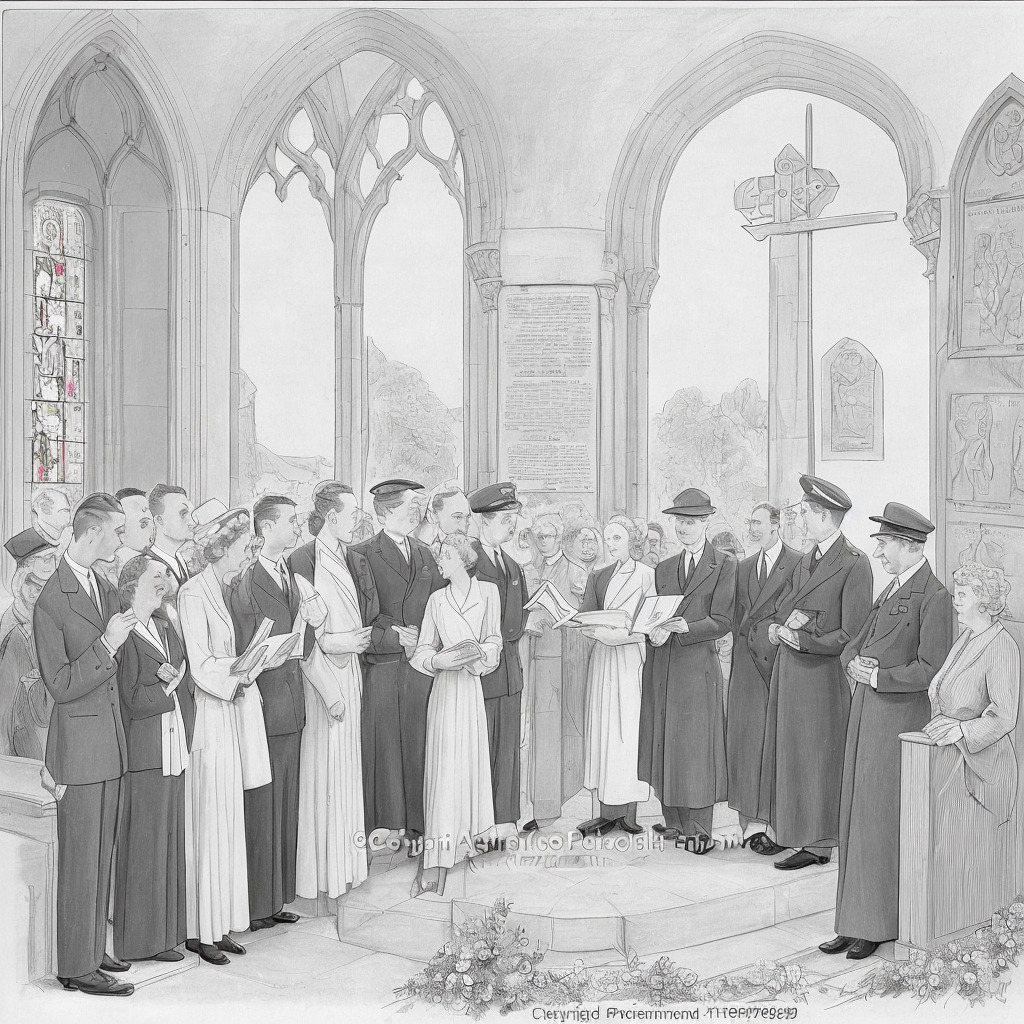
13 November 1949 — Dedication of Wembury War Memorial Bell and Tablet
On this day the Bishop of Plymouth consecrated and dedicated the war memorial bell and tablet in St Werburgh’s Church, Wembury. The new memorial was the result of parish fundraising after the Second World War, with £150 already collected and about £40 still sought to meet the total cost. The dedication took place on Remembrance Sunday, linking the village’s commemoration of the fallen with the solemn installation of these lasting symbols within the parish church.
Reflection: The memorial bell and tablet continue Wembury’s tradition of remembrance, anchoring the memory of both world wars within the daily rhythm of parish life. Every time the bell is rung, it speaks not only of worship but of sacrifice, uniting Wembury’s story with that of countless other villages who sought tangible ways to honour their dead.
Source: Western Morning News, 10 October 1949 (announcement of the Bishop’s forthcoming dedication on 13 November 1949).
Entries are summaries and interpretations of historical newspaper reports.