
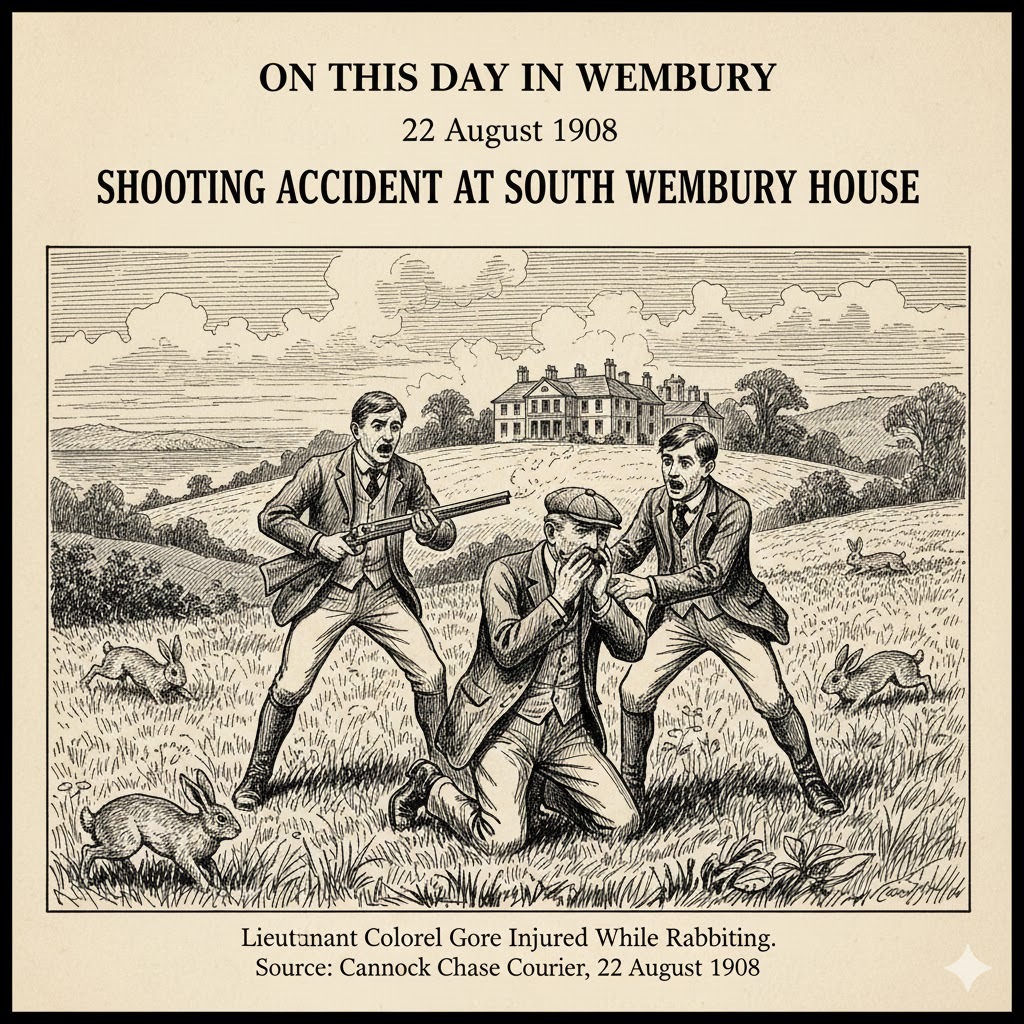
ON THIS DAY IN WEMBURY – 22 August 1908
Lieutenant Colonel G A E Gore of South Wembury House suffered a frightening shooting accident while out rabbiting on his own estate. Accounts say his gun discharged unexpectedly and he was struck in the face at close range. For a time there were real fears he might lose his sight, a serious concern not only for his health but for the running of the large South Wembury property, where he was a well-known local figure.
The report emphasised that although the injury was severe, his recovery was progressing well, and the household expected him to regain much of his strength. For Wembury residents at the time, news of a wounded landowner would have travelled fast, especially given the importance of the big estates in local employment and daily life. It also reflects how common and hazardous estate shooting parties were in the early twentieth century, long before modern gun-safety rules.
Source, Cannock Chase Courier, 22 August 1908.
On this day in Wembury, 22 August 1996
The Western Evening Herald profiled Clive Fairweather, the travelling storyteller who appeared regularly at historic sites, outdoor festivals and coastal events across the West Country. That summer he was promoting a programme of evening storytelling sessions, including one on Wembury Beach on Thursday 22 August at six thirty, where visitors could sit on the sand, listen to tales of sailors, smugglers and Elizabethan shipwrecks, and watch the light change over the bay.
Fairweather believed strongly in reviving old traditions of oral storytelling at a time when screens were taking over children’s imaginations. He drew on local history, Celtic lore, rural memories and his own family’s stories, presenting them with humour and theatrical flair. The article explained how he saw storytelling as a link to the past, a way of reconnecting people with the landscapes and communities around them. His Wembury Beach session was part of a wider summer programme of coastal events designed to bring history alive right where it happened.
Source, Western Evening Herald, 13 July 1996.
Entries are summaries and interpretations of historical newspaper reports.