
On this day in Wembury, 16 August 1832
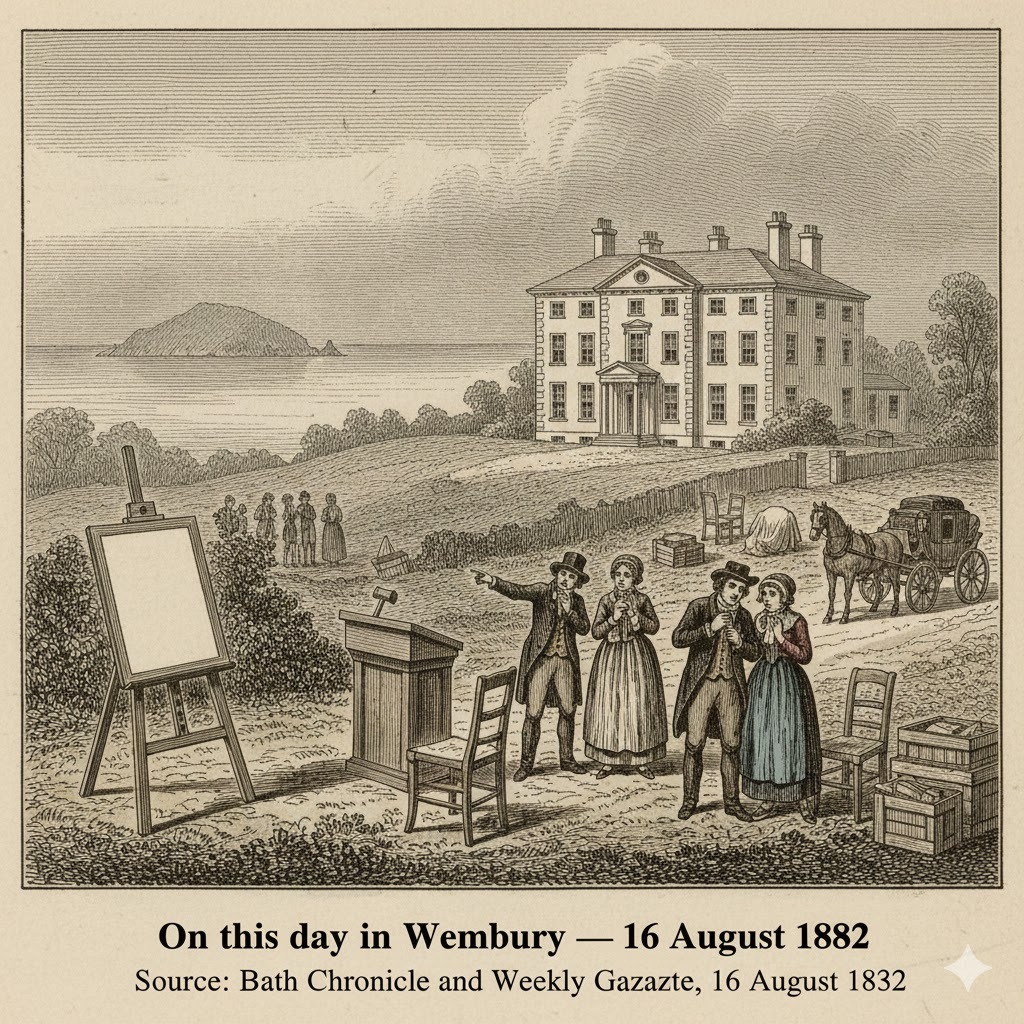
An announcement in the Bath Chronicle reported that the planned sale of the freehold property of Sir Edward Thornton at Wembury, together with later auctions of his furniture, plate, wines and other effects, had been postponed. The reason was given plainly: the prevailing epidemic in Plymouth and its neighbourhood.
The epidemic was cholera, part of the first major cholera outbreak to reach Britain. It arrived in Plymouth in late July 1832 and spread quickly through the crowded lanes of the town and the surrounding villages. Contemporary reports described severe illness, high mortality, and widespread fear. Public gatherings were discouraged, travel was disrupted and many commercial events were cancelled or delayed until the threat had passed.
Against that background, the postponement of the Wembury property sale makes clear how seriously the situation was taken. Even a well advertised auction of an estate belonging to a senior diplomat such as Sir Edward Thornton, GCB, could not go ahead. It reflects the profound impact the 1832 cholera epidemic had on daily life across the South West, reaching even quiet rural parishes such as Wembury.
Source, Bath Chronicle and Weekly Gazette, 16 August 1832.
Entries are summaries and interpretations of historical newspaper reports.