
On This Day in Wembury – 2 July 1845
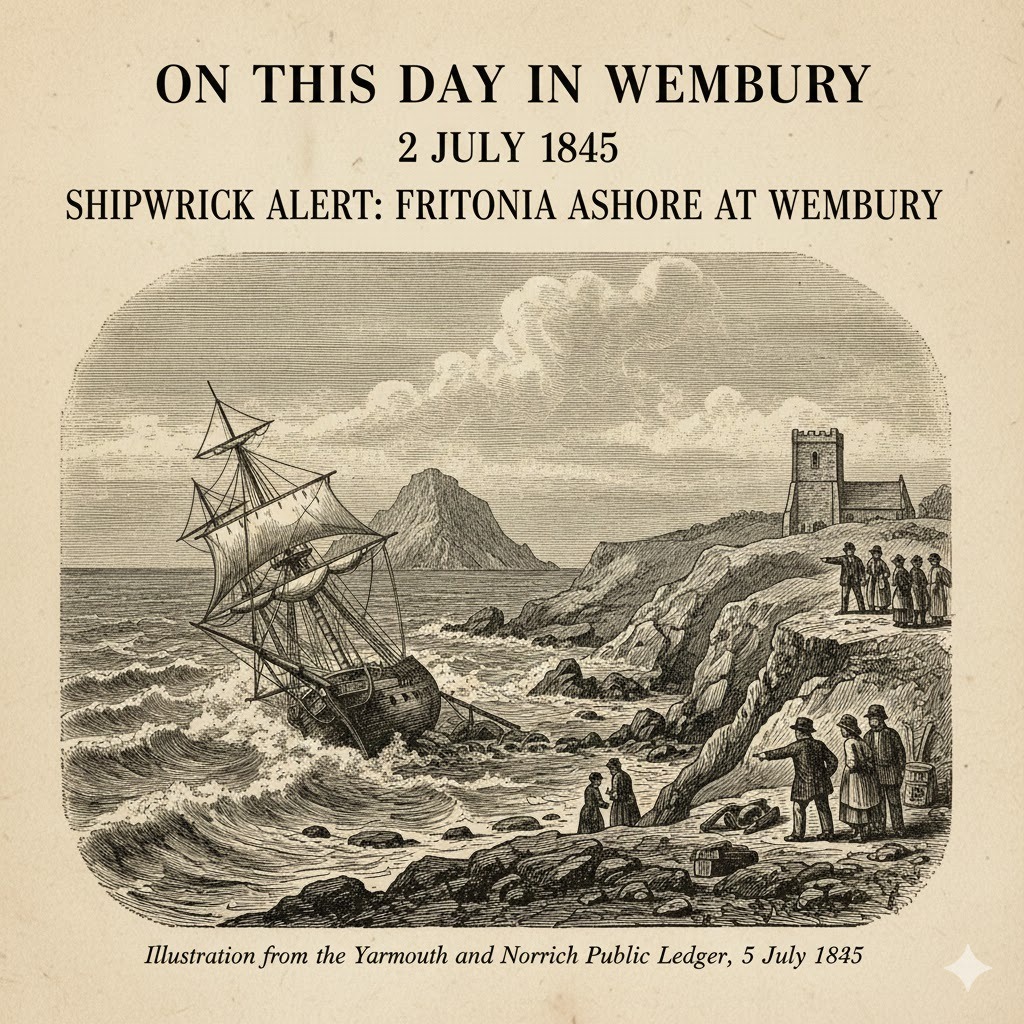
Shipwreck Alert: Fritonia Ashore
On 2 July 1845, the Fritonia, captained by Furze, was reported ashore near Wembury Church, at the back of the Mewstone. Contemporary reports suggested she was expected to become a wreck.
Source: Yarmouth and Norwich Public Ledger and Daily Advertiser, 5 July 1845.
Another of the many tragedies and near-tragedies along the coast by Wembury Church and the Mewstone. This 1845 report adds to the long catalogue of wrecks in that exposed position — reminding us that even before the more famous losses later in the century, ships were regularly caught out on that lee shore. It ties directly into the wider history of Wembury as a perilous stretch of water for sailors, and shows why wreck stories became such a staple in both local memory and newspaper reporting.
On This Day in Wembury
2 July 1928 — Hydroplanes at the Wembury Regatta
The Wembury Regatta, held on the River Yealm, drew record crowds as a new event was introduced — a handicap race for hydroplanes, or early “speed boats.” With the sport rapidly gaining popularity in the West Country, the spectacle of motorised craft cutting across the estuary added excitement alongside the more traditional sailing and sculling contests.
Nine local boats competed for the Leycester Challenge Cup, while spectators also enjoyed punt races, veterans’ races, ladies’ sculls, swimming events, and even a dogs’ race. The Regatta Committee, chaired by Commander W. R. Leycester and supported by local families such as the Clemows, Halls, and Tanners, made sure the day blended both tradition and innovation.
The 1928 regatta captures Wembury at a moment of change — balancing centuries-old estuary pastimes with the arrival of new technology. Hydroplanes roaring past the Mewstone must have seemed thrilling, even futuristic, against the timeless backdrop of oars, sails, and village rivalry. Wembury’s waters have always been a stage for human ingenuity, from fishing boats and smugglers to naval gunnery practice — and here, the Regatta hints at how modernity would ripple into even the most traditional of local gatherings.
Entries are summaries and interpretations of historical newspaper reports.