
On this day in Wembury. 2 June 1904 — Plymouth Fortress mobilisation exercises place Wembury on the front line of a mock invasion
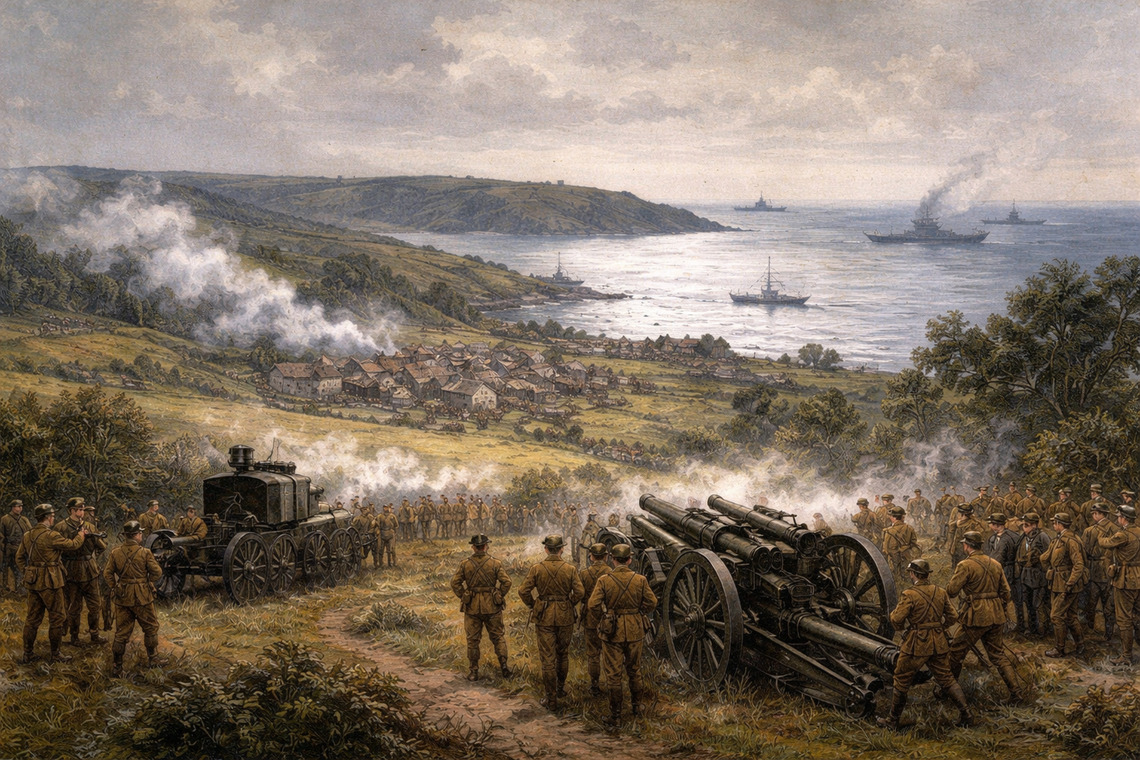
A report in the Western Morning News described major military exercises held on 1 June 1904 as part of the mobilisation of Plymouth Fortress. In the scenario, an enemy force, called the “Blue” force, was imagined to have landed during fog at the mouth of the River Yealm on the night of 31 May, intending to raid towards Renny Point. Once discovered, it was forced onto the defensive.
The exercise treated Wembury as a key approach to Plymouth’s eastern defences. The supposed enemy occupied the grounds of Wembury House and the village of Knighton, where it began preparing defensive positions. The defending “Red” force was told that its outposts at Down Thomas had been driven in, and reinforcements were then pushed forward with heavy and light artillery. Half a battalion of the 3rd Devon Regiment travelled by rail from St Budeaux to Elburton and was ordered to join the commander eastern section near Staddiscombe, from where a strong counter attack would be launched.
Bad weather disrupted the landing plans. The detachment representing the enemy, seventy men of the Royal Warwickshire Regiment under Captain Hersall, could not land at Wembury because of rough conditions and was instead put ashore at Bovisand before marching to Knighton. The defenders, under Colonel Keleart, included heavy guns of the Devon Artillery under Lieutenant Colonel White, positioned to shell Knighton and the area around Wembury House. Their escort included men of the Border Regiment under Captain du Brulay, while half a battalion of the 3rd Devon Regiment under Captain Milford also took part. Two six inch howitzers were brought into position by traction engine and manned by No. 33 Company Royal Garrison Artillery under Captain Westerman.
The evening phase shifted to Plymouth Sound, where seven torpedo boats made two mock attacks against the fortress. Searchlights swept across the water, the forts opened fire, and large crowds watched from the shore, especially at Devil’s Point. Senior officers present included Major General Slade, Inspector General of Garrison Artillery, as well as Colonels Perritt, E. S. May, and Hamilton Gordon. The inner defence batteries were manned by 200 men of the 2nd Devon Royal Garrison Artillery Volunteers under Lieutenant Colonel R. Tyeth Stevens, V.D.
The article is especially important for Wembury because it shows that in Edwardian military planning the Yealm and Wembury coast were seen as a realistic route by which an enemy might threaten Plymouth from the east. Knighton, Wembury House, Down Thomas, Elburton and Staddiscombe were not incidental background places in the report. They formed part of a serious test of how quickly men, guns, transport and communications could be brought together if an invasion force got ashore on the Wembury side.
Source: Western Morning News, 2 June 1904.
On This Day in Wembury – 2 June 1931
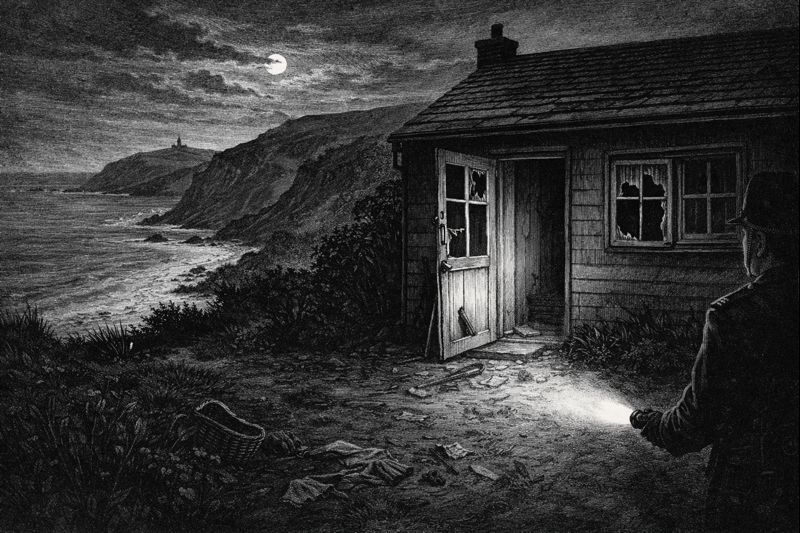
A burglary was reported at a bungalow at Warren Point, Wembury, belonging to Charles Francis Gladstone Williams. The property was broken into and food and clothing worth only a few shillings were stolen.
The theft formed part of a wider case brought before Yealmpton magistrates later that month. Alongside the Wembury incident, Herbert William de Freshwille Gallimore of Polston Park, Brixton, had his home broken into, windows smashed, and clothing, medals, and a cigarette case worth over £15 taken.
Alfred Joseph Hibbitt and Violet Hibbitt, described as of no fixed abode, were arrested after Detective-Constable George Thomas of Plymouth Police traced the stolen medals to a house in Cecil Street, Plymouth. Both admitted the offences and were committed for trial at the forthcoming Assizes.
The case was widely reported as an example of how small rural communities like Wembury and Brixton were not immune to opportunistic crime during the early 1930s.
Source: Western Morning News, 19 June 1931.
On This Day in Wembury – 2 June 1990
A routine day on the beach turned hazardous when schoolboy Robert Page of Hawthorn Drive discovered a three-foot-long smoke flare washed ashore. The canister, ominously marked “Do Not Touch”, had been dropped by an aircraft but failed to ignite.
Robert did the right thing and contacted the police straight away. Bomb disposal experts were called in and safely destroyed the device before it could cause harm.
Reflection
Incidents like this were not uncommon in the late 20th century, when military training flights still regularly crossed South Devon. For Wembury locals, it was a reminder of the coast’s dual character — a place of play and leisure, but also one shaped by its naval and wartime connections. Parents warned their children to be wary of strange objects on the shore, a habit that still lingers among older villagers today.
Entries are summaries and interpretations of historical newspaper reports.