
On This Day — 30 May 1814
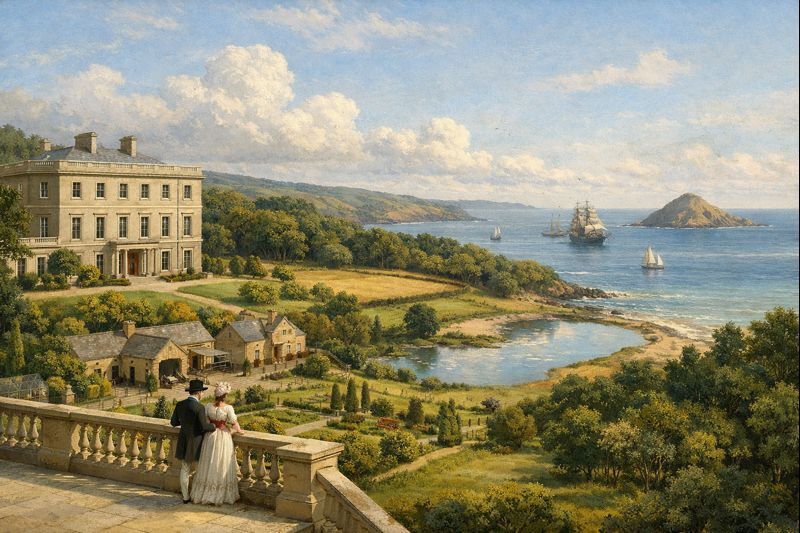
The London Courier and Evening Gazette reported the sale, by private contract, of the Manor of Wembury. The estate comprised arable, meadow, and pasture land, together with Wembury Woods and thriving plantations. At its heart stood a mansion built only eight years earlier, described as “most substantial and well-built,” with mahogany doors in the principal bedrooms, a coach house, stables, gardens, a pond that trapped fish with the tide, and a terrace 30 feet high giving sweeping views of the Channel. The whole was offered as a complete residence for “a nobleman or private gentleman.”
Source: London Courier and Evening Gazette, 30 May 1814
The grandeur of this sale anticipates later upheavals in local landholding: the 1927 Langdon Court auction, when farms, cottages, and even the Mewstone were divided up in lots, or the 1950 fears at Westhill when Admiralty expansion threatened ordinary families with eviction. Wembury’s story is often told through such moments — when the land itself, with all its beauty and history, was put on the market, revealing the tension between private prestige, military necessity, and the community that calls it home.
On This Day in Wembury — 30 May 1940
At a meeting in Plymstock Church Hall, reported the next day in the Western Morning News, every man present raised his hand when asked to volunteer for the newly formed Local Defence Volunteers (later renamed the Home Guard). Col. T. McCready, who led the appeal, emphasised that volunteers must be men of “stout hearts and indomitable courage” and vouched for by the police to prevent infiltration. Plymstock would form No. 5 Platoon of “H” Company, which included Newton Ferrers, Holbeton, Ermington, Yealmpton, Brixton, Elburton — and Wembury.
Reflection: The atmosphere of May 1940, when invasion felt imminent, produced a remarkable surge of local patriotism. Men in villages across the Yealm valley and Wembury rushed to join, many too old or too young for regular service, echoing the spirit later immortalised in Dad’s Army. What might now be remembered with humour was at the time deadly serious: hastily armed with shotguns and improvised weapons, these men stood ready to defend their communities and the “most important city in the South-West.”
Source: Western Morning News, 31 May 1940
Entries are summaries and interpretations of historical newspaper reports.