
On this day in Wembury — 30 April 1762
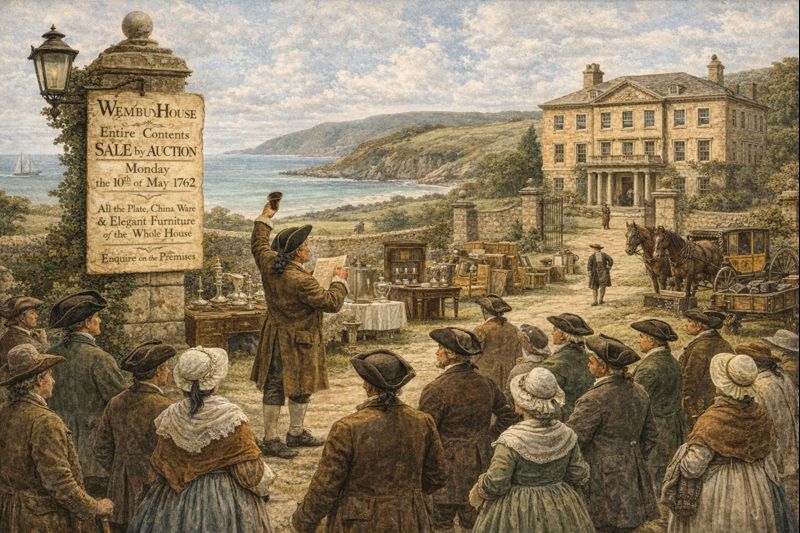
A notice in the Sherborne Mercury announced the forthcoming sale of the entire contents of Wembury House, the seat of William Molesworth, Esq., who had recently died. The sale was set for Monday the 10th of May and promised “all the plate, china ware, and entire elegant furniture of the whole house,” which had been “compleatly furnished no longer since than 1756.” The auction even included a “handsome pleasure yacht, about sixteen tons well found and lately put in good repair.”
Molesworth had belonged to one of Cornwall’s best-known gentry families, with estates across the West Country. His Wembury property, like others of its kind, stood as a symbol of Georgian prosperity and refinement, its rooms filled with imported porcelain, mahogany furniture, and silver plate. The advertisement also mentioned that the Barton of Wembury, with its park, warren, fishery and oysterage, was to be let on a long lease, suggesting that the estate’s ownership or occupancy was passing into new hands.
The reference to a “hind” showing the premises — meaning the estate steward — evokes the social order of the time, when even a sale of household goods could become a public event. Within a few decades Wembury House would change owners again, eventually giving way to the grander 1803 rebuild that still stands today. This 1762 notice captures an earlier chapter, when Wembury’s manor and its genteel comforts were already a fixture of Devon’s landed world.
(Sherborne Mercury, 10 May 1762, dated 30 April 1762)
Entries are summaries and interpretations of historical newspaper reports.