
On This Day in Wembury — 5 April 1938
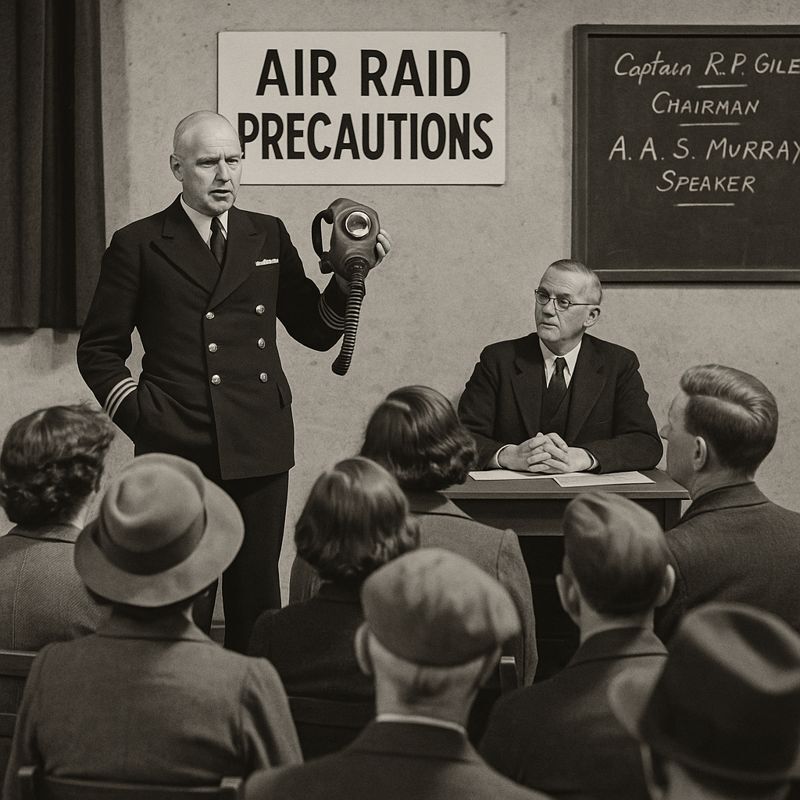
At Jubilee Hall, Down Thomas, villagers gathered for an air-raid precautions meeting led by Commander A. A. S. Murray, R.N. (ret.), the passive defence officer for Devonport Dockyard. Murray explained that A.R.P. was not about aggression but about keeping ordinary people safe in the event of air raids. He stressed the need for volunteers, noting that one trained individual would be worth four untrained when the need arose.
He warned that modern warfare meant everyone was in the front line. Bombs and poison gas might cause casualties but would not break communities if they were prepared. Murray demonstrated three types of gas masks, including one he had worn in demonstrations for over a year, and said the best defence could be a simple gas-proofed room at home or even a trench in the open.
Commander Church, chief warden for the district, explained that Devon had been divided into areas, zones, and sectors — with about 100 houses per sector, and two wardens required for each. He called again for volunteers, and several stepped forward. Mr. A. Maughan offered to serve as instructor, while R. A. Stansell proposed a vote of thanks to Murray. Captain R. P. Giles presided.
Source: Western Morning News, 5 April 1938
What strikes me now is how early these conversations were, before the war had even broken out. Villagers in Wembury and Down Thomas, still years away from bombs falling on Plymouth, were already planning gas-proof rooms and digging practice trenches. It shows both the anxiety of the age and the way small communities took ownership of their own survival, long before the big moments of the Blitz arrived.
Entries are summaries and interpretations of historical newspaper reports.