
On This Day in Wembury — 10 March 1994
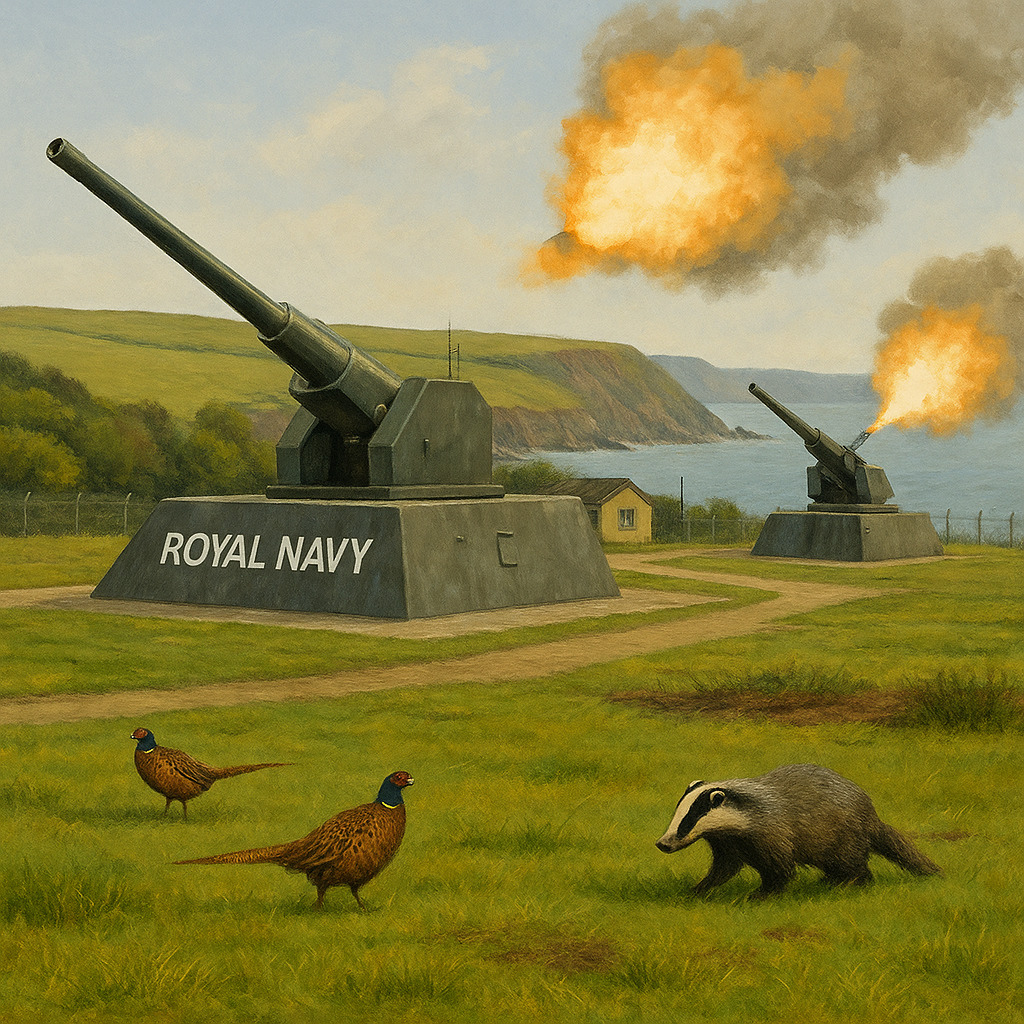
The Plymouth Extra ran a feature on HMS Cambridge, the Royal Navy’s gunnery school at Wembury Point. The article described the paradox of the site: on one hand, it was a Site of Special Scientific Interest and an Area of Outstanding Natural Beauty; on the other, it was home to the Navy’s heaviest guns, firing off more rounds each year than the rest of the fleet combined.
Nature, however, seemed unbothered. Pheasants scratched under the great guns as they roared. A badger dug up the turf, much to the frustration of grounds staff. Most notably, the endangered cirl bunting, whose UK breeding range was then confined largely to South Devon, was thriving within the perimeter.
Commander Graham Edmonds, the commanding officer, explained that “gunnery is an imprecise art… essentially you aim to miss and then bring it to the target.” He argued that Cambridge was vital: closing it would mean tying up two frigates for almost a year to achieve the same training. “It’s cheaper to stay here,” he said, “bad luck for Heybrook Bay but good news for the South Hams.”
Source: Plymouth Extra, 10 March 1994
Even as the ground shook and windows rattled, Cambridge’s curious balance of noise and nature held firm. Residents at Heybrook Bay may have cursed the thunder, but the cirl buntings sang regardless — a reminder that sometimes the wildest places survive in the unlikeliest company. In the end, the guns fell silent: HMS Cambridge closed in 2001, and the land passed to the National Trust, restoring Wembury Point fully to peace and nature.
Entries are summaries and interpretations of historical newspaper reports.