
On This Day in Wembury — 20 February 1909
Debate over the proposed Wembury Docks project spilled far beyond Devon. On this day, The Dublin Builder reported remarks by Mr. Julian Polglase of Falmouth, speaking on behalf of rival interests promoting docks at St. Just, near Falmouth.
Polglase argued that, although St. Just was about 50 miles further by rail from London and the Midlands, ocean liners would actually save half an hour to three-quarters of an hour compared with Wembury because of faster sea approaches. He claimed this erased the supposed advantage of a Wembury harbour for passenger liners.
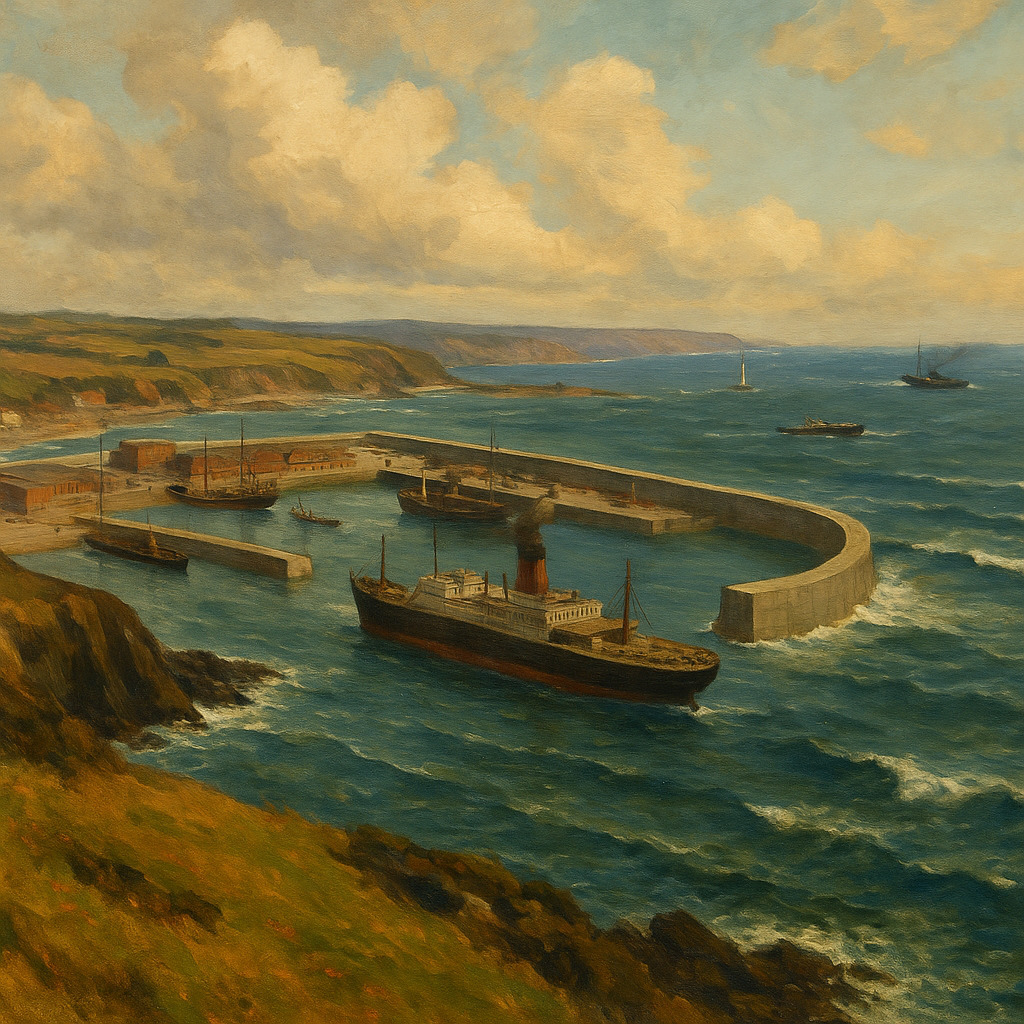
Other points raised were stark. Wembury, he said, was “open to the sea, with little or no natural protection.” The Atlantic swells crashing past the Eddystone would batter any artificial harbour works and make sheltering ships vulnerable to enemy guns. By contrast, Falmouth Bay was already fortified, mined, and offered natural protection. Moreover, St. Just could expand its docks more cheaply, and it sat close to Cornwall’s booming china clay industry, which by 1907 was exporting over 780,000 tons a year.
In wartime, he insisted, merchant vessels would be far safer in Falmouth than in exposed Wembury Bay. And he noted that the Great Western Railway would gain more mileage and revenue from St. Just passengers and mail, making it an attractive ally in the project.
Source: The Dublin Builder, 20 February 1909
The Wembury Docks dream ultimately collapsed under the weight of such arguments, never progressing beyond grand prospectuses. This debate shows how geography, industry, military strategy, and railway politics intertwined — and how Wembury’s open coast, so beloved by walkers and naturalists today, was judged too wild for the role of Britain’s “Metropolis of the West.”
Entries are summaries and interpretations of historical newspaper reports.