On This Day in Wembury — 18 February 1932
A Bathing Pool Proposed for Wembury Point
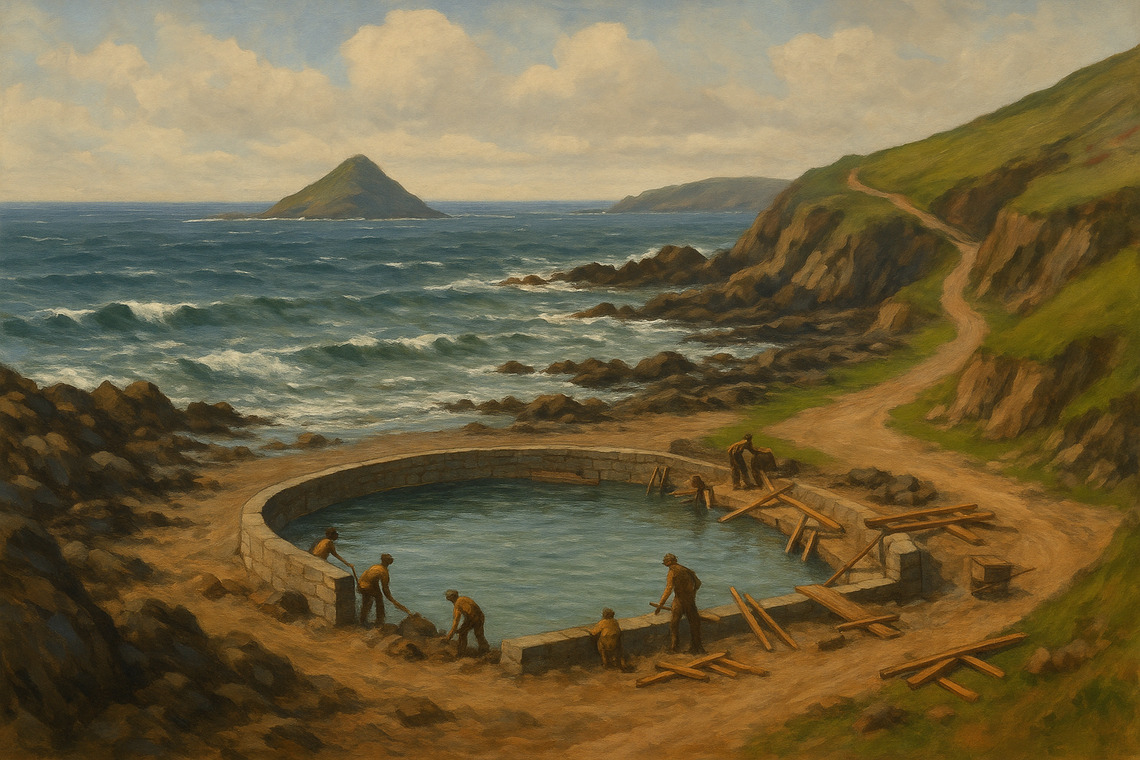
On 18 February 1932, the Western Morning News reported a new venture that reflected the growing seaside leisure culture of inter-war Devon. Mr R. A. Stansell, of the Heybrook Bay Estate, had submitted an application to the Mercantile Marine Department of the Board of Trade seeking permission to build a bathing pool on the foreshore at Wembury Point.
The proposal was for a tidal pool that could be used “at all stages of the tide” — an ambitious design for the rocky shoreline between Wembury Beach and Heybrook Bay, where swimming was already popular among locals and visitors. The plan suggested that, if approved, the pool would be completed by early summer, ready for the 1932 holiday season.
Such bathing pools were fashionable projects at the time, combining public amenity with private enterprise. Across Britain, the early 1930s saw a surge in seawater lidos and coastal swimming enclosures as part of a broader movement promoting health, modern recreation, and tourism. For Wembury, the proposal marked a moment when the village’s quiet coves and headlands were being reimagined not just as working or defensive landscapes, but as places of leisure and enjoyment.
Although no surviving structure exists today, the application stands as an intriguing glimpse of what might have been — a purpose-built swimming pool set into the rocks of Wembury Point, overlooking the Mewstone and the open sea.
Source: Western Morning News (Plymouth), Thursday 18 February 1932 — “Bathing Pool at Wembury Point.”
The Western Morning News published the story two days later under the headline “Monstrosities at Wembury — Authority May Take Action,” capturing a moment when the tension between rural beauty and human intrusion came sharply into focus along the South Devon coast.
Source: Western Morning News (Plymouth), Saturday 20 February 1932 — “Monstrosities at Wembury — Authority May Take Action.”
Curated and written by Wembury Waves using material from the British Newspaper Archive.
Entries are summaries and interpretations of historical newspaper reports.
