
On this day in Wembury — 16 February 1917
In the middle of the First World War, even the simple daily supply of milk was becoming difficult to maintain. A report in the Western Morning News described how harsh weather and wartime pressures were affecting farmers in Wembury and beyond.
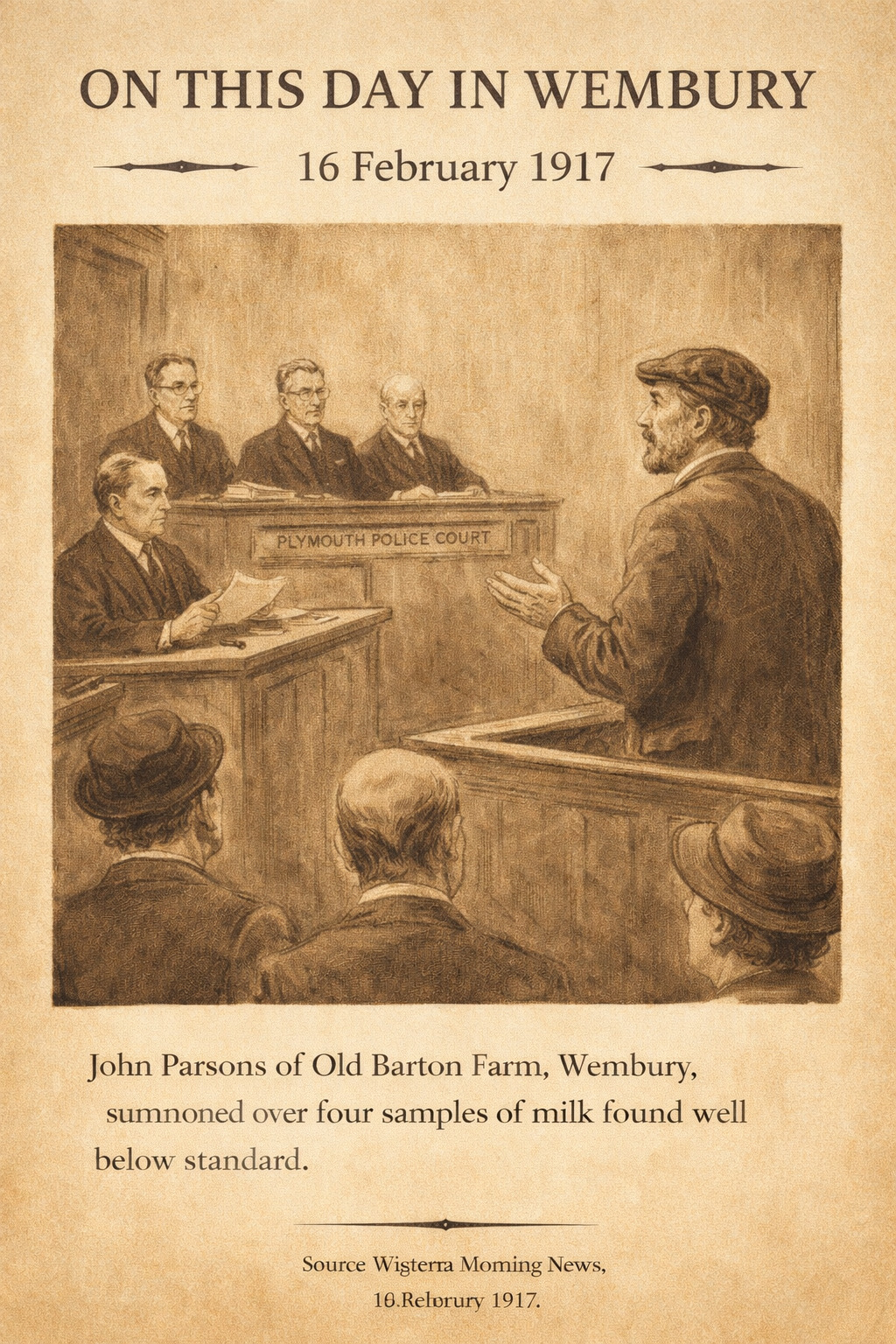
At Plymouth Police Court, a case was heard involving John Parsons of Old Barton Farm, Wembury. He was summoned after samples of milk supplied from his farm were found to fall below the legal standard.
Two samples were taken for testing. One was found to contain sixteen per cent added water, and the other twenty per cent. Only one sample was judged to be of acceptable quality.
Mr Fittall, speaking in defence, argued that the milk had not been deliberately watered down. He said the poor quality was due to the condition of the cows, which had suffered through an exceptionally hard winter. Grazing had been poor, fodder scarce, and frost had prevented the pulling of turnips, leaving farmers struggling to feed their herds.
Mr Bickle, representing the local authorities, told the court that even if the milk had not been tampered with, it still failed to meet the required standard. He stressed that customers were entitled to proper, wholesome milk.
The clerk noted that milk containing sixteen or twenty per cent water would normally be regarded as seriously below standard. Mr Fittall responded that the public should indeed be protected, but warned that driving struggling farmers out of business would only make matters worse.
John Parsons himself told the court that this was a particularly trying season for milk producers. His cows had never given so little milk before. He said he had done everything possible to maintain standards, but weather and feeding problems had made this extremely difficult.
Despite the sympathetic tone of the hearing, the magistrates ruled that the law had to be upheld. Parsons was fined five pounds.
The report offers a glimpse into the quiet hardships faced by Wembury’s farming community during wartime. Behind every delivery lay months of worry, hard labour, and uncertainty, as local farmers tried to keep food supplies flowing under the most difficult conditions.
Source: Western Morning News, 16 February 1917
On This Day in Wembury — 16 February 1940
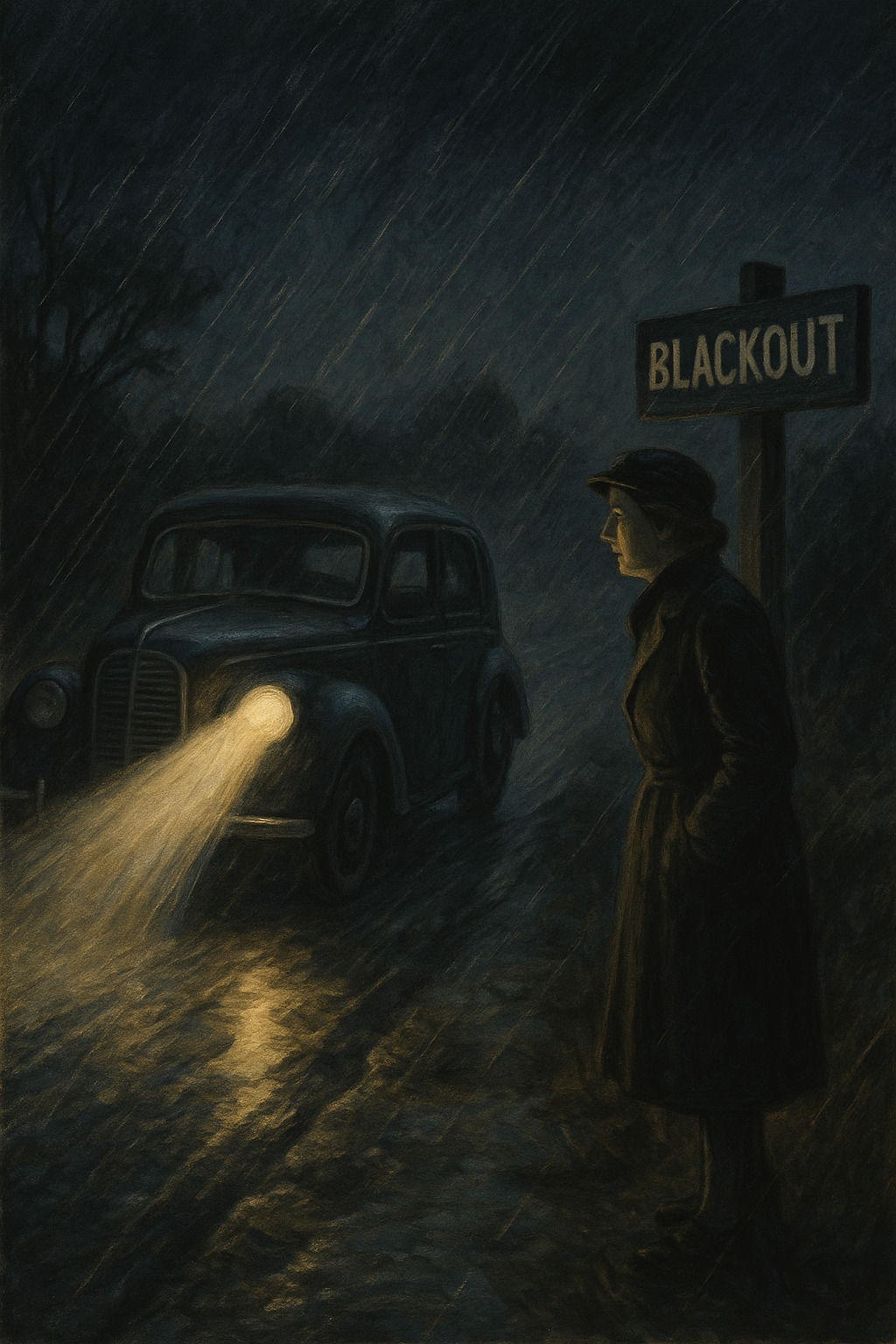
The Western Morning News reported that Mrs. Beatrice Ann Nicholas, of Windsor, Church Road, Wembury, was fined 10 shillings for using a headlamp mask that had been mutilated so the beam was no longer diffused in line with blackout regulations.
Reflection: During the Second World War, strict blackout rules were enforced to prevent enemy aircraft from spotting targets on the ground. Even a small chink of light from a headlamp could draw attention. This case shows how everyday routines like driving a car were tightly controlled, and how local people faced penalties for even minor infringements of national defence measures.
Source: Western Morning News, 17 February 1940
Entries are summaries and interpretations of historical newspaper reports.