Dr. John Pitney Aston was born in St. Briavels, Gloucestershire, to the Rev. John Aston and his wife
Amelia (nee Pitney). The family moved to Eccleshill in 1850 when his father accepted the post of
Pastor at Salem Chapel in Chapel Street.
By 1871, John was working as a medical assistant to the well-known Physician and Surgeon Christian
Henry Taylor, having gained his licence from the Worship Society of Apothecaries[1] the previous year.
In 1878 he married Jane Stewart in Ulverston, where their only daughter, Amelia Jane, was born in
1879.
By 1881 the family had returned to Eccleshill and were living at Ellenthorpe, Moorside Road. At just
thirty-four, John was appointed Medical Officer of Health for Eccleshill, taking on the difficult task of
improving the village’s poor sanitation. Tragedy struck in 1886 when his wife Jane died at the young
age of thirty-three. Her sister, Mary Ann, stepped in as housekeeper to care for John and his young
daughter.
In time, John and Mary Ann married and in 1891 they welcomed a daughter, Marian Gladys Stewart.
They were now living at Richmond House, Killinghall Road. Two years later, John was listed as a
Fellow of the Incorporated Society of Medical Officers of Health and wrote an article on ‘The
Prevention of Choleraid Diarrhoea and Lead Poisoning, and How To Bring Up Children’.
His practice in Yorkshire was intense and demanding which forced him to step back from work due to
ill health. He accepted the lighter duties of Medical Superintendent at the West of England ‘Hydro’ [2]
in Bristol, where he developed a keen interest in Homeopathic treatment. He studied the literature
thoroughly and once his health recovered, returned to practice with a firm belief in Homeopathic
principles. Though many of his colleagues disapproved, he remained outspoken and committed,
becoming a member of the British Homeopathic Society.[3]
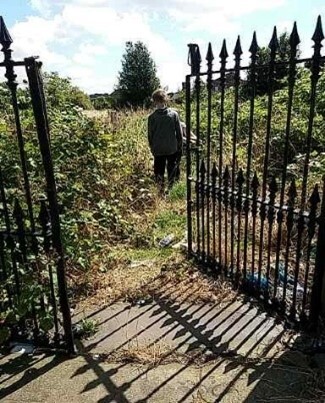
Dr. Aston died in January 1899 and was laid to rest in Chapel Street Cemetery, only a few rows away
from the grave of his parents. After his death, Mary Ann and the two girls moved into lodgings on
Leeds Road, Eccleshill. By 1911, Mary Ann had disappeared from the records, but Marian is found
lodging at Moorwell Place, Eccleshill whilst studying for a BA. She became a teacher at Belle Vue School
in Bradford, a profession she continued throughout her life. Amelia Jane became an actress and married
Charles Herbert Henderson in 1911, a much older man, who was the stage manager of a theatre in
Manchester. Their marriage was short lived as whilst on a visit to Bradford in 1918, Charles died suddenly.
After Charles’s death, Marian supported her older sister and the two lived together for many years.
Amelia died in 1925 and Marian in 1968.
[1] The Society of Apothecaries was incorporated as a City Livery Company by Royal Charter from
James I on 6th December 1617 in recognition of apothecaries’ specialist skills in compounding and
dispensing medicines. The society has been licensing doctors to practise medicine since 1815.
[2] The Hydro in Bristol was a hydrotherapy pool. Hydrotherapy involves the use of warm water for
pain relief and treatment can improve a range of conditions including arthritis, rheumatism and
sports injuries.
[3] Homeopathy is an 18th-century alternative medicine system based on treating “like
with like”. It uses highly diluted natural substances (plants, minerals) designed to trigger the body’s
healing.
Location: Section 4 L29