
On This Day in Wembury
21 November 1908 — Proposal to Enclose Wembury Bay for Atlantic Liners
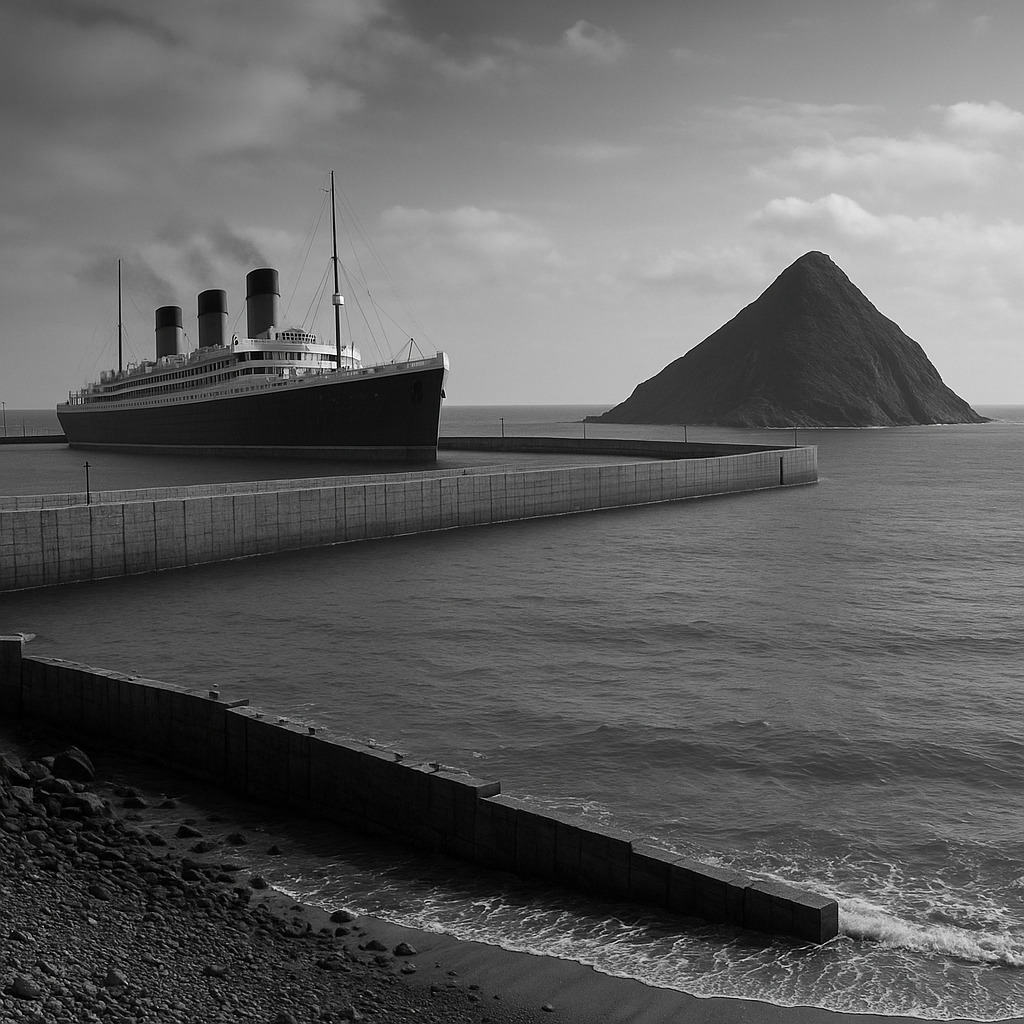
On this day the Hampshire Independent reported on a statutory notice lodged at Plymouth for a vast maritime scheme: the enclosure of Wembury Bay with three great sea walls and embankments, stretching from Wembury Point to the Great Mewstone and across to Gara Point. Inside the breakwaters, over 1,000 acres of sheltered water were to be created, including what would have been the largest dock in the kingdom, graving docks over 1,000 feet long, and quays capable of handling up to ten of the largest Atlantic liners afloat. A direct railway, four miles long, would have linked the complex with Plymouth. Proponents argued the docks would rival Cardiff, Bristol, and Liverpool in scale and bring enormous commercial benefit to the West of England.
Reflection: Though the scheme was never realised — Admiralty opposition and logistical challenges saw it abandoned — the proposal shows how Wembury’s quiet bay was once considered for transformation into a world-class shipping terminal. Had it gone ahead, the coastline would have been irrevocably altered, with the Mewstone hemmed in by breakwaters and the parish reshaped into an industrial port landscape. Wembury’s character as a village of fields, cliffs, and beaches might have been lost to cranes, railways, and ocean liners.
Source: Hampshire Independent, 21 November 1908.
ON THIS DAY IN WEMBURY – 21 November 1932
A deeply sad event unfolded in Wembury when 27-year-old motor mechanic Alfred Cecil Griffin, of The Fletchers on Wembury Road, was found dead by the roadside late on a Monday night. His father, Fred Griffin, an elderly pensioner, told how Alfred had come home from work unusually early, gone upstairs as if to rest, and then quietly left the house without disturbing his bed. When Alfred’s mother took him a cup of tea and discovered his room empty, the alarm was raised.
Fred searched the property by lantern light, checking the garden and nearby lanes, until he finally found his son lying in the roadway with gunshot wounds to the head. A small rifle was beside him. Despite immediately calling a doctor and the police, nothing could be done.
At the subsequent inquest the full weight of Alfred’s recent troubles came to light. Several years earlier he had faced difficulties in his marriage, and although a divorce had been granted nine months before, the decree had not yet been made absolute, preventing him from remarrying. The woman he hoped to wed died following an operation, a blow from which he never recovered.
His father explained that Alfred had been financially strained, emotionally exhausted, and believed he had recently received a threatening letter demanding money. Dr J W Bradbury of Oreston, who had treated him, described Alfred as excitable and prone to sudden impulses. The Coroner returned the verdict “Suicide by shooting while of unsound mind.”
The tragedy would have cast a heavy shadow over the Wembury community, coming at a time when mental health difficulties were rarely spoken of and support was limited. Alfred’s story reflects the quiet pressures carried by many young men in the interwar years — financial stress, emotional loss, and the lack of help available to them.
Source, Western Morning News, 23 and 25 November 1932.
Entries are summaries and interpretations of historical newspaper reports.