
On This Day in Wembury: 2nd Sept 1765
The Library of William Molesworth
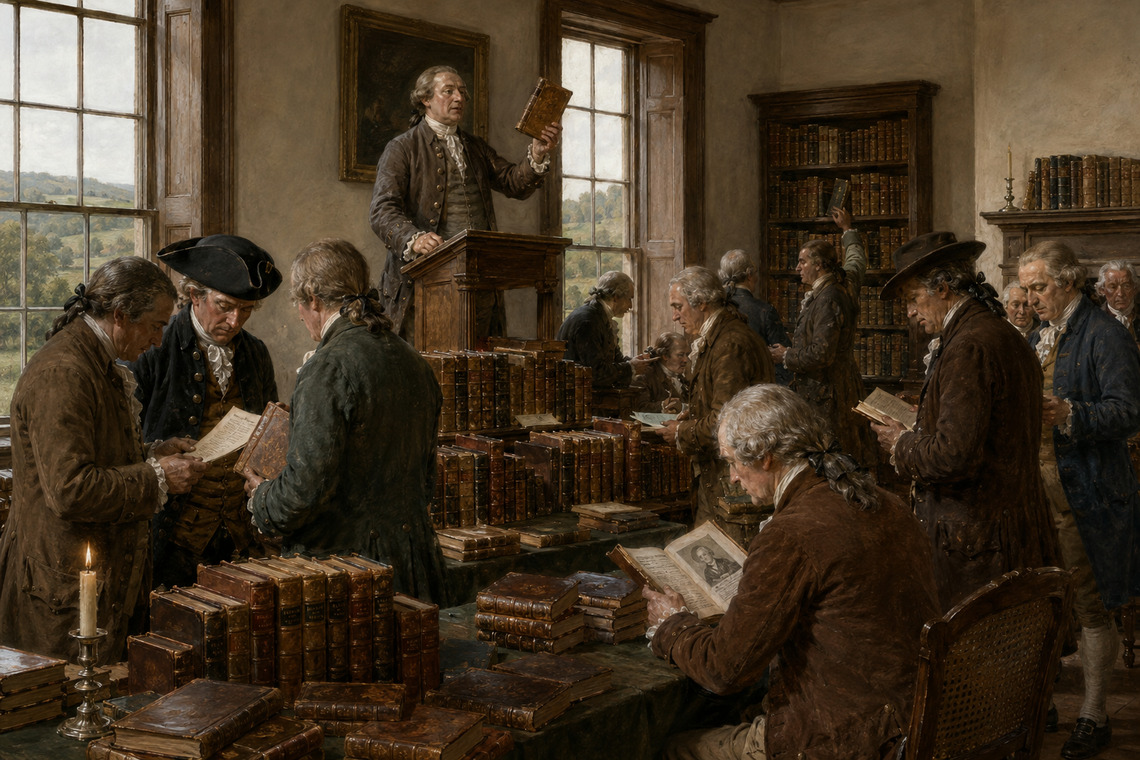
On 2 September 1765, the Sherborne Mercury announced that the library of the late William Molesworth Esquire was to be sold by auction at Wembury House. The sale was arranged for 5 and 6 September and included what was described as a large collection of valuable and well preserved books.
William Molesworth was not simply a wealthy resident of Wembury. Born in Cornwall in 1732, he was the younger son of Sir John Molesworth, the fourth Baronet of Pencarrow, near Bodmin. He was therefore a member of one of Cornwall’s most influential landed families, although, as a younger son, he did not inherit the title or the main Pencarrow estate.
The family’s baronetcy and much of its earlier wealth came through William’s great grandfather Hender Molesworth, a Jamaican plantation owner and colonial governor. The family’s position was therefore connected to land and enslaved labour in Jamaica.
William studied at Balliol College, Oxford, graduating in 1751. In 1756 he married Elizabeth Smyth, one of the daughters and coheiresses of James Smyth of St Audries in Somerset. Elizabeth brought considerable inherited wealth from a Bristol merchant family.
That same year William bought the Wembury estate from Elizabeth Chudleigh. The Wembury House in which he lived was an earlier building on the site, not the present house, which was constructed for Thomas Lockyer in about 1803.
William and Elizabeth had two daughters, Barbara and Frances. Their time at Wembury was marked by a series of family tragedies. Elizabeth died at Wembury in December 1758, shortly after the birth of Frances, and was buried at St Werburgh’s Church. William died on 9 February 1762, aged only 29. His elder daughter Barbara died a few months later, aged about five.
The only surviving member of the immediate family was the young Frances Molesworth. She eventually became a considerable heiress and in 1785 married John Jeffreys Pratt, who later became the first Marquess Camden. Their family connection helped carry the Molesworth name into Camden Town, where Molesworth Place appeared on an estate map of 1833.
The auction advertised in September 1765 therefore took place more than three years after William’s death. It appears to have formed part of the lengthy dispersal or settlement of his Wembury property while his surviving daughter was still a child. Catalogues were available from Mr Whitefield and Mr Haydon, booksellers in Plymouth, and the sale began at ten o’clock on each of its two days.
The notice marks the closing chapter of the Molesworth family’s short and unhappy occupation of Wembury House. William had arrived as a young, educated and wealthy gentleman with a new wife and the prospect of establishing his own branch of the family. Within six years, both parents and one of their children were dead. By September 1765, even William’s books were being sold and removed from the house.
Sources include the original Sherborne Mercury notice, the Camden Town History study of Frances Molesworth, British History Online’s account of Wembury and the Historic England record for Wembury House.
On This Day near Wembury – 2 September 1995
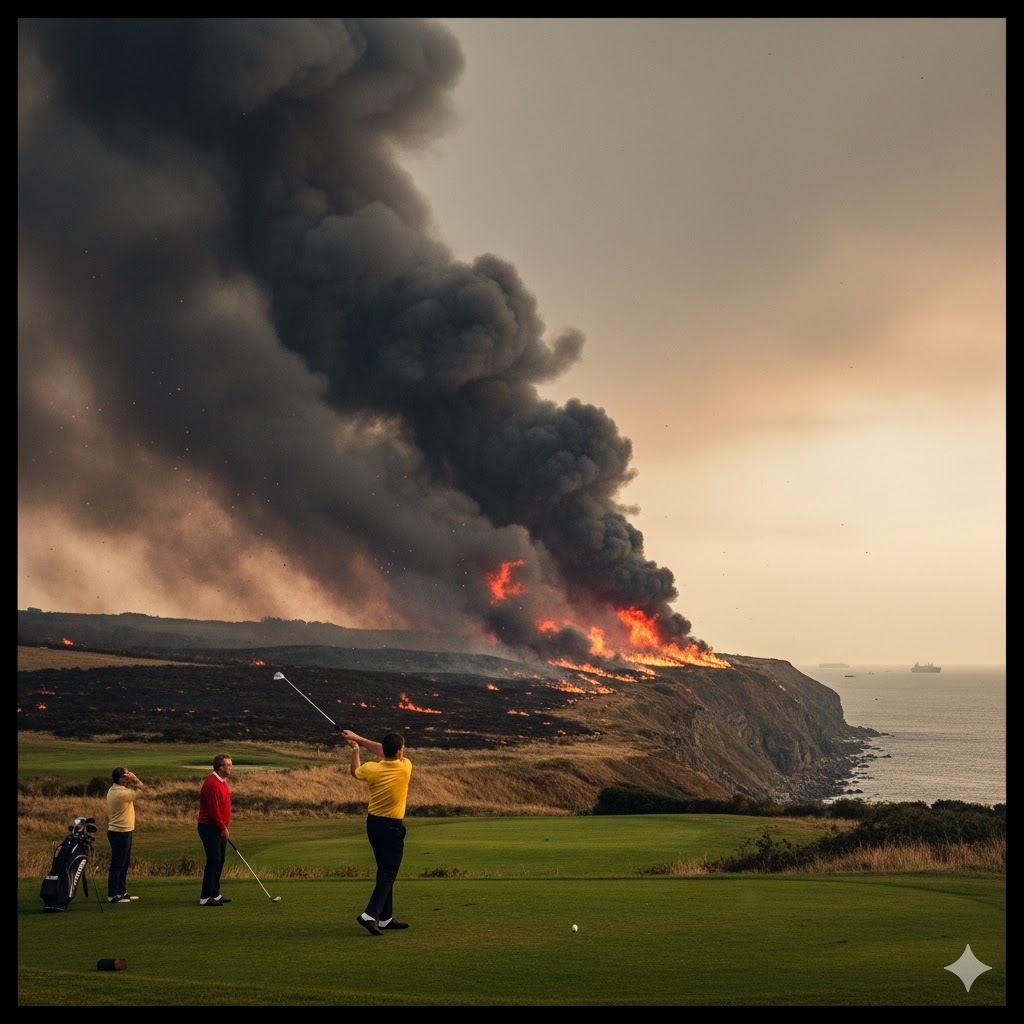
A huge grass and gorse fire swept along the cliffs between Bovisand and Jennycliffe Bay, leaving nearly a mile of charred cliff face overlooking Plymouth. Thick smoke drifted inland, but on the nearby Staddon Heights Golf Course, players carried on regardless.
Hamish Fleming, club secretary, remarked that “golfers don’t stop for things like this,” so long as their rounds could be played in safety. The blaze raged through the night before being brought under control, marking one of the more dramatic cliff-top fires in living memory.
Source: Western Morning News, 2 Sept 1995.
Entries are summaries and interpretations of historical newspaper reports.