
On This Day in Wembury – 26 August 1833
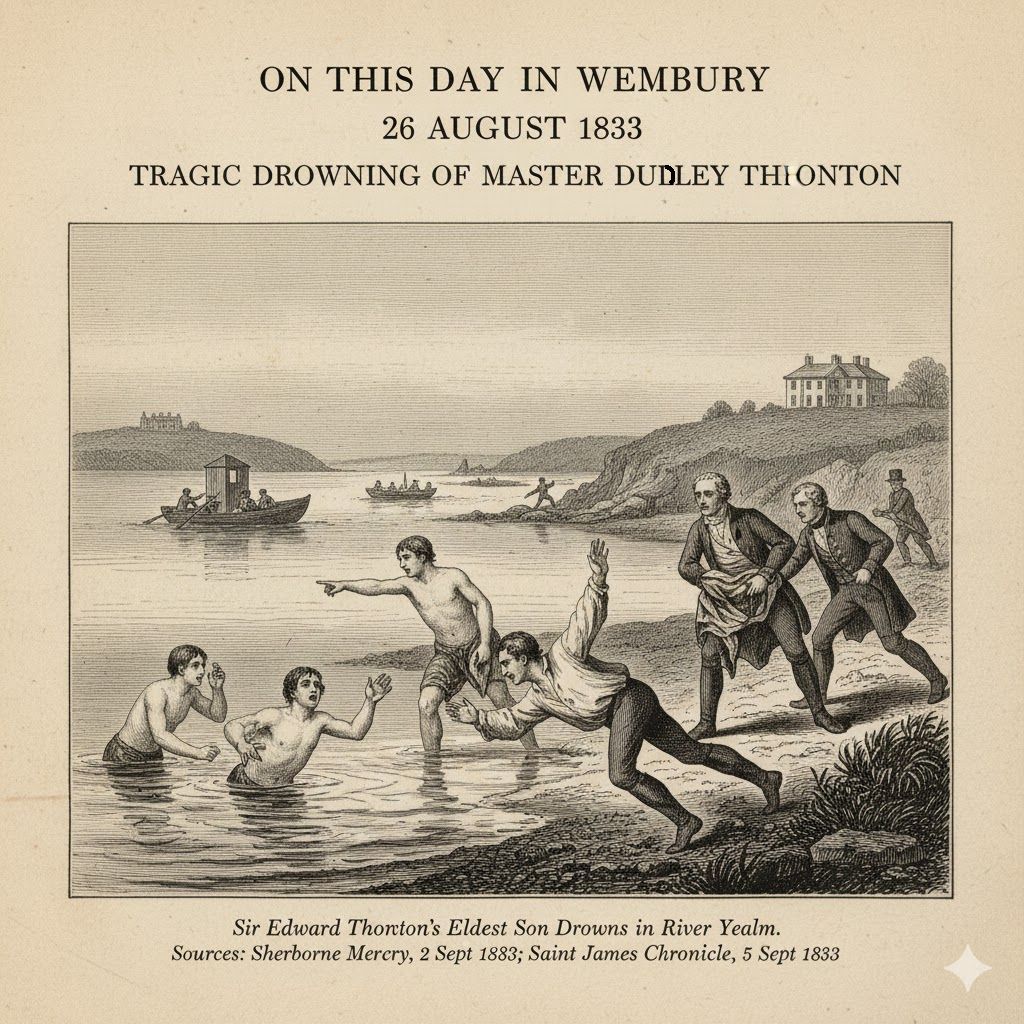
A tragedy befell the Thornton family of Wembury with the drowning of Master Dudley Thornton, the 17-year-old eldest son of Sir Edward Thornton.
The accident occurred while Dudley was bathing in the River Yealm with his brothers on a warm Monday morning. Sir Edward, mindful of their safety, had ordered that they bathe under supervision, and even had a servant join them in the water. Despite these precautions, Dudley suddenly disappeared beneath the surface.
His brothers immediately raised the alarm. Sir Edward rushed into the river fully clothed but, hampered by his sodden garments, was forced back to shore. Stripping to his shirt and boots, he dived again, but could not locate the exact spot where his son had gone under.
Men from the preventive station launched a boat with great speed and recovered Dudley’s body within minutes. Resuscitation was attempted at once, but although he had been in the water for only nine minutes, all efforts failed.
Newspapers described Dudley as a youth of great promise, and the grief of his family was widely noted. The incident stands as a stark reminder of the dangers of river bathing in the 19th century, even under the eye of a parent.
Sources: Sherborne Mercury, 2 Sept 1833; Saint James Chronicle, 5 Sept 1833.
A Serious Fall From a Wembury Stile
Western Morning News, 26 August 1938
A visit to the Wembury countryside ended painfully for Mrs C. Kemp, aged 15, Garden Crescent, West Hoe, Plymouth.
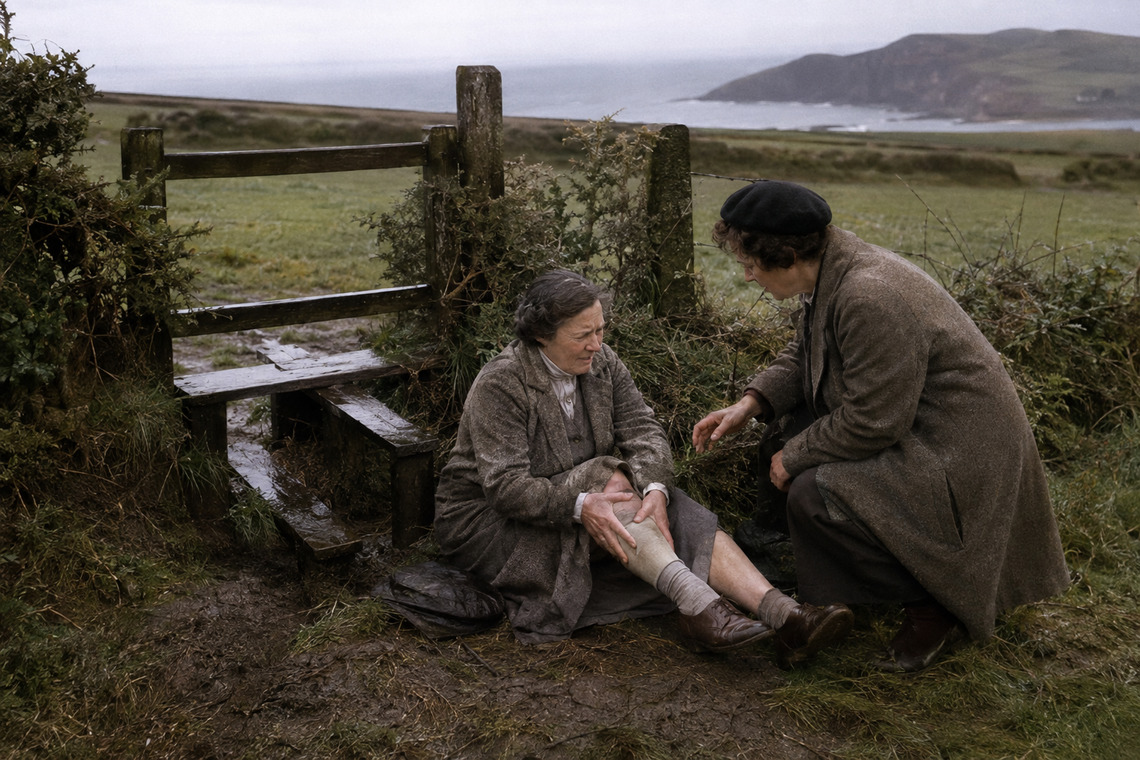
While climbing down from a stile in one of Wembury’s fields, Mrs Kemp slipped on the wet soil and fell. She suffered two broken bones in her leg and had to be taken by ambulance to the Prince of Wales’s Hospital in Greenbank Road, Plymouth.
The following evening, she was reported to be progressing favourably.
The newspaper did not identify the field, the path she was following or who came to her assistance. However, Wembury was already a popular destination for walkers and visitors from Plymouth, who arrived by bus or travelled out from the city to enjoy the coast and countryside.
Reflection
Today, a stile can appear to be a picturesque feature of a country walk. This brief report reminds us that wet Devon soil, uneven ground and awkward wooden steps could make one genuinely hazardous.
Mrs Kemp’s accident was serious: breaking both bones in the lower leg would have meant a lengthy and painful recovery in 1938. Yet the newspaper’s reassuring final sentence—that she was “progressing favourably”—suggests that the immediate danger had passed.
The precise Wembury stile has long since been forgotten, but the familiar combination of rain, mud and a difficult field crossing makes this small story remarkably easy to picture.
The accompanying image is a historically informed reconstruction; neither the location nor Mrs Kemp’s appearance is known.
On This Day in Wembury – 26 August 1996
The Western Morning News published a letter from Mrs J. E. Davarian of Plymstock, responding to debate about new housing proposals in Wembury.
She recalled her childhood memories of the village, walking from the almshouses where her grandfather lived down Brown Hill Lane, past Wembury House, and across what were then open fields to the beach. At that time, she noted, Wembury was “truly a village,” centred on Knighton Hill and Church Road.
Much of that land, she observed, had since been built over. Many newer residents, she suggested, were enjoying homes in what they called an unspoilt village — but only because others before them had already developed the fields. “It’s 35 years too late to save the area,” she wrote.
Mrs Davarian even applauded a fresh Wimpey planning application, not for the houses themselves but in the hope that development would finally bring a proper speed limit to the Wembury road, which then had a 60mph limit. Today the road is restricted to 30mph, with police speed cameras often in place to enforce it.
Source: Western Morning News, 26 Aug 1996.
Entries are summaries and interpretations of historical newspaper reports.