
🚍 ON THIS DAY IN WEMBURY — 23 AUGUST 1935
BUS AND CAR COLLIDE AT SPRIDDLESTONE CROSS
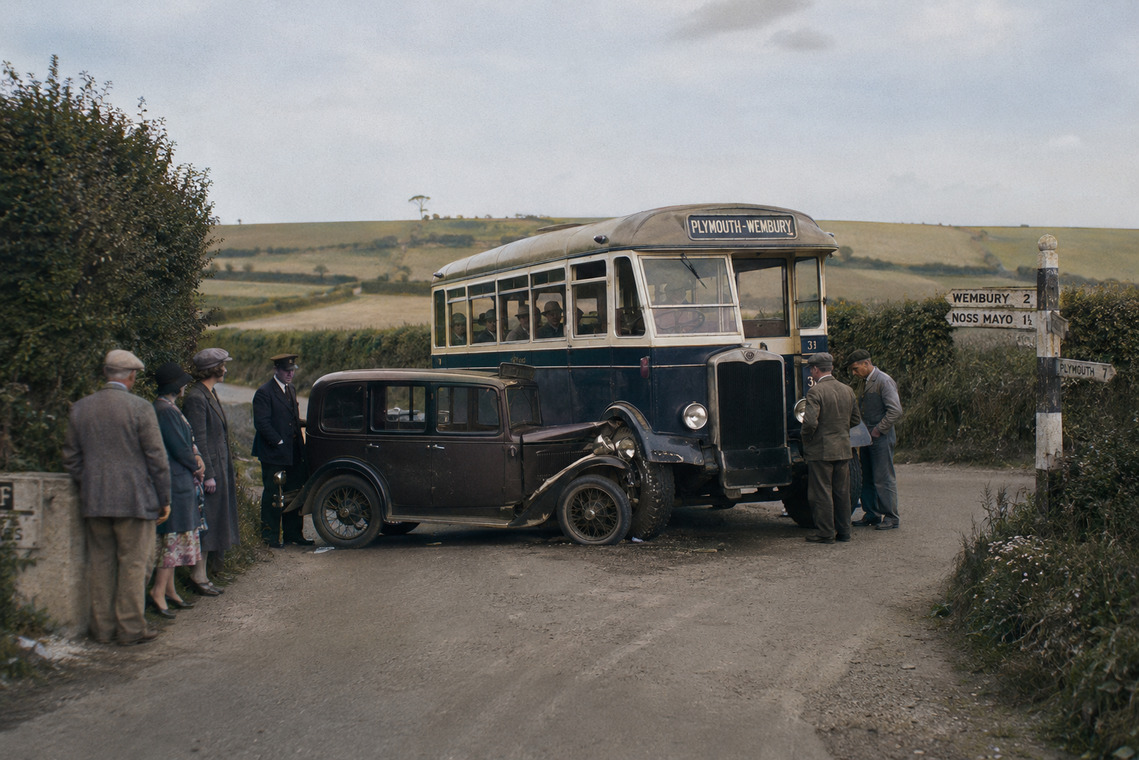
On this day in 1935, the Western Morning News reported a road accident at Spriddlestone Cross, approximately two miles from Wembury.
The previous evening, a motor bus travelling from Plymouth towards Wembury reached the crossroads just as a private car approached from another direction.
The two vehicles collided in the middle of the junction. The impact was forceful enough to drag the car for eight or ten feet before both vehicles came to a halt.
There were only a few passengers aboard the bus at the time. Remarkably, nobody in either vehicle suffered any personal injury.
Shortly after the accident, Mr D. Branson of Yealmpton arrived at the crossroads. He found the bus and car still locked together, with the private car having sustained damage.
The report gives no names for either driver and offers no explanation of who had right of way—or whether either vehicle had seen the other approaching through the surrounding hedges.
REFLECTION
Today, Spriddlestone Cross lies on a familiar route between Plymouth, Plymstock and Wembury. In 1935, however, these were much quieter rural roads, bordered by high hedgebanks and carrying vehicles with limited braking power and almost none of the safety protection we now take for granted.
There were no seatbelts, airbags or modern crumple zones. Road markings and warning signs were far less extensive, while a driver approaching a narrow country crossroads might have had very little view of traffic coming from either side.
That makes the newspaper’s most important detail particularly striking: despite the car being dragged several feet and left locked against the bus, nobody was hurt.
The accident was dramatic enough to earn a place in the following morning’s newspaper, but fortunate enough to leave us with a story about damaged machinery rather than lost lives.
📷 The accompanying image is a modern historical interpretation of the collision. It imagines the bus and car at a rural crossroads near Wembury; the vehicles’ precise makes, colours and positions are not recorded in the original report.
Source: Western Morning News, 23 August 1935.
#OnThisDay #Wembury #WemburyWaves #Spriddlestone #WemburyHistory #PlymouthHistory #MotoringHistory #LocalHistory
On This Day in Wembury — 23 August 1937
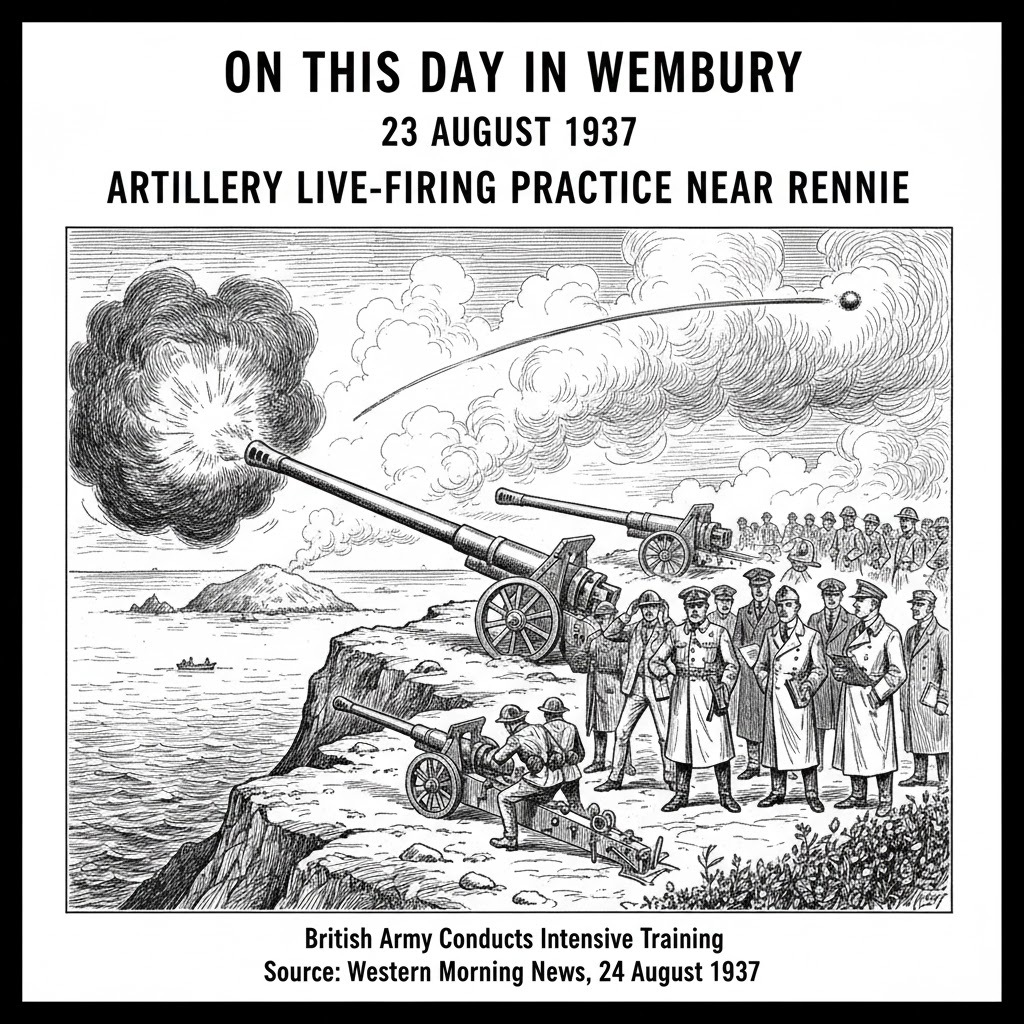
The cliffs near Rennie, close to Wembury, echoed to the sound of twelve big guns as the 3rd and 23rd Heavy Batteries of the 1st Heavy Brigade, Royal Artillery began an intensive programme of firing practice. The weapons included 9.2-inch howitzers and 6-inch calibre guns, directed under the command of Lieut.-Col. D. Paige. War Office officials and officers of Southern Command attended to observe the training, which was expected to continue for several days.
Source: Western Morning News, 24 August 1937
To those in nearby villages, the earth-shaking blasts were a reminder that Europe’s uneasy peace might not last. Today the same headlands are walked for their views and wildlife, but in 1937 they doubled as Britain’s front line of preparation.
Entries are summaries and interpretations of historical newspaper reports.