On this day in Wembury — 5 May 1866
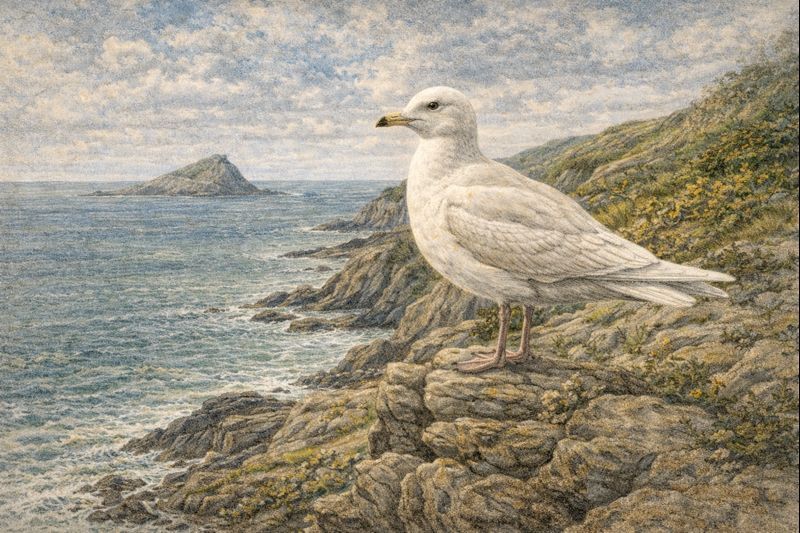
An unusual visitor was recorded along the coast at Wembury — an Iceland Gull (Larus leucopterus), a rare Arctic species seldom seen so far south. Writing in The Field magazine, naturalist J. Gatcombe reported spotting the bird “when sitting on the cliffs at Wembury on Saturday last.” He noted that, although the gull had been observed occasionally near Plymouth during winter, this sighting was exceptional for the time of year.
Gatcombe, a respected Plymouth ornithologist, compared the Iceland Gull to its larger British relatives, remarking on its “whiter plumage and smaller size.” His observation added to a growing record of rare seabirds along the South Devon coast during the mid-Victorian era, when interest in natural history was at its height.
The cliffs and estuaries around Wembury were already known for attracting seabirds, particularly in the cold months when northerly winds drove Arctic species south. Gatcombe’s detailed notes contributed to early regional bird studies, many of which would later inform the Plymouth Institution’s natural history records and help establish the South Devon coastline — including Wembury — as a notable location for migratory and overwintering birds.
His calm account, written in an age before binoculars were common, captures both the precision and quiet wonder of Victorian field observation — a reminder that Wembury’s cliffs have long drawn watchers of the sky as much as lovers of the sea.
(The Field, 5 May 1866)
Curated and written by Wembury Waves using material from the British Newspaper Archive.
Entries are summaries and interpretations of historical newspaper reports.
