
On this day in Wembury — 3 May 1889
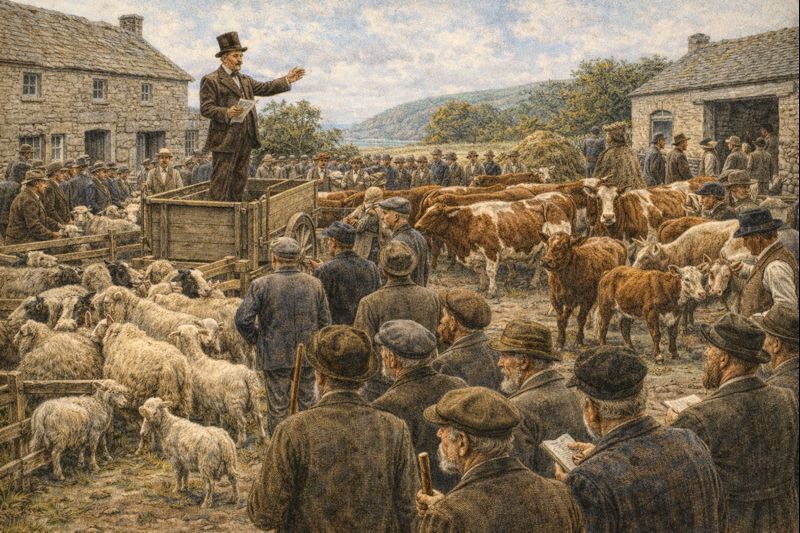
Under the heading "Wembury", The Exeter and Plymouth Gazette reported a thriving agricultural auction at Penleigh , where Messrs Bourne and Son sold off the livestock of Mrs Nelder. The sale drew farmers and dealers from across Devon and Cornwall, eager to bid on what the paper called “a valuable lot of South Hams stock.” Bidding was brisk, and the prices showed the continuing strength of local farming in the late Victorian period.
The sheep were offered first, with double couples fetching 91 and 87 shillings a pair, and single ewes ranging from 63 to 76 shillings. Ewe hoggs sold close to 50 shillings each, the best making 61. Cattle followed, with cows and calves selling for around £23, and heifers in calf reaching up to £21 10s. Young heifers brought between £10 and £12, while yearlings and stirks sold from £7 to £13. Calves fetched £5 to £6 per pair, and three yearling bulls sold to Mr Crosseing of Woodford for 14, 15 and 15½ guineas.
Such detailed reports were a staple of the rural press, chronicling not just prices but the pulse of country life. For Wembury farmers, this was both business and social occasion — a day of handshakes, gossip, and a measure of prosperity at a time when the land still set the rhythm of the parish.
Perhaps Penleigh Farm itself once stood in the southern part of Wembury parish, possibly between Knighton and the coast road leading to Wembury Point. The name, derived from the old words pen for headland and leigh for meadow, literally means “farm on the headland field.” However, the only Penleigh Farm I can find is situated in Wiltshire so there's a mystery!!
(Exeter and Plymouth Gazette, 3 May 1889)
Entries are summaries and interpretations of historical newspaper reports.