
On this day in Wembury — 22 April 1996
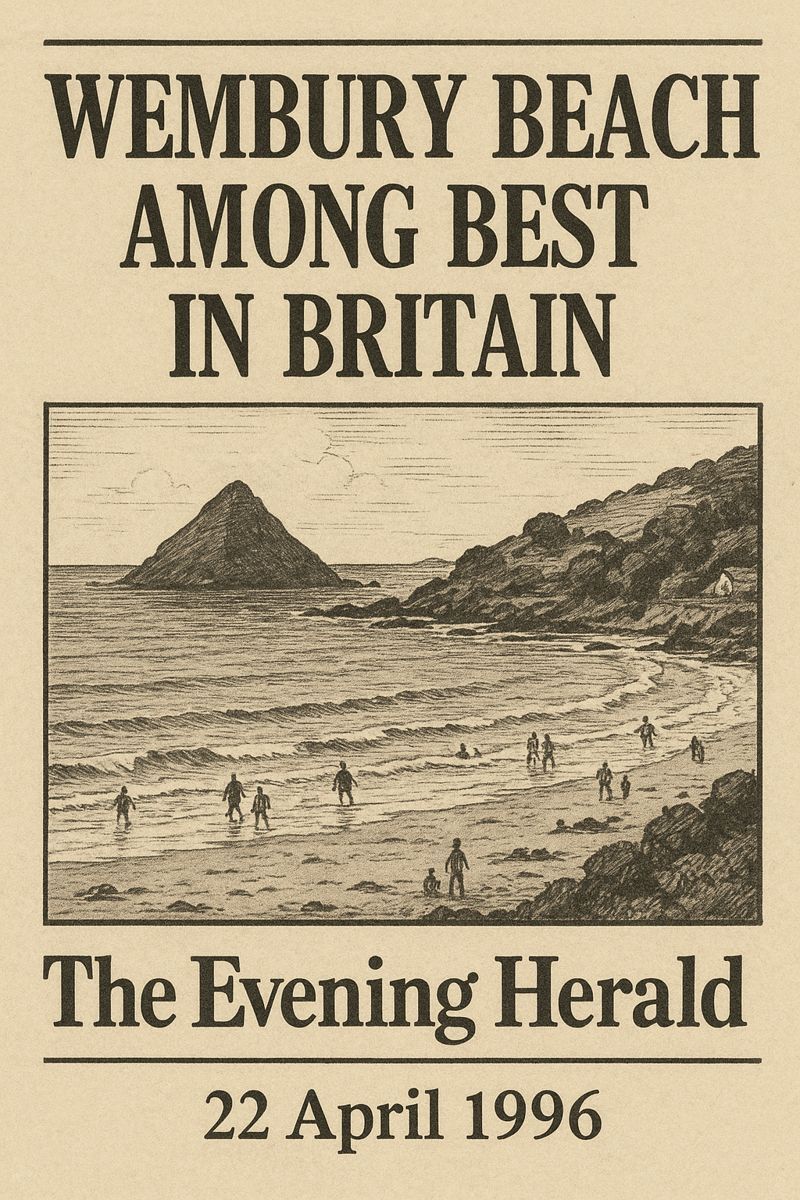
The Evening Herald reported a surge of pride across the South Hams as eight local beaches, including Wembury, were named among the best in Britain in the new Reader’s Digest Good Beach Guide. It was a moment of long-awaited recognition. Years of frustration over sewage discharges and poor water quality had given way to optimism, thanks to new treatment works and tighter environmental standards. Devon County Councillor John Hart, who represented Wembury and Erme, said he was “delighted” that Wembury Beach had been included, calling it “the playground of Plymouth” and celebrating South West Water’s role in cleaning it up. “Wembury is getting better all the time,” he told the paper.
In 1996 the Marine Conservation Society’s guide used its own demanding “dolphin rating” system. Wembury earned three dolphins, meaning its water met the MCS minimum standards and was safe to swim in. The other seven beaches, including Mothecombe, Bigbury, Bantham and Thurlestone, achieved the top four-dolphin rating. The report was clear about the challenge that remained, warning that at too many British resorts “someone flushing a toilet may find that the contents reach the beach before they do.”
Nearly thirty years on, Wembury’s position has transformed. The bay now consistently meets or exceeds the top water quality category under the Environment Agency’s bathing water classifications, a reflection of long-term investment in sewage infrastructure and storm overflow controls. The Marine Conservation Society’s most recent Good Beach Guide listings place Wembury among the cleanest monitored beaches in Devon.
The Marine Centre, run by the Devon Wildlife Trust, draws visitors for its rockpool safaris and marine education work, and the old fear of pollution has largely faded. Dog restrictions, clear signage, and volunteer clean-ups keep the beach well managed. The combination of water quality, natural beauty, and accessibility from Plymouth makes Wembury one of the South West’s most respected family beaches — living proof of the environmental turnaround that began with that cautious note of optimism back in April 1996.
(Western Evening Herald, 22 April 1996; comparison based on Environment Agency and MCS data, 2025)
Entries are summaries and interpretations of historical newspaper reports.