
On This Day in Wembury — 20 March 1915
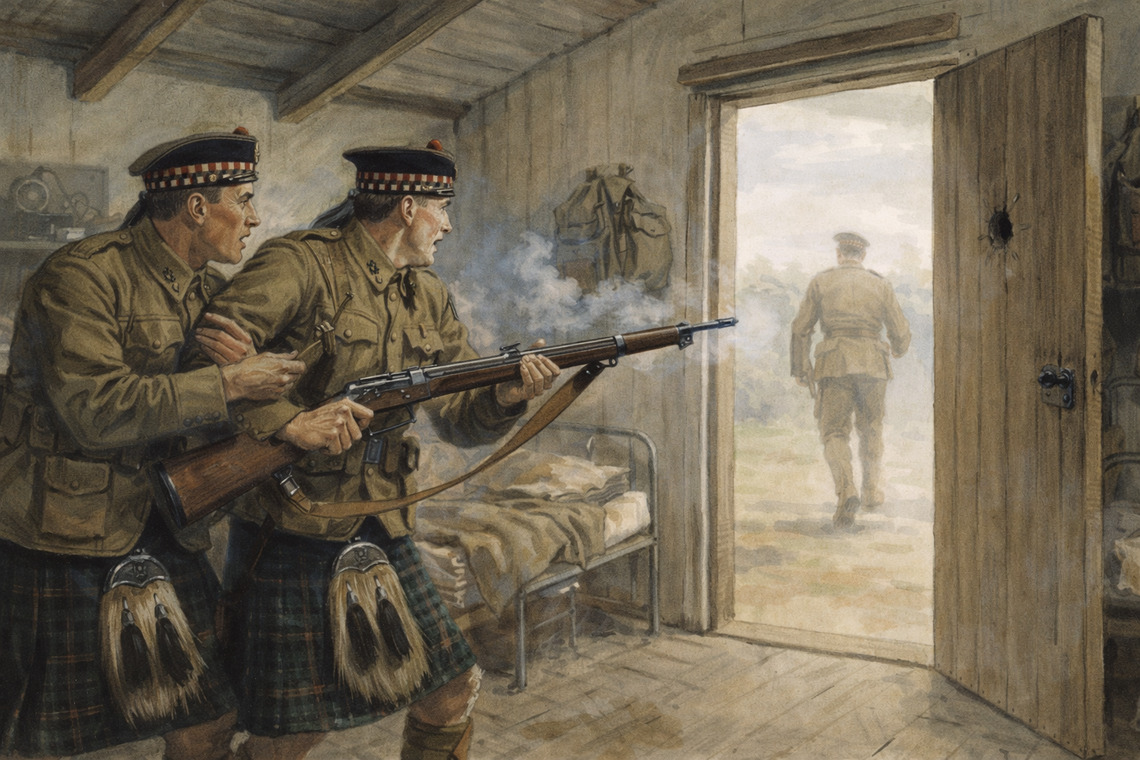
A tragic shooting took place at Fort Rennie, in Wembury parish, on 20 March 1915, when Private David Welsh of the Highland Light Infantry was fatally shot by a bullet fired from inside the barrack room. Reports stated that Welsh had just passed through a door when his friend, Private Robert Laird, fired a rifle believing it to contain only a dummy cartridge. Instead, the shot passed through the two-inch-thick door and killed Welsh instantly. Laird was arrested and brought before the magistrates at Plympton, where he said it was an accident and expressed deep distress. At the inquest, the jury returned a verdict of accidental death, and when the case later came before the Exeter Summer Assizes, the Grand Jury threw out the bill. Contemporary reports also stated that Welsh was a man with whom Laird had no quarrel.
Sources: Western Evening Herald, 22 March 1915, “Shot at Fort Rennie”; Western Morning News, 23 March 1915, “Soldier Shot at Fort Rennie”; Exeter Flying Post, 12 June 1915, Summer Assize report
What makes the case so shocking is that even on the evidence reported at the time, the act seems desperately careless. If Laird truly believed the rifle contained only a dummy cartridge, he may have thought there was no real danger in firing at the door just after Welsh had passed through it. The later finding of accidental death suggests the authorities accepted there was no intent to kill, but the incident still reads as a tragic example of reckless handling of a weapon with fatal consequences.
On this day in Wembury — 20 March 1999
The Western Evening Herald reported several local stories that week, all centred on community life and the protection of Wembury’s coastline.
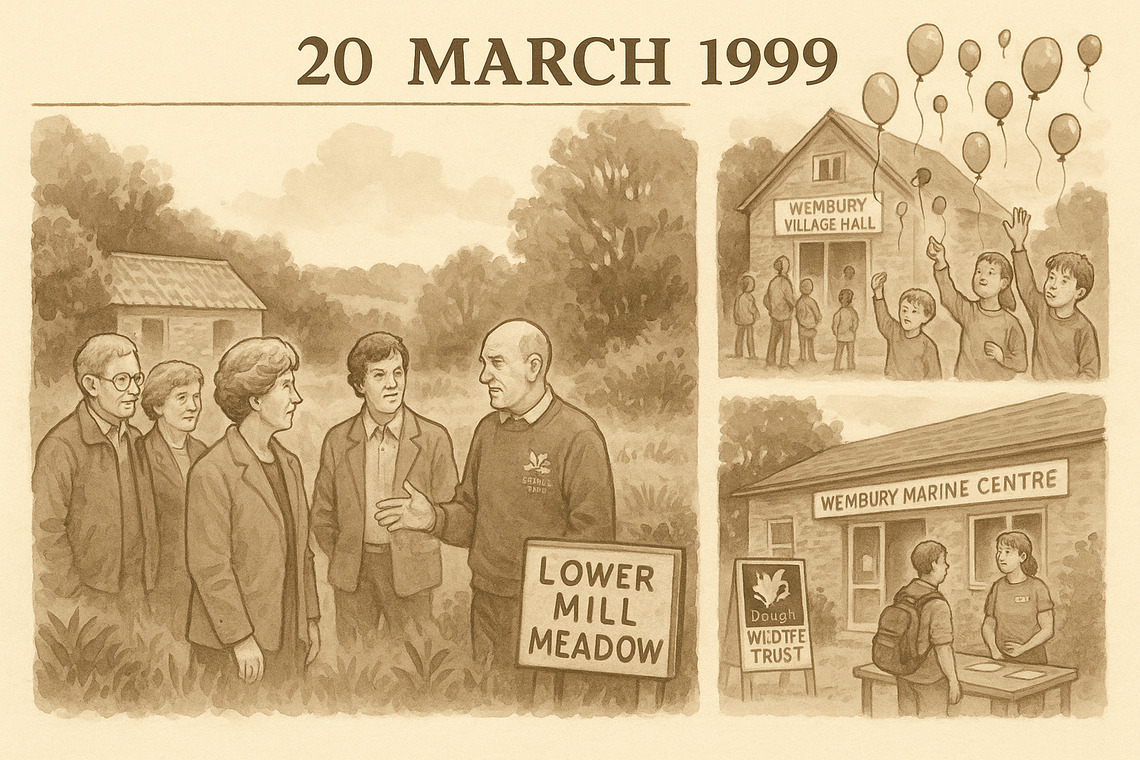
The main item covered a meeting between Wembury Parish Council and officers of the National Trust regarding the Trust’s new acquisition of Lower Mill Meadow. For many years, the condition of the meadow had been a concern for residents. Parish Council chair Monica Pinckard said the council had always recognised its responsibility to safeguard the Area of Outstanding Natural Beauty and welcomed the chance to be involved in the Trust’s plans for restoration and long-term management of the site.
Another story celebrated the success of the Wembury Pre-School Group’s balloon race, held at the Village Hall on 16 January. Nearly 300 balloons were launched, each carrying the name of a sponsor hoping theirs would travel the furthest. Some labels returned from as far as France, while others came back from West Buckland and other nearby areas. The adult winner was Gerry Brown (balloon from France), and among the children’s categories, Jacob Mower, Becky, Sam Romang, and Roger Underwood were winners. The event raised £250, and supervisor Mandy Wirgman said she was thrilled with the result.
Meanwhile, the Devon Wildlife Trust announced a volunteer open day at the Wembury Marine Centre, next to the beach, to recruit helpers for educational visits, school group sessions, and visitor engagement during the coming season.
Taken together, the stories paint a picture of Wembury at the close of the 20th century—active, community-minded, and deeply connected to its coast and countryside, with the National Trust and Devon Wildlife Trust now firmly shaping the stewardship of the area’s natural heritage.
(Source: Western Evening Herald, 20 March 1999 — “Wembury: Your Local.”)
Entries are summaries and interpretations of historical newspaper reports.