
On this day in Wembury — 25 February 1765
A short satirical poem appeared in the Sherborne Mercury, signed simply “F. T., Wembury.” Entitled “Spoken Extempore,” it reads:
Since tuneful Churchill is no more,
And Wilkes is banish’d from our shore,
What patriot now will watch us?
Of S——men should we catch the itch,
And, like them, suddenly grow rich,
There is no soul to scratch us.
The poem was a witty commentary on mid-18th-century politics and satire. “Tuneful Churchill” refers to Charles Churchill (1731–1764), the outspoken poet and pamphleteer who attacked hypocrisy in church and state and died only months earlier. “Wilkes” refers to John Wilkes (1725–1797), the radical MP and journalist who was exiled after publishing attacks on King George III. Together, the two men had championed freedom of the press and liberty of speech — causes that resonated across Britain.
The missing “S——men” almost certainly meant statesmen, a common typographical convention in 18th-century newspapers used to veil political criticism. The line “no soul to scratch us” completes the conceit — with the “itch” of corruption left unchecked now that the great satirists were silenced or exiled.
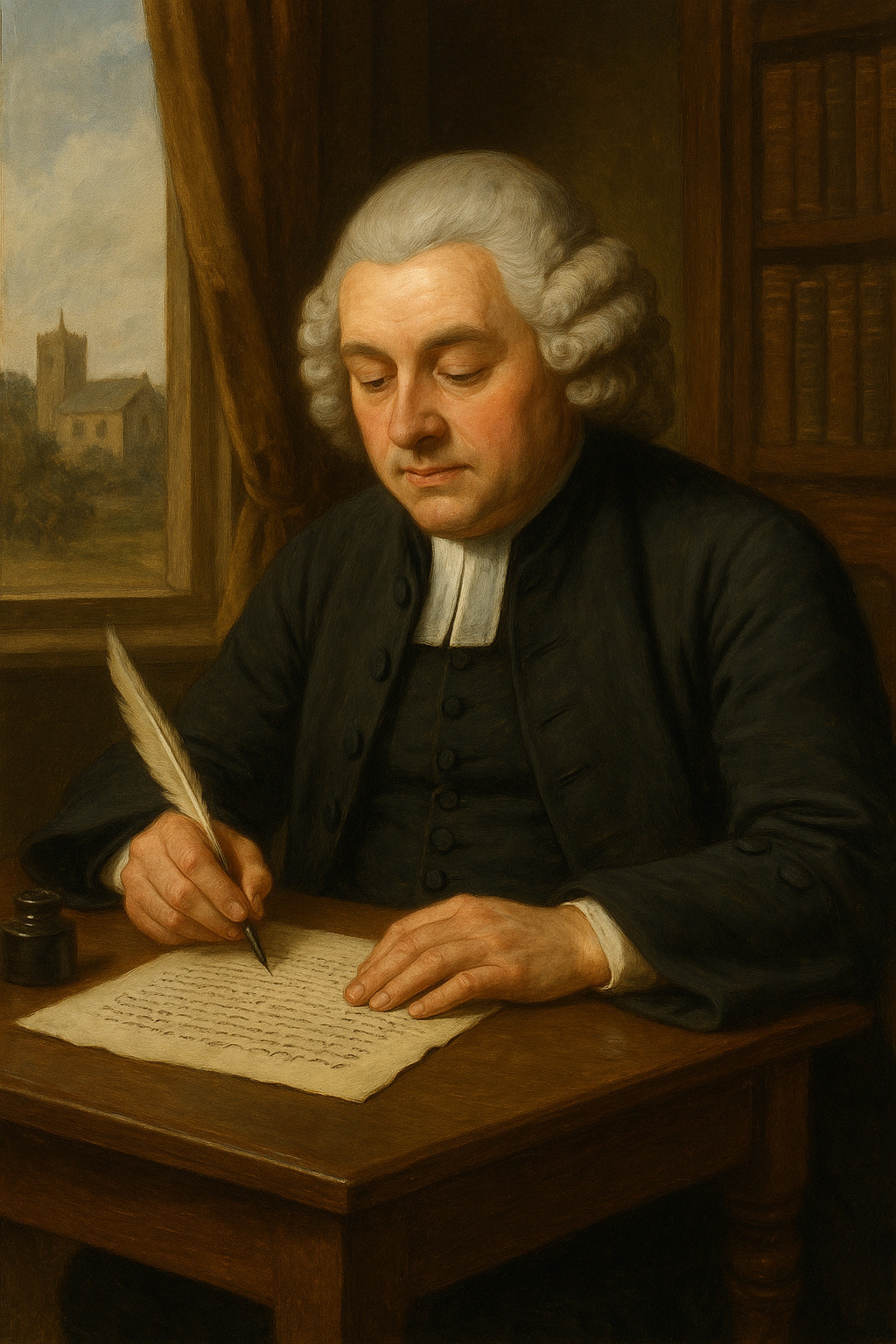
The initials F. T. remain unconfirmed, but may have belonged to a clergyman or educated resident of Wembury with literary leanings, possibly connected to the church or local gentry. The tone and classical wordplay suggest someone well-read and politically aware, engaging from this quiet Devon parish in the lively national debates of the day.
Source: Sherborne Mercury, 25 February 1765.
And now, a guess!
In the mid-18th century, Wembury was a small coastal parish under the influence of a few educated families and the church. The parish register and clergy lists from the period record Rev. Francis Tothill, who was active in the South Devon area and is occasionally linked to Wembury and Plymstock in diocesan documents. He was from a clerical family — the Tothills appear in Exeter records from the early 1700s and he would have been precisely the kind of man who read and contributed to provincial papers such as the Sherborne Mercury, which often carried items from literate country clergymen.
The style of the poem , playful, politically literate, moral in tone but couched in humour , fits that of a literate cleric or gentleman-satirist, not a farmer or tradesman.
So, while not certain, the most plausible identification for “F. T., Wembury” is the Reverend Francis Tothill, a Devon clergyman likely resident in or near Wembury at the time. He fits the initials, the education level, the tone, and the period perfectly.
If this is correct, the poem would represent a rare surviving example of mid-Georgian political satire penned from the South Devon coast — a tiny but telling sign of how even remote parishes like Wembury were tuned in to the political turbulence of 1760s London.
Entries are summaries and interpretations of historical newspaper reports.