
On this day in Wembury — 2 February 1767
Two short verses by F. T., Wembury appeared in the Sherborne Mercury of 2 February 1767, both dated 20 January 1767. The first, a letter to the editor titled “To the Printer of the Sherborne Mercury,” reads:
Old pension’d Will may chatter still,
And cavil and dispute;
But all agree, and plainly see,
He is a tool to B—.
May Heav’n hear our ardent pray’r,
And grant what we implore!
Let those in trust be always just,
’Tis good! we ask no more.
The second, beneath it, was a pious riddle-answer titled “An Answer to the Ænigma in the Sherborne Mercury of the 12th Instant,” concluding:
In holy writ our Saviour shews,
His mission was divine;
He, for the unbelieving Jews,
Turn’d water into wine.
The poems show F. T. of Wembury as both politically aware and scripturally fluent. The “Old pension’d Will” likely referred to William Pitt the Elder, Britain’s celebrated but controversial former prime minister, who had been granted a government pension in 1766. The “B—” probably alluded to the Duke of Bedford or possibly Bute, two figures often accused of political manipulation in the press of the time.
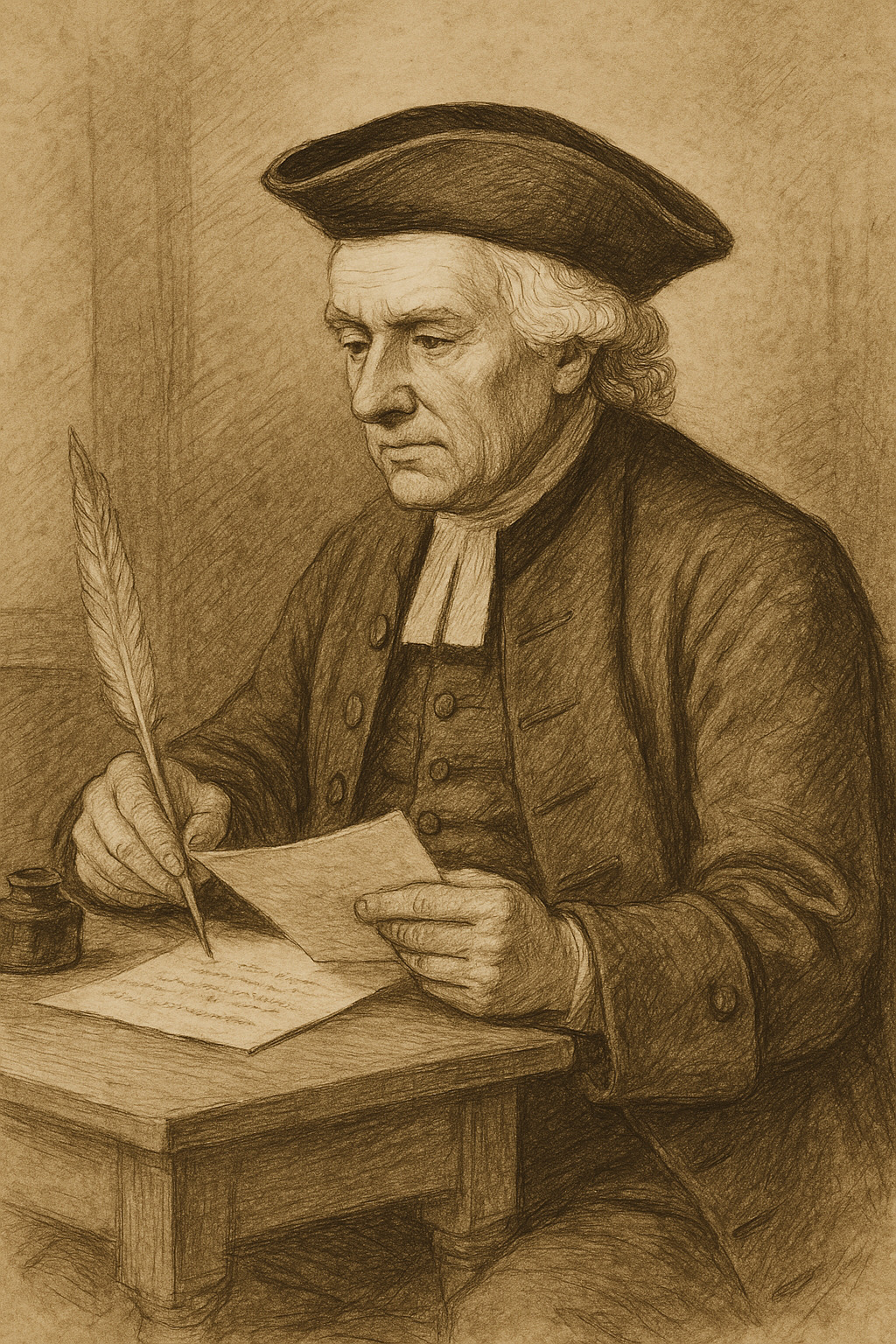
Together, these verses show a man steeped in both political satire and religious reflection, a distinctive combination pointing again to a literate clergyman or educated gentleman. The most probable author remains the Reverend Francis Tothill, who appears in Devon church records of the period and fits both the initials and social standing of such a writer.
His writings mark a rare instance of 18th-century verse from Wembury reaching the wider provincial press, revealing that even this quiet coastal parish had a voice in the spirited political and moral debates of Georgian England.
Source: Sherborne Mercury, 2 February 1767 (letters dated 20 January 1767).
Entries are summaries and interpretations of historical newspaper reports.