
On This Day — 19 January 1828
During a violent gale on the night of Saturday 19 January 1828, the sloop Lord Mulgrave was wrecked off Wembury. The ship, only recently purchased, was overwhelmed by the force of the storm and smashed to pieces on the rocks. Several of her crew were lost, including the skipper and his son, leaving behind a widow with six orphaned children. Another man left five young orphans with only their elderly grandmother to care for them. A boy who had been bound apprentice less than three months before also perished.
Local fishmonger Mr. Fisher of Plymouth, who owned the vessel, wrote movingly of the disaster. He bore the cost of coffins and bringing the bodies home, but stressed that the true tragedy lay in the destitution faced by the bereaved families.
Source: London Packet and New Lloyd’s Evening Post, 21 January 1828 (letter dated from Plymouth).
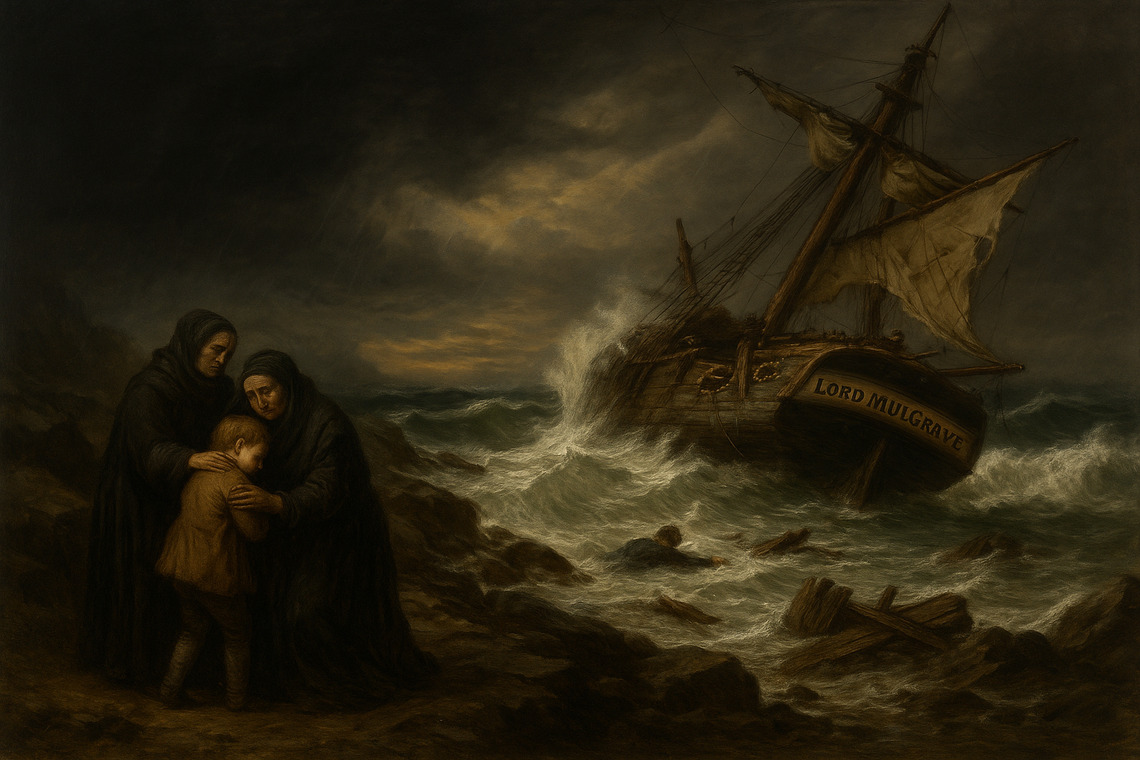
The wreck of the Lord Mulgrave adds to a long line of storms recorded in the Wembury archive — from the hurricane of 1806 that drowned 18 men of the Hibernia’s boat crew, to the 1824 tempest that left the John Wills wrecked on Wembury beach. Again and again the coast claimed ships and lives, and with them reshaped the fortunes of local families. These tragedies echo through parish memory, reminders of how precarious life by the sea could be.
On This Day in Wembury – 19 January 1856
At Yealmpton Petty Sessions, before the Earl of Morley and other magistrates, John Pascoe of Wembury was fined for assaulting Vincent Pollexfen Calmady Esq the local justice of the peace at Langdon Hall.
The charge stemmed from events on New Years Day. Calmady had been called by the parish clergyman to an orchard where a cock fight was expected. He seized a bag containing a game fowl and demanded Pascoes name. After some resistance, and with the keeper Rev Lane warning that he was dealing with a magistrate, Pascoe gave his name and the gathering of thirty or forty men dispersed.
Later that night Calmady his gamekeeper and two others were lying in wait near a road junction when Pascoe and two companions appeared. Recognised in the light of Calmadys cigar Pascoe rushed forward. A violent struggle followed with sticks seized coats stripped off and heavy blows exchanged. Another of the men named Marshall threatened Calmady declaring that if he had a gun he would shoot you as dead as h.
Calmady forced Pascoe into the road and gave him into custody though further threats and abuse followed before the men withdrew. For the defence it was argued that Calmady had first collared and struck Pascoe unfairly. Both Pascoe and Marshall bore head wounds from the fray.
The Bench nevertheless found the assault proved and fined Pascoe five pounds including costs with a months imprisonment in default. Marshalls case was adjourned on medical grounds.
Source: Western Times, 19 January 1856
Reflection
The case shows how fragile the line was between parish authority and local defiance. Calmady represented the law yet he met it out not from a bench but with fists and a stick in the Devon lanes. Pascoe for his part stood for a community tradition of cock fighting that was illegal but still deeply rooted. The clash played out by hedge light and cigar glow reminds us how justice in Victorian Wembury was as much about physical presence and reputation as statutes and summonses.
Entries are summaries and interpretations of historical newspaper reports.