
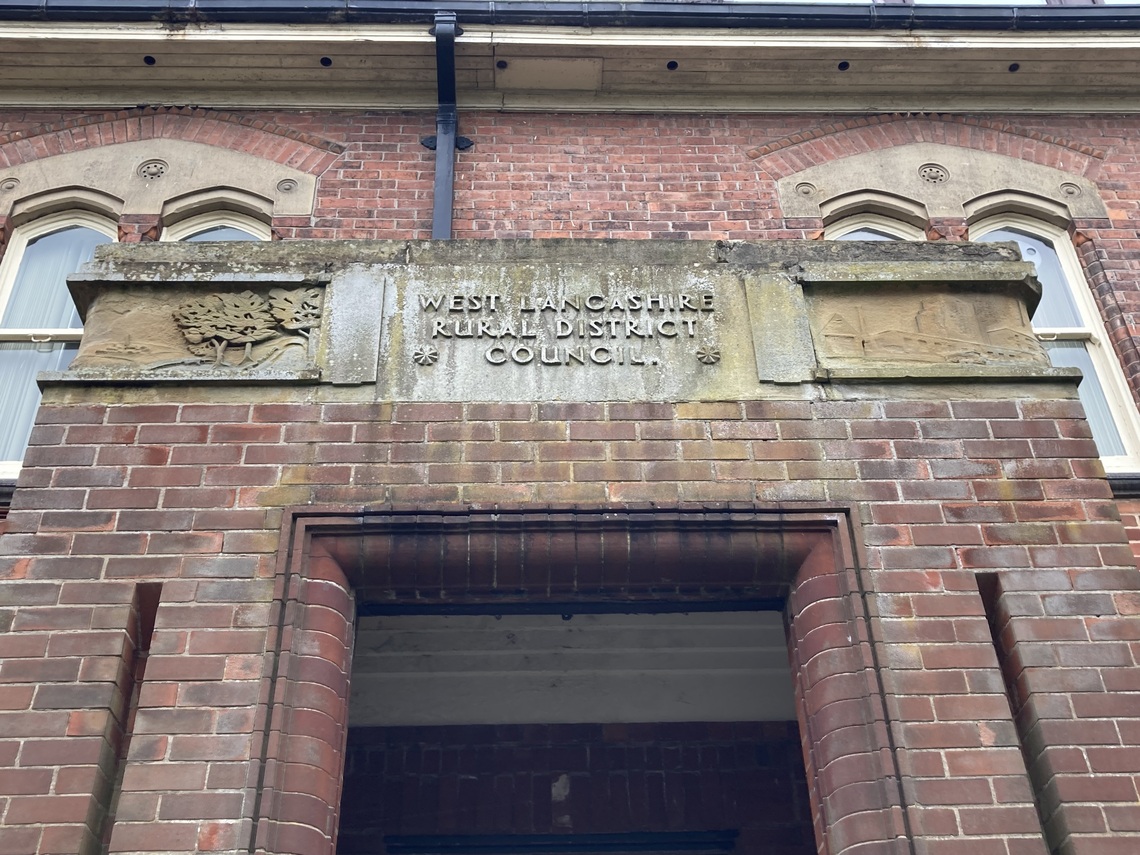
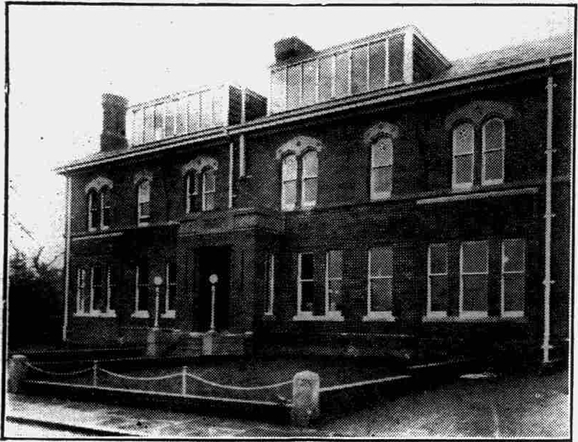
The West Lancashire Rural District Council purchased No. 52 Derby Street from the Trustees of Miss Ann Jane Lax, eldest daughter of Doctor William Lax. After the death of her father, Anne moved from St Helens Road to a large 12 room property at 52 Derby Street which she re-named Beaconsfield, to reflect the home she had grown up in at Beaconsfield Corner. Her neighbour, in the house called Abbotsford, was another local Doctor, Hugh Heald, and next door to the Heald household was another large dwelling, Walmsley House, home of Anne’s half sister Lucy Sophia Parker nee Lax, who had married Thomas Percy Parker, son of the Aughton Brewer Thomas Sumner Parker, in 1890.
The Council Offices served the Rural District Council well for a decade but then once again the space they provided proved inadequate. The Sefton Rural Council merged with the West Lancashire Rural District Council from Friday the 1st of April 1932 , increasing not only the Councillor numbers but also the administration personnel.
The Art Deco movement, emerging in the early 20th century, is characterized by its bold geometric forms, vibrant colours, and luxurious materials, representing a fusion of modernity and decorative arts.
The International Exhibition of Modern Decorative and Industrial Arts (French: Exposition internationale des arts décoratifs et industriels modernes) was a specialized exhibition held in Paris, France, from April 29 to November 8, 1925. The design idea was immediately taken on board by architects and designers across the World.
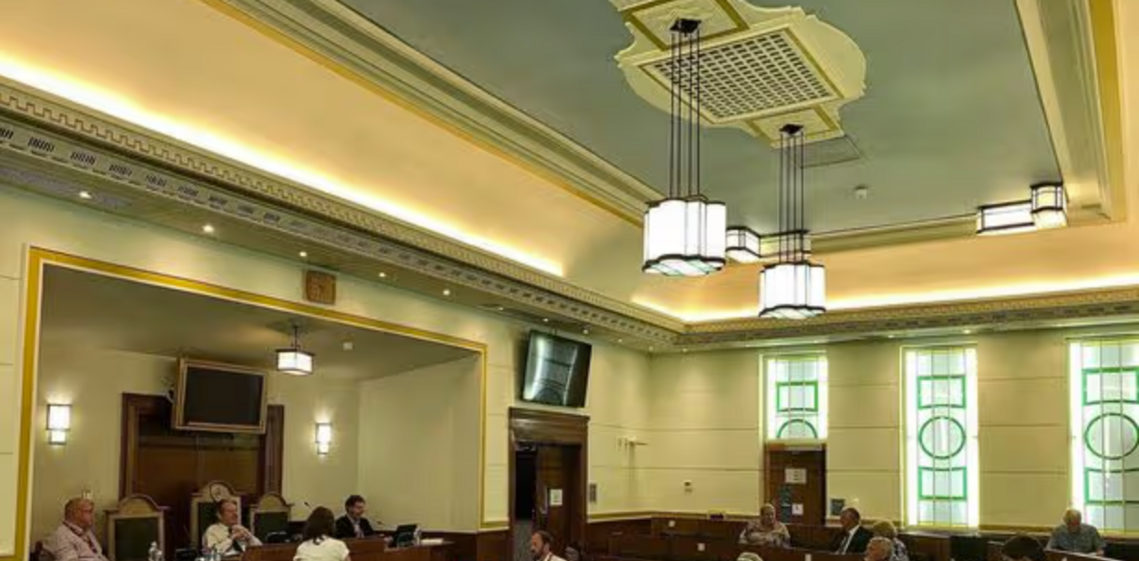
The Council building is an example of a very well-preserved Art Deco gem. The architect was Mr R.E. Cookson, A.R.I.B.A.. The Council Chamber retains the original 52 seat amphitheatre in three tiers and is built in light Austrian Oak with Walnut and ebonite trim. The front tier has 11 seats; the second tier has 17 seats and the top tier 24 seats all with the green leather lift up seats. The Dias remains the same as in 1936 with the green leather chairs originally having the gold embossed coat of arms for the council on the back rests. The Earl of Derby opened the building on Tuesday the 3rd of November 1936.
The desks in front of the tiered seating are made of oak with a top of green hide. The lower half of the walls have oak panelling to match the desks with walnut and ebony trim.
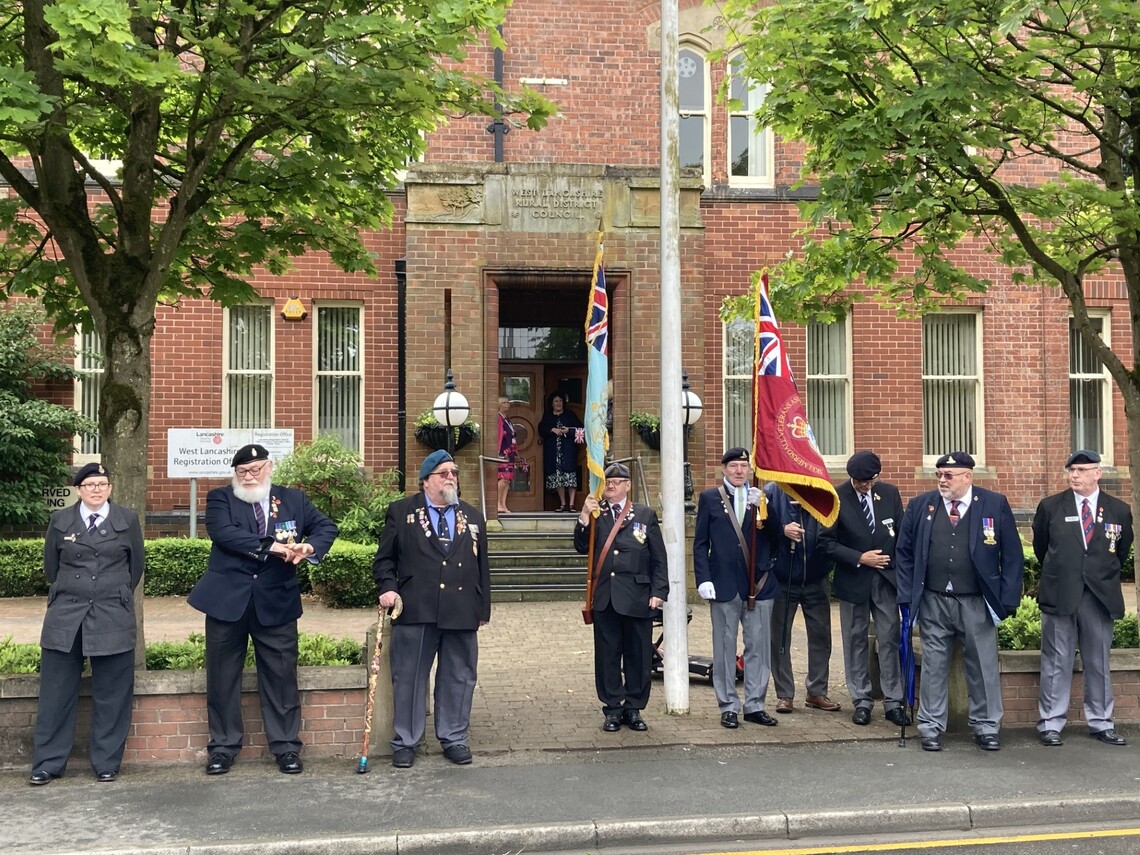
The front entrance porch is sand-faced brick with lamps either side. The panels around the porch depict scenes in the art-deco style from both rural and urban life: Trees and a Ploughman; a Smithy at work; a hump backed canal bridge and a cow looking over a gate. The Urban depiction is of Factories, the Church; housing and road transport.
The building contains the Town Regalia, 6 staffs dating to the 18th century town officials. The hand-written WW1 Roll of Honour from the Conrades Club hangs on the wall in one of the stairwells.
The building does warrant being protected as it is the most wonderful example of Art Deco.
Copyright, Dot Broady Hawkes, 2025